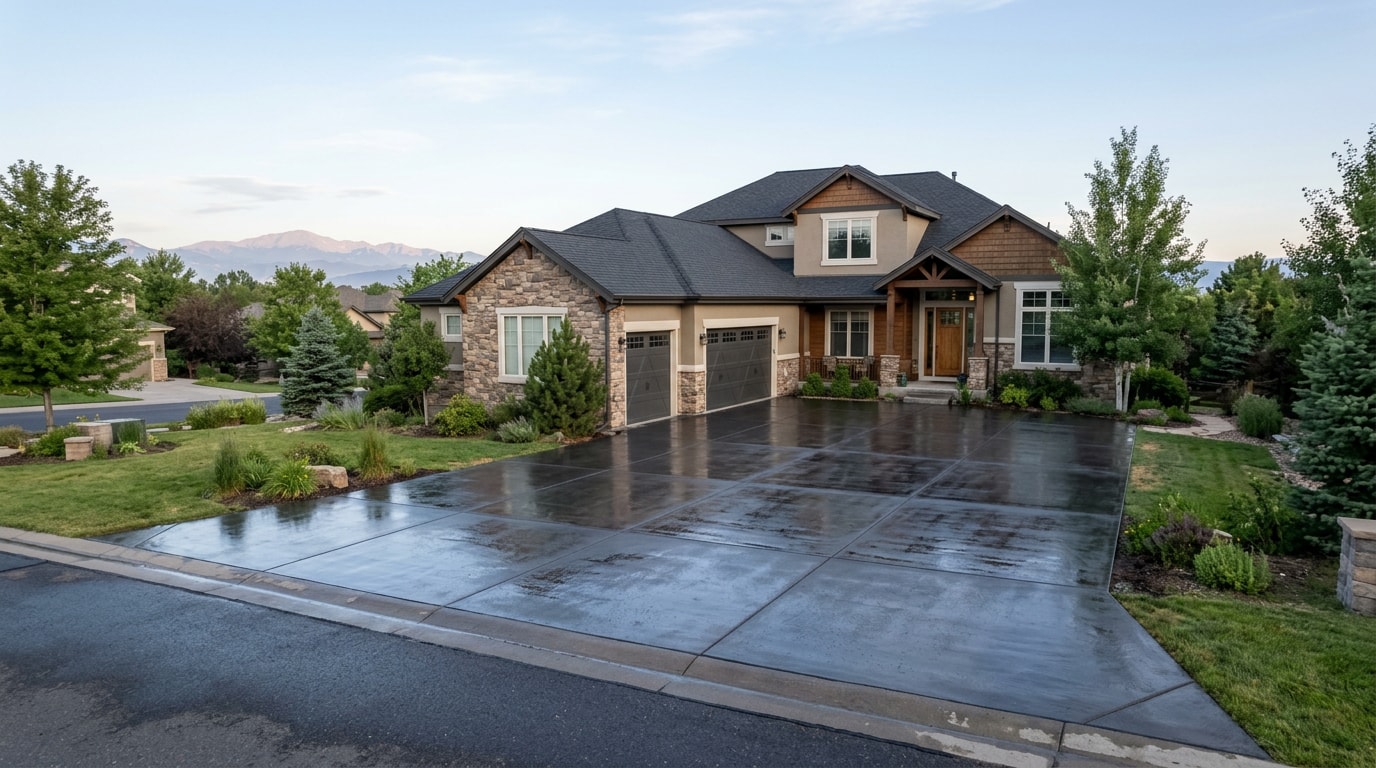
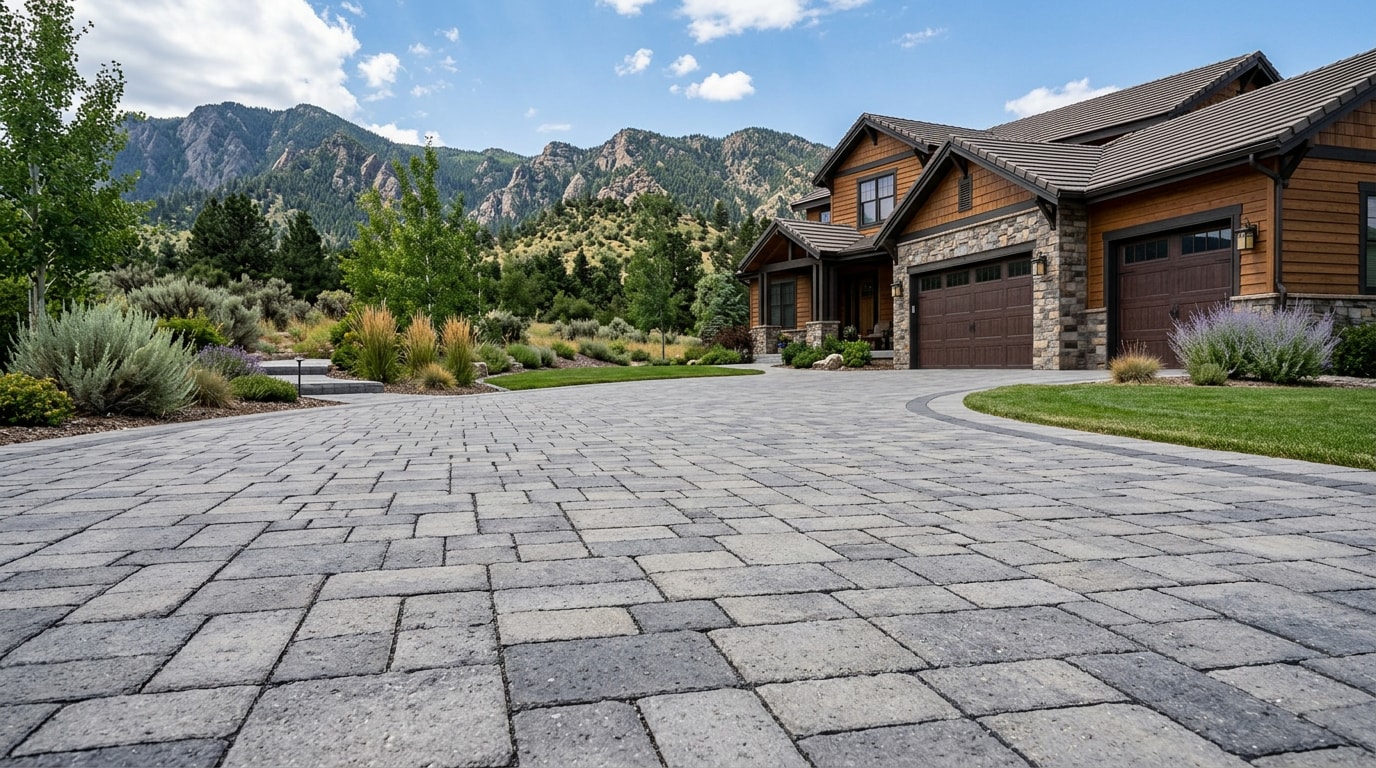
Concrete pavers in Ken Caryl & Highlands Ranch, CO are replacing poured driveways and patios for one reason: rigid concrete keeps cracking in this soil. Expansive clay and dozens of freeze-thaw swings a year stress a single slab in ways a flexible, segmented surface simply doesn't feel. Here's what actually separates a paver job that lasts 25+ years from one that heaves within three winters.
What a Paver Driveway Needs to Survive This Soil
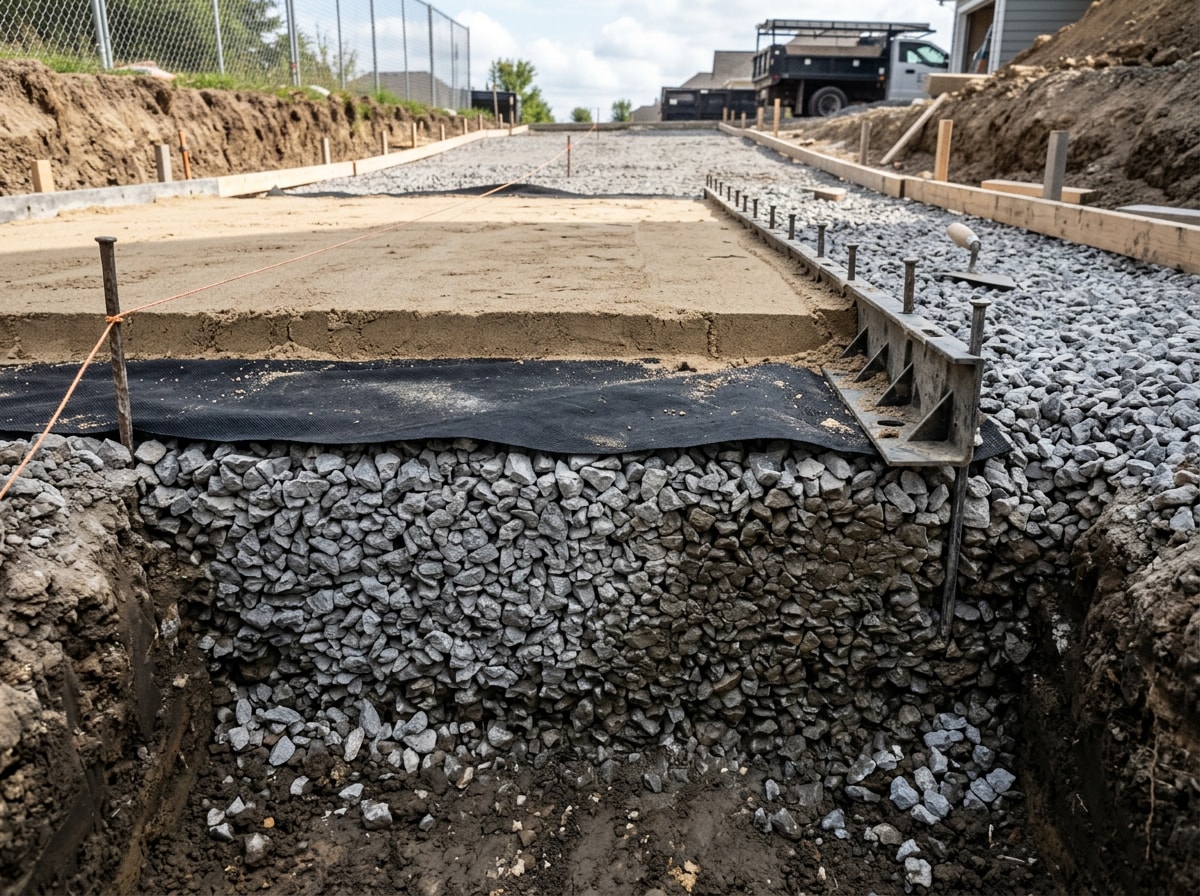
A durable paver driveway is built below grade, long before the first unit goes down. That base is what carries the load and resists the clay beneath it.
Engineering standards for base thickness can be applied to streets constructed with interlocking concrete pavers. Non freeze-thaw areas with well-drained soils should have at least a 6 in. thick base. Greater thicknesses are often used in regions with numerous freeze-thaw cycles, expansive soils, or very cold climates , which describes this stretch of the Front Range almost exactly.
The specifics shift by neighborhood:
- Ken Caryl's foothill lots need extra base depth on sloped sections, plus grading that moves water off the surface fast instead of letting it pool against the clay.
- Highlands Ranch's flatter plains lots need a wider, more even compacted base so runoff disperses across the surface rather than collecting near the foundation.
Elevation differences between the two communities also mean foothill sections can see slightly more freeze-thaw activity over a winter than the plains. That's one more reason base depth isn't the place to cut corners on a quote.
Why Expansive Clay Breaks Poured Concrete Here
Front Range soil contains bentonite and montmorillonite clays—in the form of soils or soft bedrock—that underlie many populated areas of Colorado . These clays swell when wet and shrink when they dry out, and that cycle repeats every year.
The scale of the problem is bigger than most homeowners realize. Over 250,000 new homes are built on expansive soils each year, and one person in ten is affected by floods, but one in five by expansive soils . A poured slab can't move with that kind of ground shift, so it cracks.
A paver system handles it differently. Individual units shift slightly with the soil instead of fracturing as one piece, which is the entire reason paver driveways and patios routinely outlast poured concrete on this type of ground. If you're also dealing with an existing cracked slab, our guide on 24x24 concrete pavers in Ken Caryl & Highlands Ranch walks through sizing and cost for a direct replacement.
Concrete Pavers vs. Brick vs. Poured Concrete
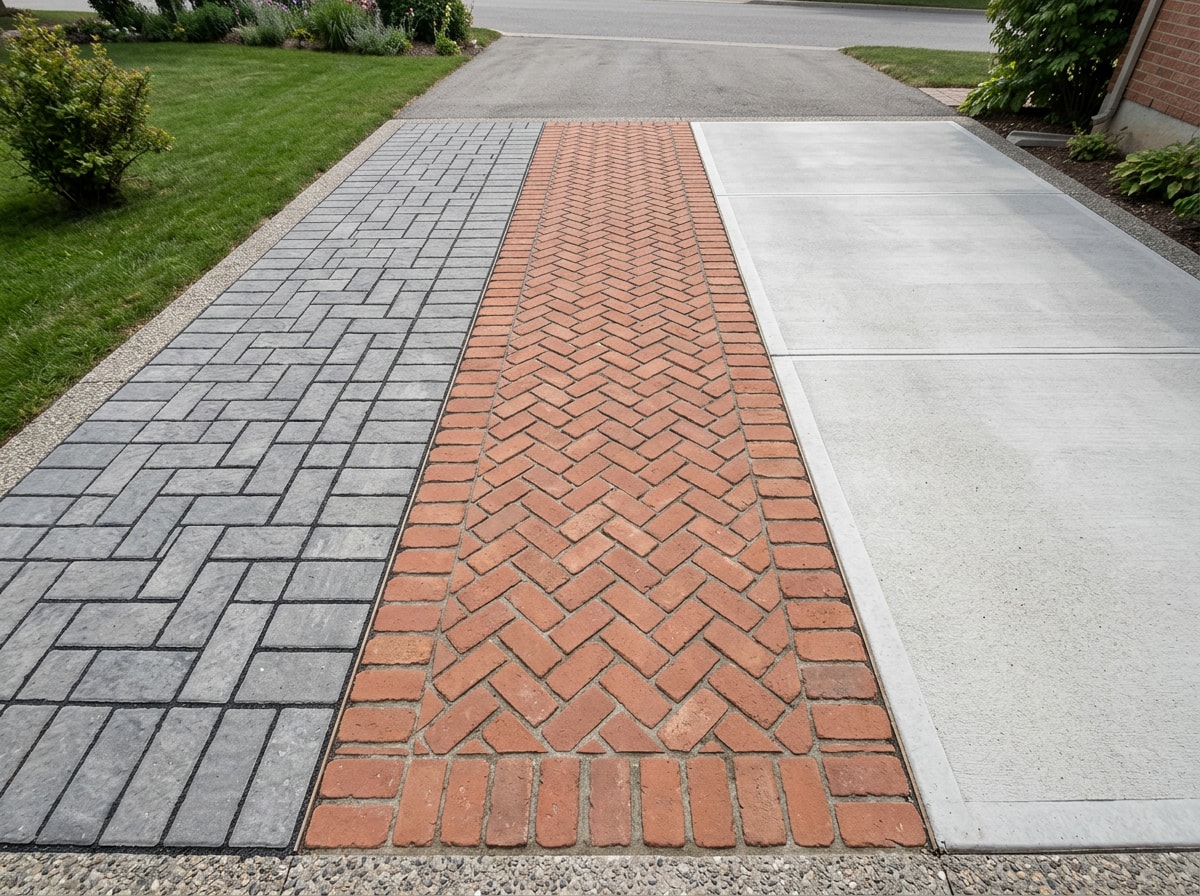
Material choice drives cost, lifespan, and how a repair gets handled years down the road. Here's how the three options compare for a typical driveway or patio in this market:
| Material | Cost per sq ft | Expected lifespan | Repair method | Climate performance |
|---|---|---|---|---|
| Concrete pavers | $15–$25 | 25–30+ years | Replace individual units | Flexes with ground movement |
| Brick pavers | $18–$30 | 20–25 years | Replace individual units | Good, but more prone to chipping |
| Poured concrete | $8–$15 | 15–20 years | Full-slab repair or replacement | Prone to cracking in clay soil |
Pavers also win on repairability. A stained or cracked unit gets pulled and swapped; nobody re-pours a driveway over one bad spot.
Not every paver is built the same, though. Interlocking concrete pavers used in paved surfaces are manufactured from cementitious materials, aggregates, chemical admixtures, and other constituents such as integral water repellents under the ASTM C936 specification, which is worth confirming with any installer's product sheet before you sign a contract.
How Professional Installation Determines Lifespan
Picking the right paver only gets a project halfway there. Base compaction, edge restraint, and joint fill are what determine whether a surface lasts 15 years or 30.
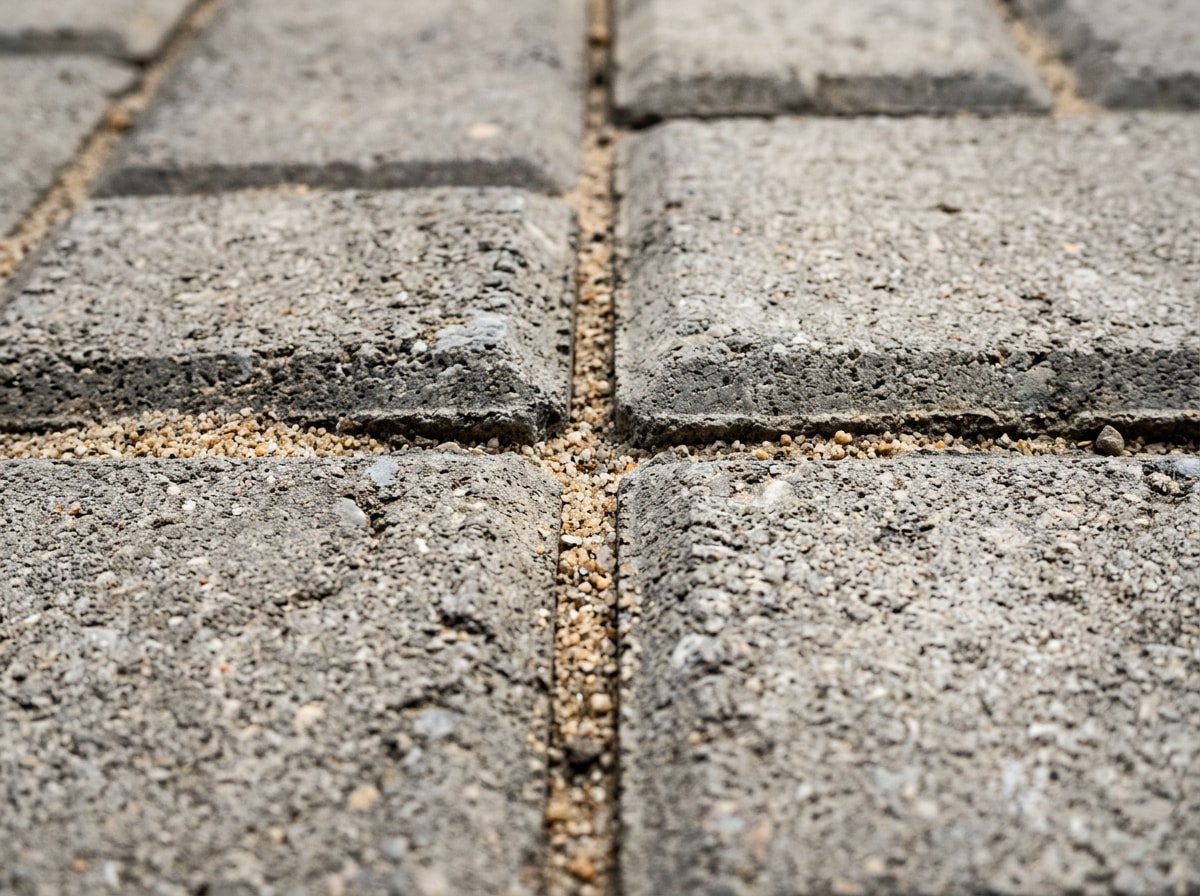
Interlocking systems spread weight across many small units instead of concentrating stress on one rigid slab. That lets the surface flex slightly rather than crack under a vehicle's load. A compacted aggregate base handles the structural work, while joint sand locks each paver in place and still allows minor seasonal movement.
On job sites in both communities, we check base depth to clay before we ever talk paver color, because that's the detail that decides whether the driveway is still flat in year ten. Ken Caryl's sloped lots and Highlands Ranch's seasonal ground shifts both benefit from a surface built to move with the earth instead of fighting it. If a retaining element is part of the grading plan, our retaining wall installation page covers how that pairs with a paver driveway on a sloped site.
HOA & Architectural Review in Both Communities
Ken Caryl and Highlands Ranch are both HOA-governed, master-planned communities. Most exterior hardscape changes go through architectural review before a shovel touches the ground.
Reviews typically cover:
- Paver color and pattern approval
- Edge restraint and border material
- Drainage direction relative to shared property lines
- Driveway width or footprint changes
Check your HOA's architectural guidelines before finalizing paver selections, not after a crew shows up. We handle this step as part of every quote in Ken Caryl & Highlands Ranch, and it's far cheaper to adjust a drawing than to redo installed pavers.
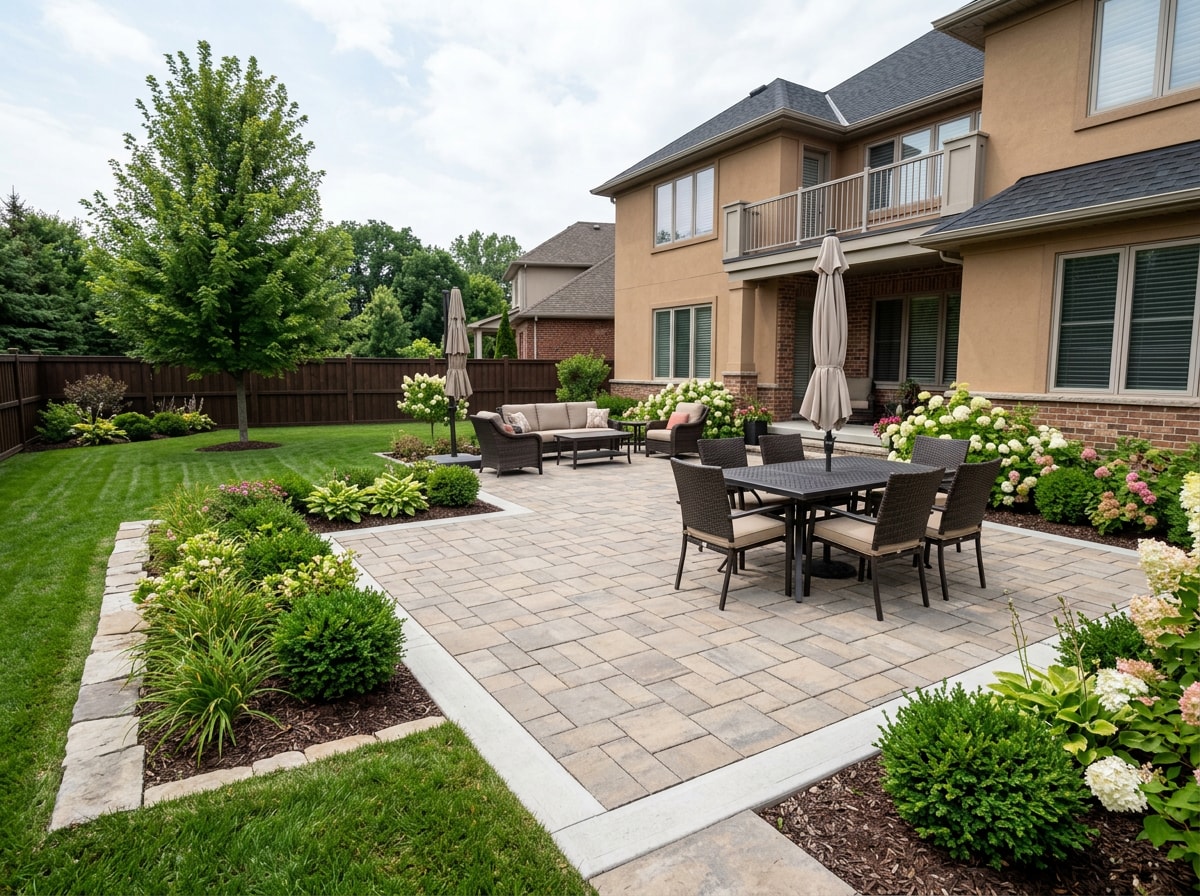
Want a firm number before you deal with the HOA packet? Get a free estimate and we'll put base depth, material, and projected cost in writing. Our full range of hardscape services, including concrete installation and patio installation, is built around this clay-and-freeze-thaw climate. You can see the full scope of what we do on our homepage.
Frequently Asked Questions
Are pavers a good choice for Ken Caryl & Highlands Ranch's terrain and climate?
Yes. Concrete pavers generally outperform poured concrete across both communities. Ken Caryl's sloped lots and Highlands Ranch's flatter plains both experience freeze-thaw cycles that stress rigid surfaces, and a flexible paver system handles that seasonal ground movement far better than a single slab.
How long do paver driveways and patios last in Ken Caryl & Highlands Ranch?
Well-built paver surfaces typically last 25 to 30 years in this region. Base depth matters most: a deeper, properly compacted base resists shifting better than a shallow one. Soil prep before installation and periodic joint sand resealing push a project toward the higher end of that range.
Can you replace cracked concrete with pavers in Ken Caryl & Highlands Ranch?
Yes. The process involves full concrete removal, rebuilding the foundation with a properly compacted base, and installing a flexible paver surface in its place. This addresses the soil movement that likely caused the original slab to crack, rather than just covering the problem.
How much do concrete pavers cost in Ken Caryl & Highlands Ranch?
Most residential projects run $15 to $25 per square foot installed, depending on paver style, base depth needed for the site's soil, and project size. A sloped Ken Caryl lot or a drainage-heavy Highlands Ranch yard can push costs toward the higher end because of extra base work.
What's the best base depth for pavers on clay soil?
A minimum 6-inch compacted aggregate base is standard, with deeper bases common on expansive clay and in climates with frequent freeze-thaw cycles like this one. Skimping on base depth is the single most common reason a paver driveway heaves or settles unevenly within a few years.
Do you install pavers throughout Ken Caryl & Highlands Ranch?
Yes. Coverage includes neighborhoods throughout both communities, including the Valley and Plains areas of Ken Caryl and the Westridge, Eastridge, Southridge, and Northridge sections of Highlands Ranch. Visit our Ken Caryl & Highlands Ranch area page for full neighborhood coverage.