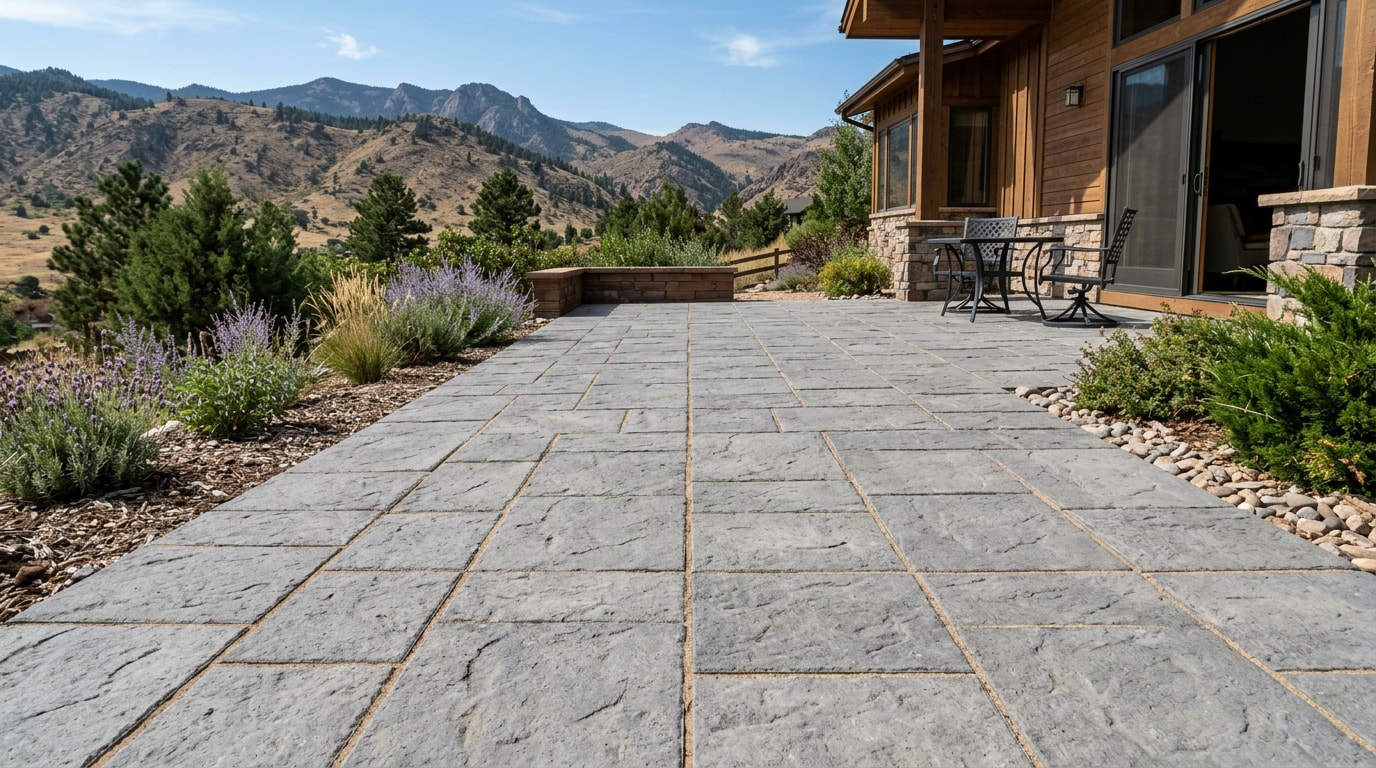
24x24 concrete pavers in Ken Caryl and Highlands Ranch, CO give Front Range patios a clean, modern surface without the grout lines of smaller units. This guide covers real specs, 2026 installed pricing, HOA and permit rules specific to both communities, and the base-prep details that keep slabs this large from heaving in a Colorado winter. Here's what to check before you sign a contract.
Why Choose 24x24 Concrete Pavers? Specs & Material Basics
Large-format concrete pavers give a patio a sleek, low-maintenance surface that holds up under Colorado's temperature swings. Before comparing colors or patterns, it helps to know what you're actually buying.
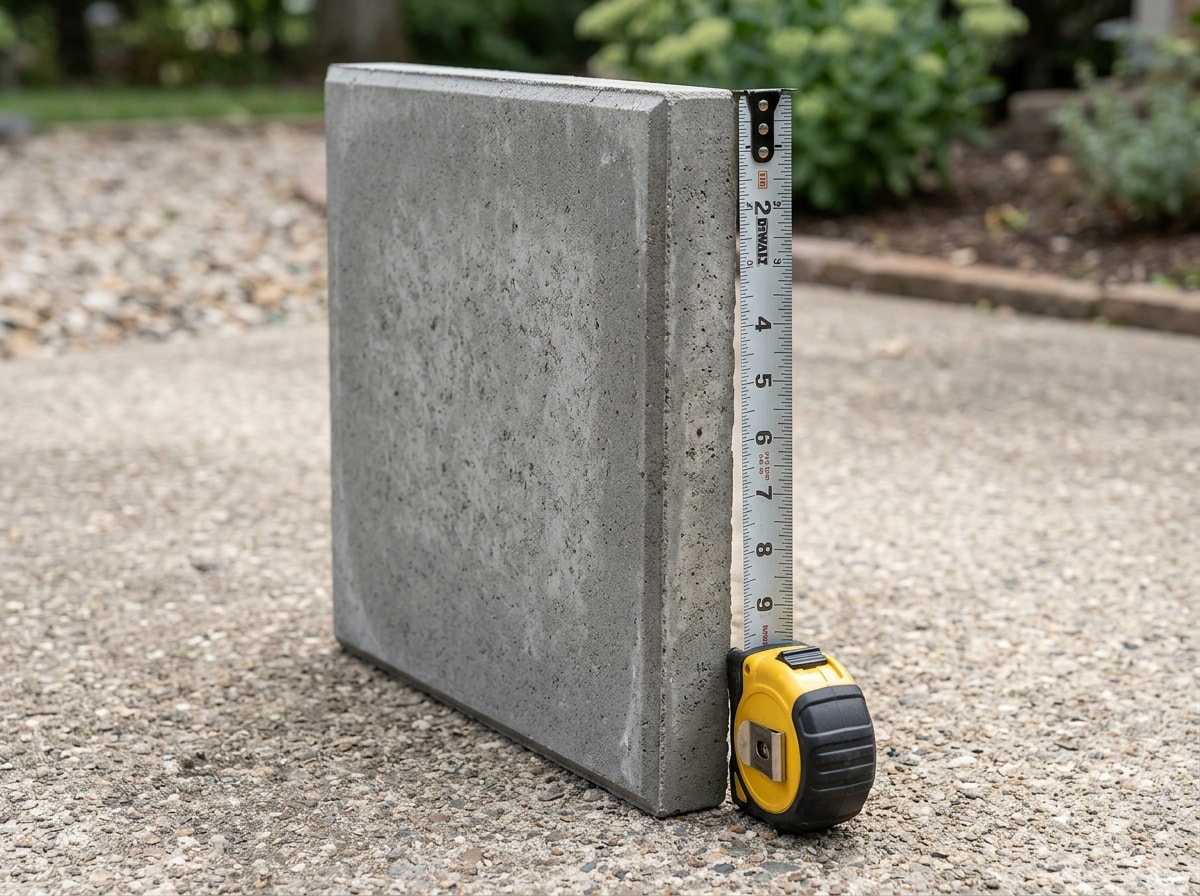
Standard specs for a 24x24 concrete paver:
- Nominal size: 24 inches by 24 inches (actual size often runs closer to 23.5 inches to allow for joint spacing)
- Thickness: roughly 2 inches
- Weight: about 80 pounds per unit
- Coverage: approximately 4 square feet per paver
- Manufacturing: dry-cast, which packs the concrete mix tighter than a wet-cast or poured slab
That density gives the paver higher compressive strength and better resistance to freeze-thaw cycling than a standard poured patio. Color is mixed throughout the paver rather than applied as a surface coating, so scratches and wear don't expose a different-colored base layer underneath, unlike some painted or stamped surfaces.
2026 Cost of 24x24 Concrete Pavers in Ken Caryl & Highlands Ranch, CO
Pricing varies by supplier, finish, and how complex your site is to prep. The table below reflects typical material and installed ranges for large-format concrete pavers across the Denver metro.
| Cost Factor | Low Estimate | High Estimate |
|---|---|---|
| Material only (per sq ft) | $4.00 | $8.00 |
| Professionally installed (per sq ft) | $12.00 | $25.00 |
| Typical 300 sq ft patio | $3,600 | $7,500 |
| Larger 600 sq ft patio | $7,200 | $15,000 |
Ken Caryl and Highlands Ranch properties often land toward the higher end of that range. Many lots sit on sloped or clay-heavy soil that needs extra excavation, drainage work, or a thicker base, all of which add to installed cost but also extend the patio's life.
A flat per-square-foot number only goes so far on a lot with grade changes. A concrete installation estimate that accounts for your soil and slope beats a generic quote, and you can get a free estimate before committing to a design.
Design Styles, Laying Patterns, Colors & Patio Enhancements
Pattern and color do more than set a style. On a 24x24 paver patio, they also affect how large the space feels and how it reads against your home's exterior.
Popular Laying Patterns
- Stack bond — a simple grid; suits smaller patios because it reads clean and uncluttered
- Running bond — staggered joints that add visual movement on larger spaces
- Checkerboard — mixes two colors or finishes, popular near pool decks and modern builds around Highlands Ranch
- Diagonal (45-degree) — works well on larger spaces and helps disguise minor size variation between slabs
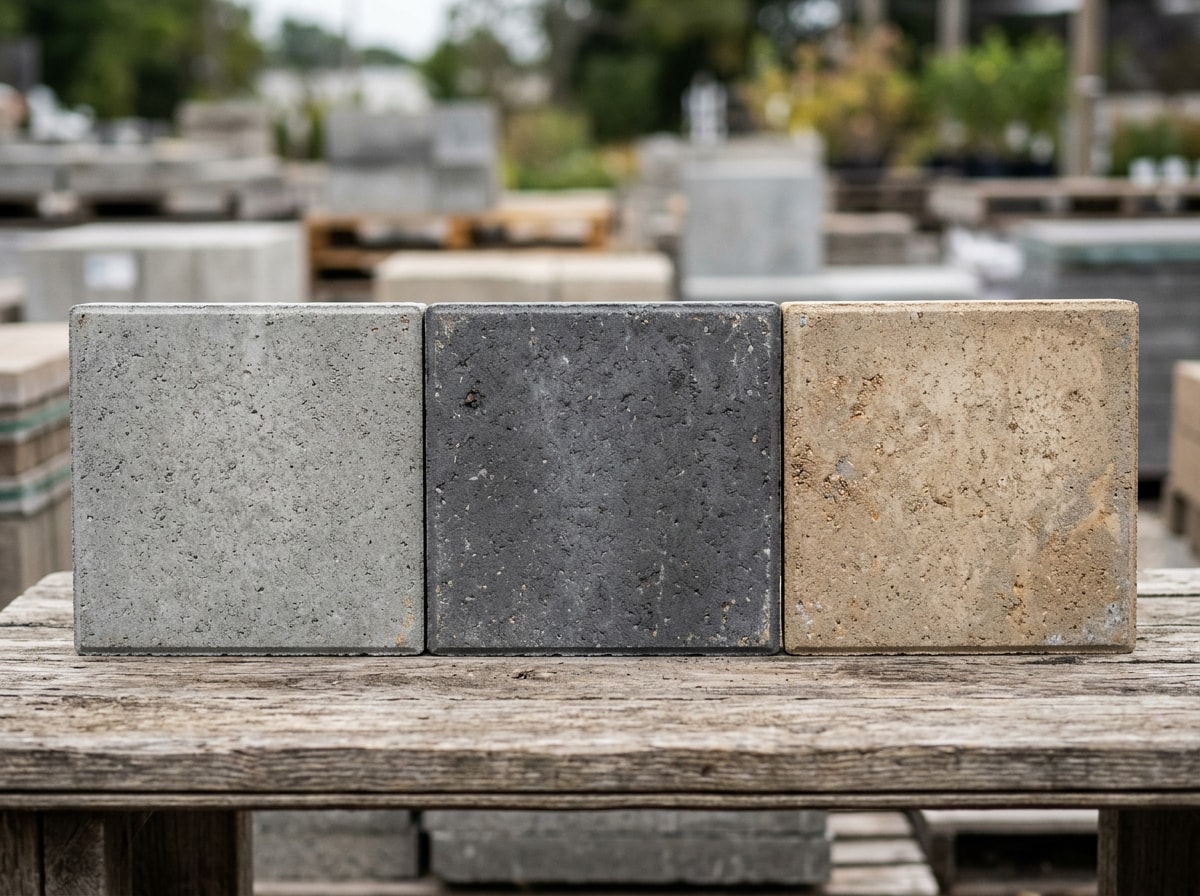
Popular Color Palettes
- Gray / natural concrete — the most requested tone; pairs with almost any siding or stone
- Pewter and charcoal — suit contemporary homes
- Sandstone and tan — complement the warmer brick and stucco common in older Ken Caryl neighborhoods
Lighter colors also reflect more heat, which matters during Colorado's intense summer sun. A gray or sandstone paver generally stays more comfortable underfoot than a dark charcoal one on a 90-degree afternoon.
Artificial Turf as a Patio Surround
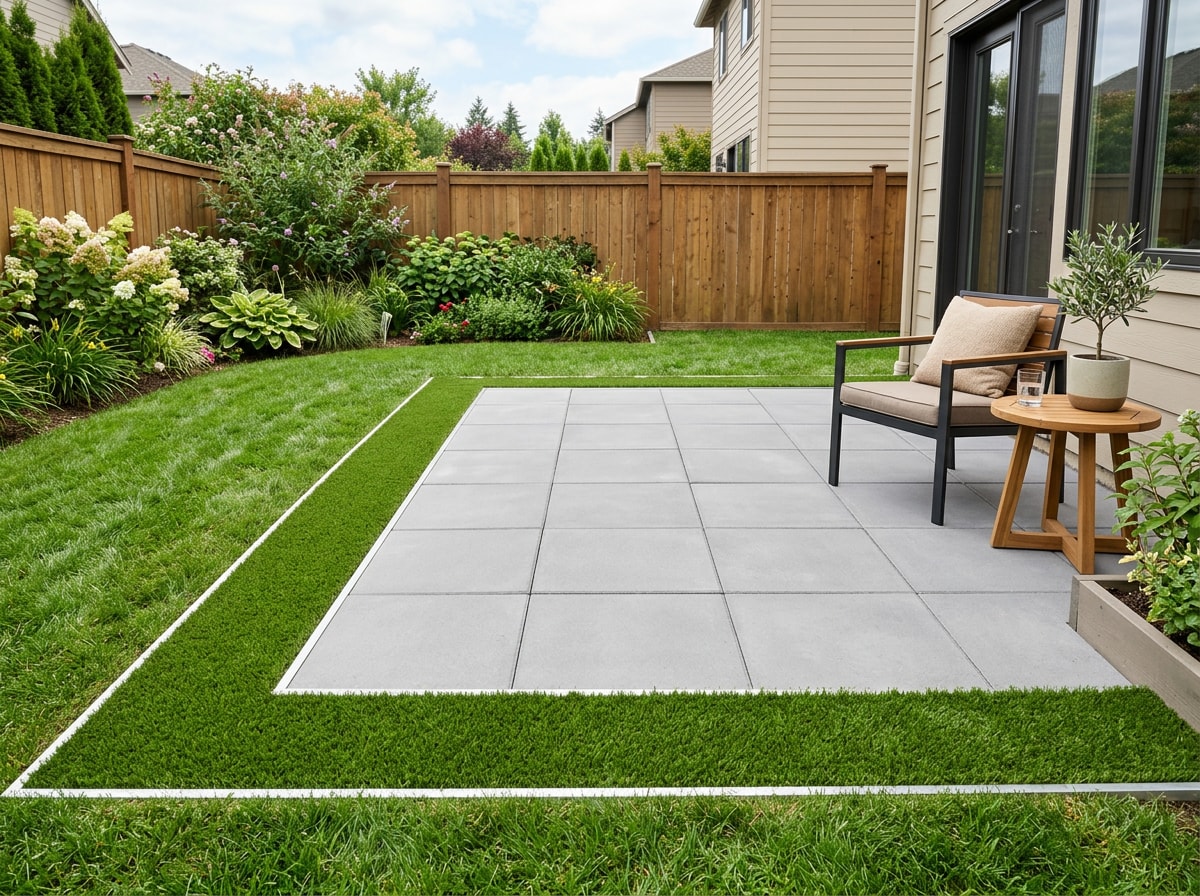
Framing a paver patio with a strip of artificial turf is a simple way to soften hard edges and skip the upkeep of a grass or mulch border. The turf strip also works as a transition zone between the patio and existing lawn, so a newly installed patio looks finished immediately instead of waiting for sod to fill in. This works especially well on narrow side yards or dog-friendly spaces where real grass would struggle.
Pairing With Retaining Walls, Stone Veneer & Outdoor Kitchens
Many foothill lots in Ken Caryl and parts of Highlands Ranch aren't flat, so a paver patio is often combined with a retaining wall to carve out a usable, level space. Stone veneer on that wall, or on an adjacent fireplace or kitchen island, ties the hardscape back to the home's exterior materials.
If outdoor cooking is part of the plan, a dedicated outdoor kitchen installation built alongside the paver patio gives appliances a stable, level base that won't shift the way a gravel or sand surface might. For general patio installation planning, start with the layout before locking in hardscape add-ons.
Local Factors: Freeze-Thaw, Elevation & Permits
Elevation, climate, and local review boards all shape how a paver project comes together in Ken Caryl and Highlands Ranch. Both communities sit above 5,800 feet, which means more freeze-thaw cycling each winter and, in most neighborhoods, an added layer of HOA or architectural review before work can start.
Why Freeze-Thaw Cycling Changes Base Depth Here
NOAA's engineering climate data for the Denver area puts annual freeze-thaw cycling at roughly 105 cycles a year, driven by daytime temperatures that climb well above freezing even in January before dropping back below overnight. That pattern puts real stress on any hardscape surface, and for a 24x24 paver, base depth and joint sand matter more than they would on a smaller unit.
Technical guidance from the Concrete Masonry & Hardscapes Association (the organization formed from the merger of the Interlocking Concrete Pavement Institute) sets a 4-inch minimum compacted base over well-drained soil for pedestrian areas, and calls for a thicker base in colder climates with wet or weak soils. On Ken Caryl and Highlands Ranch properties with heavier clay, that typically means a 6 to 8-inch compacted base rather than the bare minimum, giving water somewhere to drain instead of pooling under the slab and heaving it out of place.
Permits & HOA Approval for Hardscape Projects
Ken Caryl falls under Jefferson County, and county policy is direct on this point: concrete pads do not require a building permit in unincorporated Jefferson County. HOA review is a separate matter, though. Many Ken Caryl neighborhoods still require architectural review through the Ken Caryl Ranch Master Association before exterior hardscape work begins.
Highlands Ranch properties typically fall under Douglas County, where a ground-level paver patio generally doesn't trigger a county building permit either, but any patio cover does. Douglas County's own patio cover permit page recommends getting HOA or ACC approval before applying, which is good practice even when no county permit is required for the patio surface itself.
Expect to submit a site plan and, often, physical material or color samples to your HOA regardless of county permit status. For neighborhood-specific guidance, see our Ken Caryl & Highlands Ranch service area page.
Installation Process for 24x24 Concrete Pavers
Large pavers leave less room for error than small ones. A half-inch dip in the base shows up as a noticeable wobble across a 24-inch slab instead of disappearing into a seam.
Crews working Ken Caryl and Highlands Ranch paver jobs typically spend as much time on base compaction as on laying the pavers themselves. That step is what decides whether a patio stays flat for 15 years or starts heaving within two winters.
Base Preparation and Grading
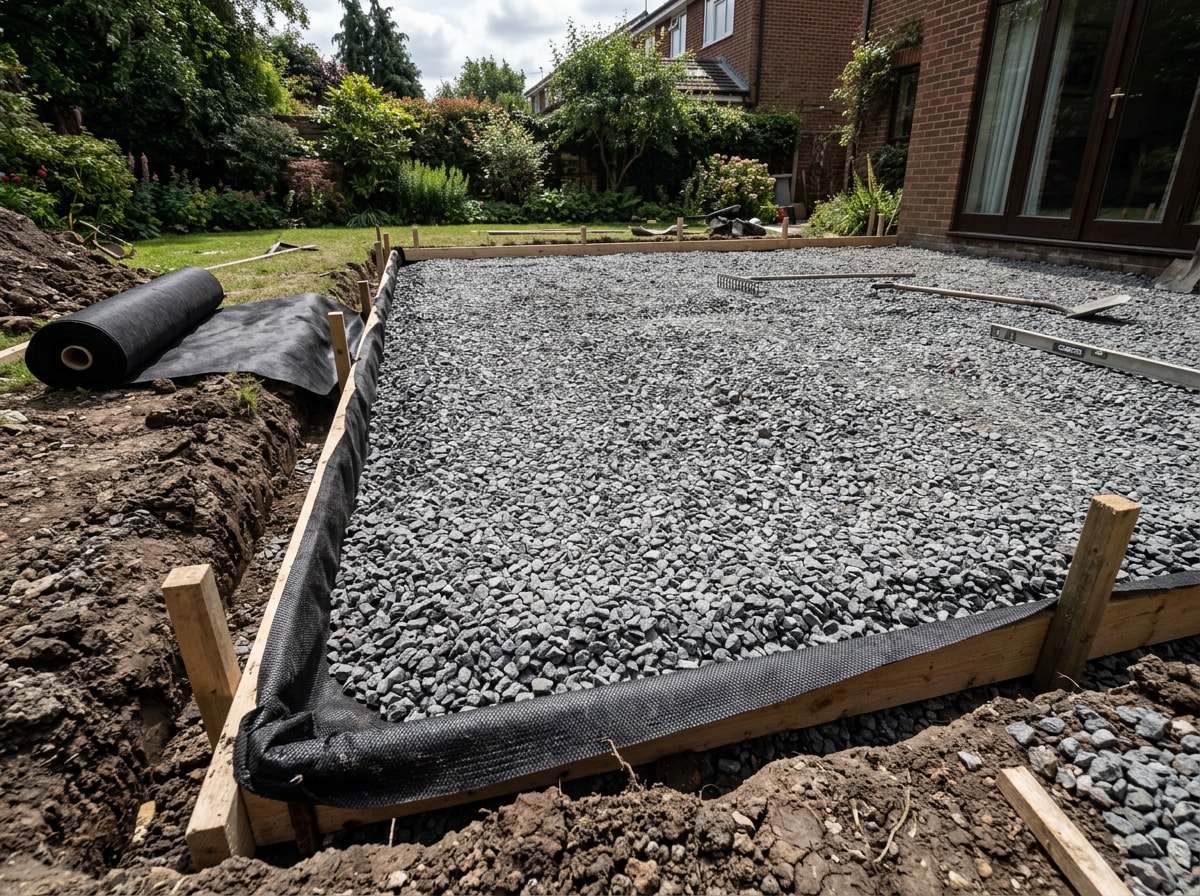
Installation starts with excavating the patio area to account for base depth plus paver thickness, typically 7 to 10 inches total in this region. A geotextile fabric layer goes down first to keep base material from mixing with native soil, followed by compacted gravel in lifts, then about an inch of bedding sand screeded flat and level.
The entire patio should slope slightly, about a quarter inch per foot, away from the house foundation to direct water away from the structure.
Laying, Jointing & Sealing the Pavers
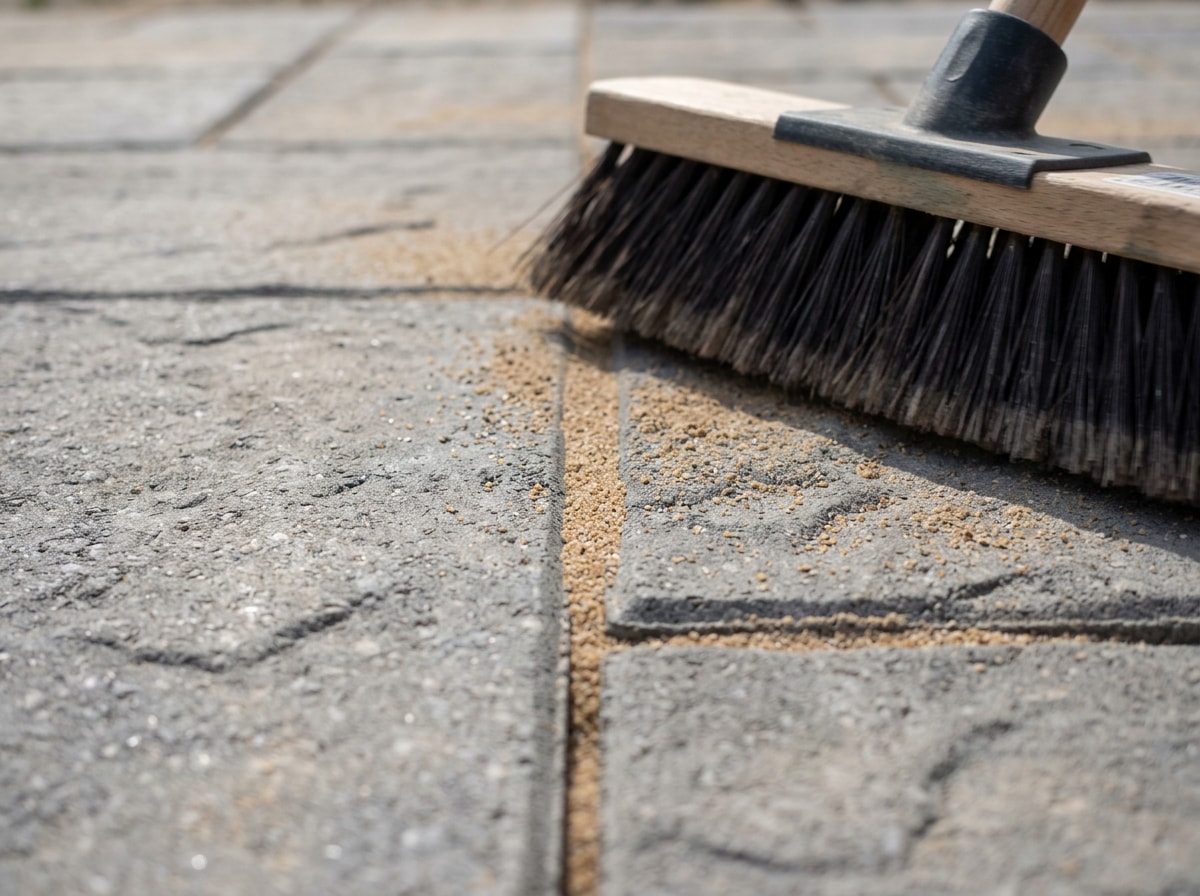
Because each paver weighs around 80 pounds, installers typically use suction-cup lifters or two-person handling to set them precisely without disturbing the bedding sand underneath. Once the field is laid, polymeric sand gets swept into the joints and compacted with a plate compactor, which locks the pavers together and helps resist weed growth and ant intrusion.
Sealing is optional but common for protecting color and reducing staining. Most installers recommend waiting 60 to 90 days after installation so the polymeric sand and concrete can fully cure before a sealer goes on.
Maintenance & Longevity Tips
A 24x24 paver patio holds up well with fairly simple upkeep:
- Rinse the surface periodically and sweep away debris to keep joint sand from eroding
- Check joints once or twice a year, topping off with fresh polymeric sand wherever gaps appear
- Reapply sealer every 2 to 5 years depending on sun exposure; south-facing patios in Highlands Ranch tend to need it sooner than shaded ones
- Avoid rock salt or other chloride-based deicers, since they accelerate surface wear; a calcium-magnesium acetate product or plain sand works better for traction
- Use a plastic shovel instead of a metal one when clearing snow, to avoid chipping paver edges
Routine attention like this is what separates a patio that still looks sharp after a decade from one that needs an early refresh. If your project also involves a pool, our guide to concrete pool deck repair in Ken Caryl & Highlands Ranch covers what to watch for around coping and expansion joints.
Ready to put numbers to your own lot? Get a free estimate and we'll walk the site, check the grade, and quote a price before any demo starts. You can also browse recent work on the Peppers Landesign homepage.
FAQ
Are 24x24 concrete pavers suitable for driveways?
No. These pavers are designed for pedestrian loads like patios, walkways, and pool decks. Vehicle weight can crack a 24x24 slab, so driveways need a thicker paver product or a reinforced base system designed for vehicular traffic.
How much does it cost to install 24x24 concrete pavers?
Installed costs typically run $12 to $25 per square foot in the Ken Caryl and Highlands Ranch area, depending on site prep and design complexity. See the cost table above for a full range by patio size.
How many 24x24 pavers do I need for my patio?
Each paver covers about 4 square feet, so divide your patio's total square footage by 4. A 400-square-foot patio, for example, needs roughly 100 pavers, plus a small overage for cuts and breakage.
Does concrete crack in freeze-thaw climates like Colorado's?
Properly installed dry-cast pavers resist freeze-thaw cracking better than poured slabs because individual units flex independently instead of cracking as one solid piece. See our hardscape contractor services for how we handle base prep in this climate.
Do I need HOA approval for a paver patio in Ken Caryl or Highlands Ranch?
Usually, yes, even though a ground-level paver patio often doesn't require a county building permit in either Jefferson or Douglas County. Most HOAs and architectural review committees still require a site plan and material samples before work starts. Check the Permits & HOA section above for specifics.
How long do 24x24 concrete pavers last?
With basic upkeep, a well-installed paver patio typically lasts several decades, often outlasting a comparable poured slab. The main advantage is repairability: individual pavers can be lifted and reset if the base settles, instead of patching or replacing an entire slab.
Can I install 24x24 pavers myself?
It's possible but difficult. Each paver weighs about 80 pounds, base grading has to be precise across a large surface, and a single low spot will show as a visible wobble. Most homeowners hire a crew with the lifting equipment and compaction tools to do it right the first time.