Concrete pool deck repair in Ken Caryl & Highlands Ranch, CO usually starts the same way: a homeowner notices a crack that's widening, a slab corner that's dropped below the coping, or water that won't drain after a swim. None of that is cosmetic for long. This guide breaks down what's actually happening under your deck, what it costs to fix, and how our crew handles it from first inspection to final seal.
Signs Your Pool Deck Needs Repair
Watch for these warning signs before they turn into a liability:
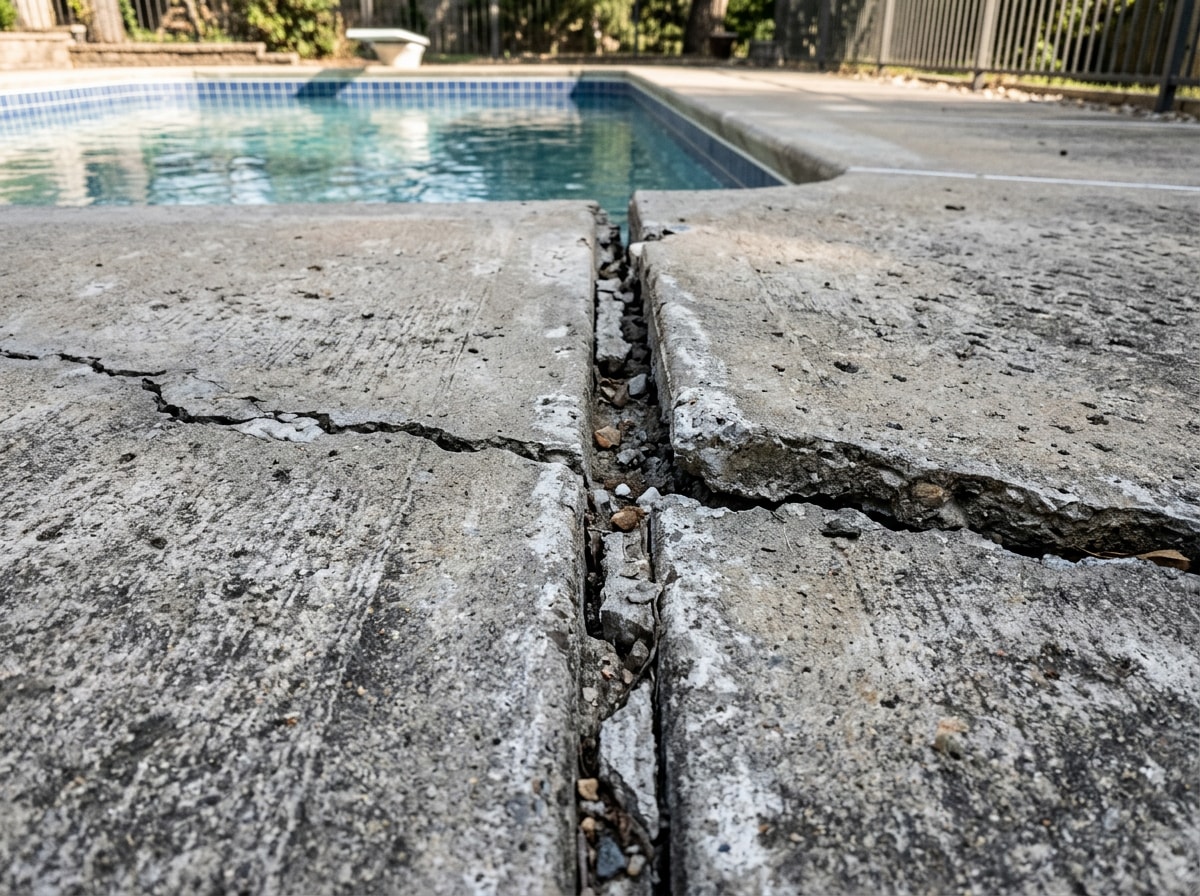
- Visible cracking, especially cracks that run through control joints or widen season to season
- Uneven or sunken slab sections, where one side sits lower than the rest
- Water pooling on the deck instead of draining toward the lawn or drain line
- Widening gaps where the deck meets the pool coping or expansion joints
Hairline cracks confined to the surface are usually cosmetic. Wide, spreading cracks paired with a sinking slab point to structural movement underneath, and that's worth a professional look before someone gets hurt. The CPSC launched Pool Safely, a national public education campaign to reduce drowning, submersion injuries, and entrapments , and an uneven, cracked deck surface is exactly the kind of hazard that campaign warns homeowners to fix early.
Why Pool Decks Crack and Sink in Ken Caryl & Highlands Ranch
Pool decks sit in constant contact with moisture. Splash-out, backwash, and irrigation overspray all soak into the soil below the slab. That moisture washes fine soil particles away, a process called soil erosion, leaving voids the concrete eventually settles into.
Colorado's Front Range speeds this cycle up. Denver's average date of first freeze is October 7th, and the average date of last freeze is May 5th , which means ground beneath an exposed pool deck can freeze and thaw repeatedly across a seven-month window most years. Each freeze expands trapped moisture in the soil before thawing and settling again, a repeating cycle that produces the sunken, uneven slabs we see on service calls every spring.
Local HOAs add another layer homeowners often miss. The Ken Caryl Ranch Master Association requires architectural approval for concrete driveways, paving, patios, and landscaping , so a deck repair that looks simple on paper can still need a quick review before work starts. We handle that paperwork as part of estimating jobs in Ken Caryl & Highlands Ranch, CO.
Resurfacing vs. Replacement vs. Polyjacking
Not every damaged deck needs a full tear-out. The right fix depends on what's happening beneath the surface, not just what you can see on top.
| Repair Type | Best For | Typical Cost | What It Fixes |
|---|---|---|---|
| Resurfacing / Overlay | Shallow cracks, faded or worn concrete |
$3 to $12 per square foot
| Cosmetic wear, surface cracks, texture | |||
|---|---|---|---|
| Polyjacking (Slabjacking) | Sunken but structurally sound slabs | Lower than demo-and-pour in most cases | Settling, uneven slab height, trip hazards |
| Partial Replacement | Isolated sections with deep cracks |
$8 to $15 per square foot
| Localized structural failure | |
|---|---|
| Full Replacement | Widespread cracking or base failure |
$15 to $35 per square foot
| Total structural loss, major heaving |
Before calling anyone, check three things: crack width, whether the slab has moved recently, and the concrete's age. A 10-year-old deck with a few surface cracks is a different, more cost-effective repair than a 30-year-old slab that's dropped two inches. Our concrete installation and stamped concrete teams start every job with that same assessment before quoting a fix.
Our Concrete Pool Deck Repair Process
Most restorations follow a predictable sequence, though material choice changes the finish and lifespan.
Surface Preparation
Every method starts the same way. Crews pressure-wash the deck, chase out and fill cracks with a flexible repair compound, and compact or inject beneath soft spots to build a stable base before any overlay goes down.
This step directly addresses the erosion and settling covered above. If the soil underneath isn't stabilized first, a new overlay will crack again within a season. Surface prep is also when we check slope, since standing water was likely one of the original warning signs. Proper drainage slope matters more than most homeowners realize: federal accessibility guidelines cap walking surface slope at a maximum of 1:12, or 8.33% , and a well-built pool deck should drain well under that to avoid both puddling and trip hazards.
Polyjacking for Sunken or Uneven Slabs
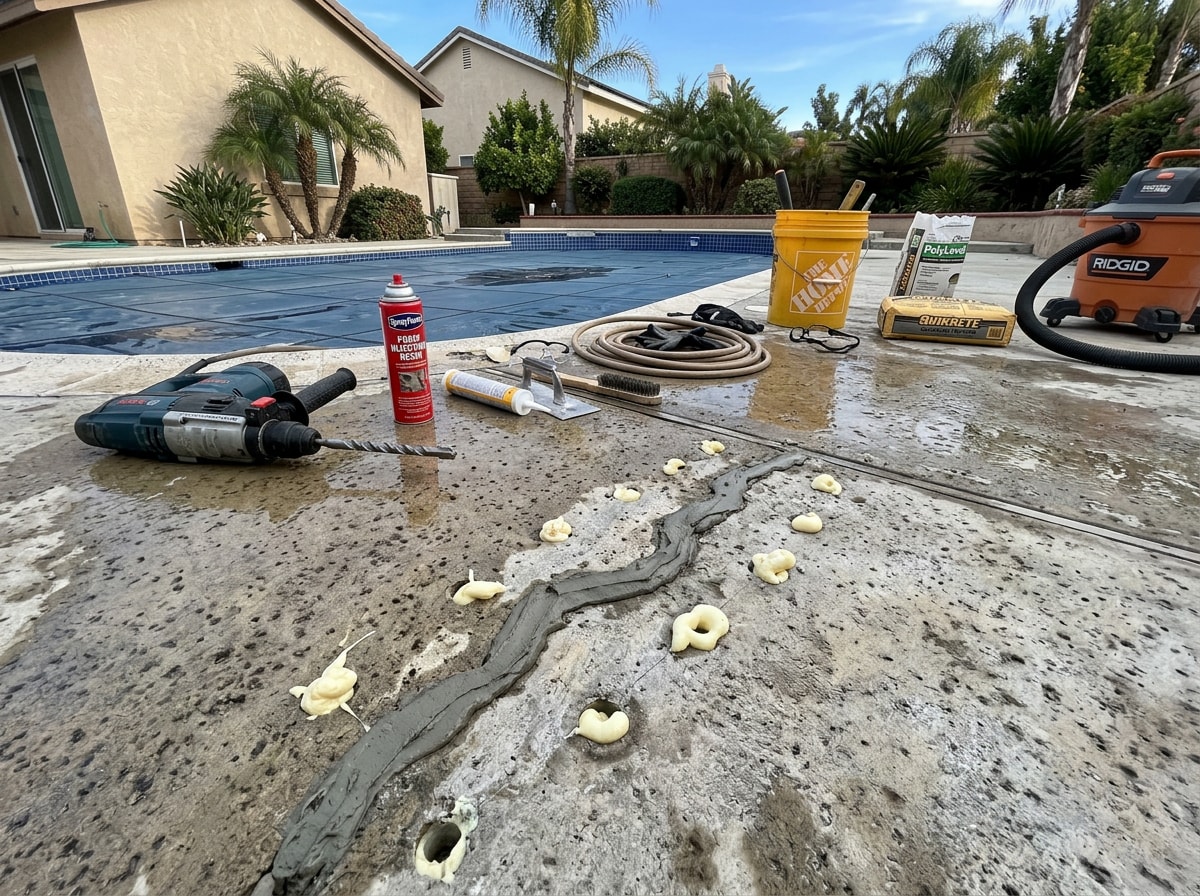
Polyjacking lifts sunken or uneven slabs by drilling small, dime-sized access holes and injecting expanding polyurethane foam beneath the concrete. The foam fills the voids left by washed-out soil, lifts the slab back toward level, and cures within minutes. Crews patch the holes the same visit.
It's often a genuine same-day repair with minimal mess, but it only works when the existing slab is still structurally sound. If a deck has deep cracking or base failure rather than simple settling, foam injection won't hold. That's a partial or full replacement job, which our deck repair crew handles alongside the concrete work so you're not coordinating two separate contractors.
Finish and Seal
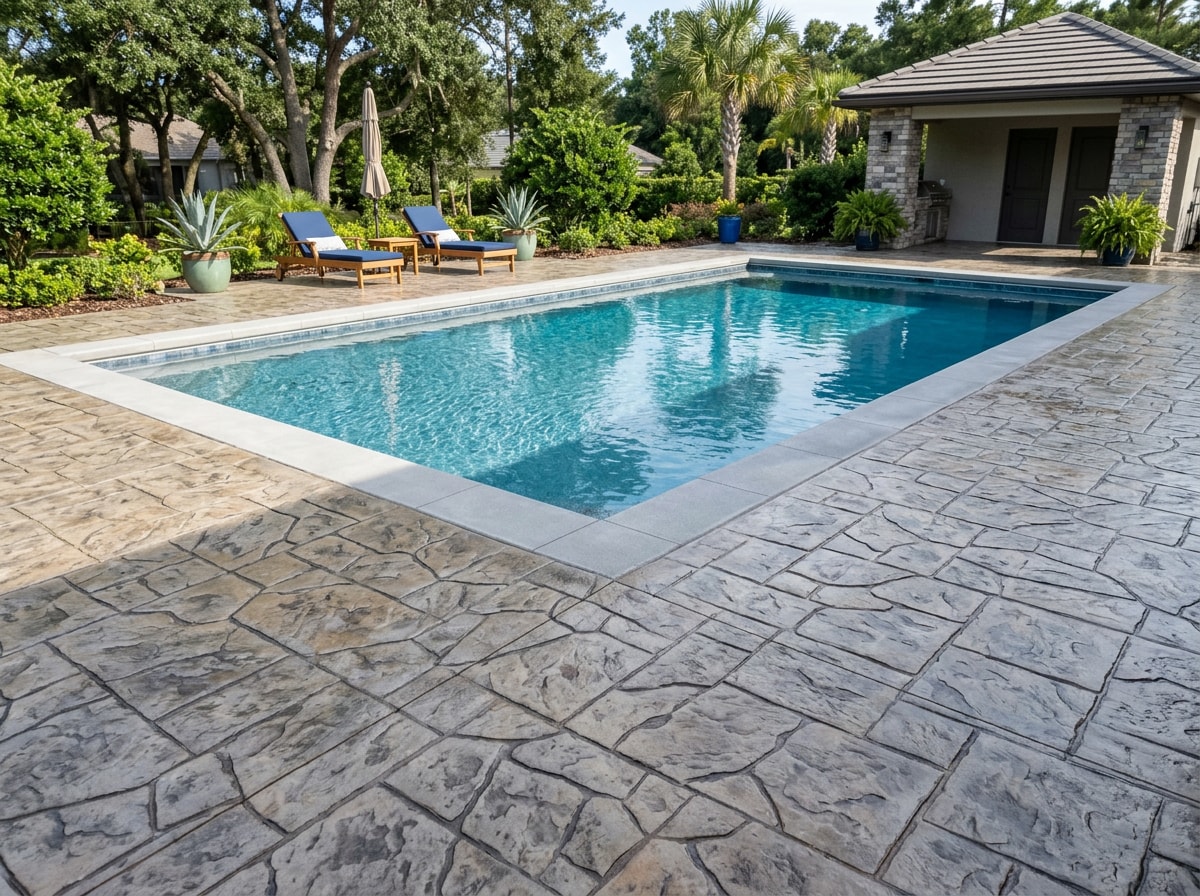
Once the slab is level and stable, crews apply the chosen finish, knockdown texture, stamped overlay, or cool-deck coating, and seal it. Sealing isn't optional around pools. It's what keeps chlorine, sunscreen oils, and freeze-thaw moisture from reopening the cracks you just paid to fix.
Where We Repair Pool Decks in Ken Caryl & Highlands Ranch, CO
We repair pool decks throughout Ken Caryl and Highlands Ranch, from established 1980s and 1990s neighborhoods to newer HOA communities built in the last decade. Highlands Ranch's community pools and private backyard decks both tend to show the same pattern: slabs poured 20-plus years ago that are now at prime age for settling.
In our experience quoting these jobs, the fastest fixes are backyard decks under 400 square feet with isolated settling. Those are frequently same-day polyjacking visits. HOA-governed community pool decks take longer because of the architectural approval step mentioned above, so we build that lead time into the schedule up front rather than surprising you with it later.
Take a look at completed work in the area on our projects page, or visit the homepage to see our full range of hardscape and concrete services.
FAQ
What causes a pool deck to sink or crack?
Water seeping beneath the slab washes away supporting soil, leaving voids the concrete settles into over time. In Colorado, freeze-thaw cycles speed this up by repeatedly expanding and contracting the ground beneath the deck until it sinks or tilts.
How much does it cost to repair or resurface a concrete pool deck?
Resurfacing typically runs $3 to $12 per square foot depending on the finish. Partial replacement of a damaged section runs $8 to $15 per square foot, and full replacement runs $15 to $35 per square foot. Simple crack patching costs less than either option, so get an on-site quote for an accurate number.
Can a cracked pool deck be repaired without full replacement?
Yes, if the slab is otherwise structurally sound. Resurfacing covers cosmetic cracks and worn finish, and polyjacking lifts sunken sections without demolition. Replacement is only necessary when cracks run deep, edges are crumbling, or the base has failed.
How long does pool deck repair or resurfacing last?
Most resurfacing lasts 10 to 15 years depending on the material, though Colorado's freeze-thaw climate can shorten that range if the base wasn't properly stabilized first. Regular sealing every few years extends the lifespan significantly.
Is a cracked concrete pool deck dangerous?
Yes. Uneven or cracked decking is a common trip-and-fall hazard around pools, and wet concrete is already slippery. If a crack is wide enough to catch a toe or sandal, treat it as a near-term repair rather than something to monitor.
Do I need HOA approval to repair a pool deck in Ken Caryl or Highlands Ranch?
Often, yes. Ken Caryl Ranch Master Association requires architectural approval for concrete paving and patio work, and many Highlands Ranch HOAs have similar review processes. We handle that submission as part of the project when we quote the job.
Can pool deck repair be done in winter in Colorado?
Polyjacking and crack sealing can be done in cooler weather if temperatures stay above freezing during cure time. Full resurfacing and new concrete pours are best scheduled in late spring through early fall for reliable curing.
Ready to stop staring at that crack? Get a free estimate and we'll walk your deck, tell you straight whether it needs resurfacing, polyjacking, or replacement, and give you a number before we leave.
Gabriel Peppers is the owner and operator of Peppers Landesign Services, a family and veteran-owned exterior contractor based in Littleton, Colorado. A Navy Seabee veteran with more than 15 years in landscape and hardscape construction, Gabriel and his crew handle concrete, stamped concrete, and deck repair across the Denver Front Range. Contact the team for a free on-site estimate.