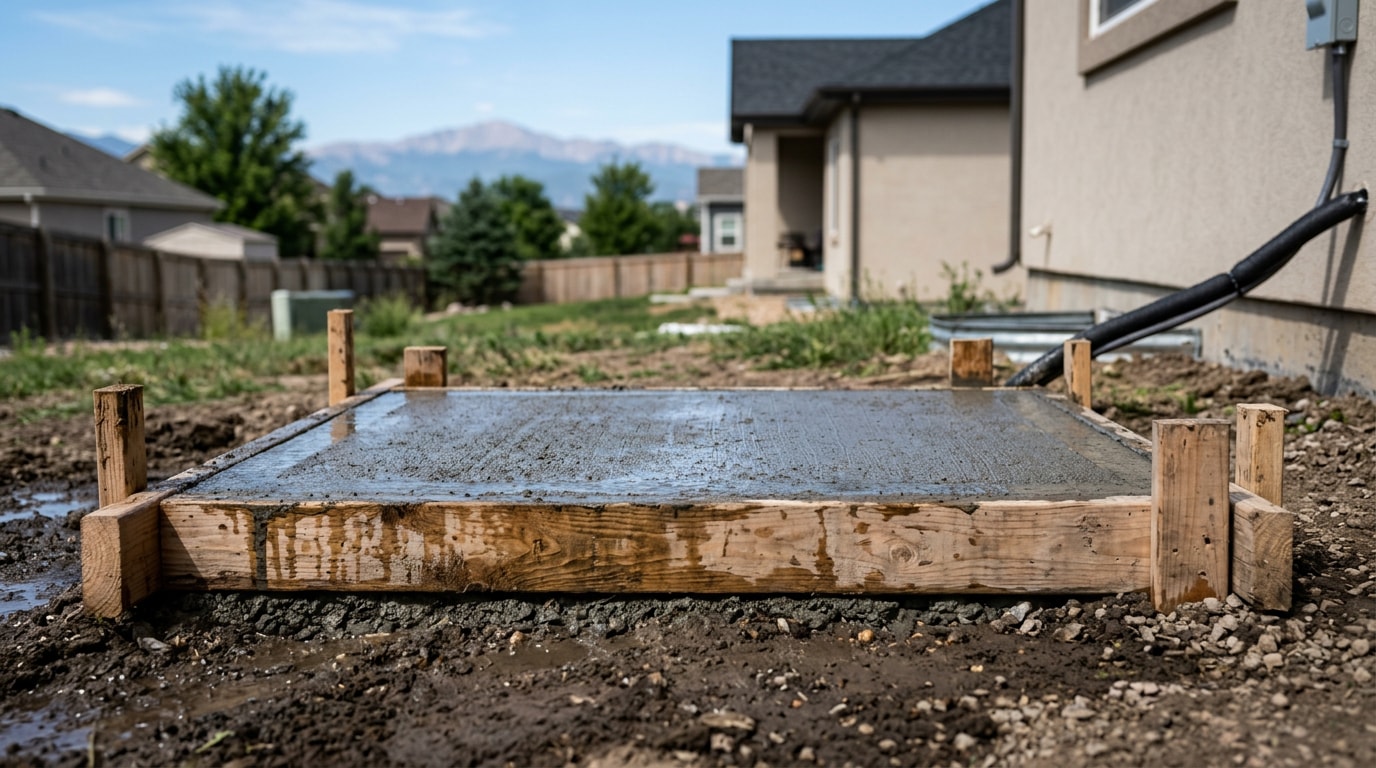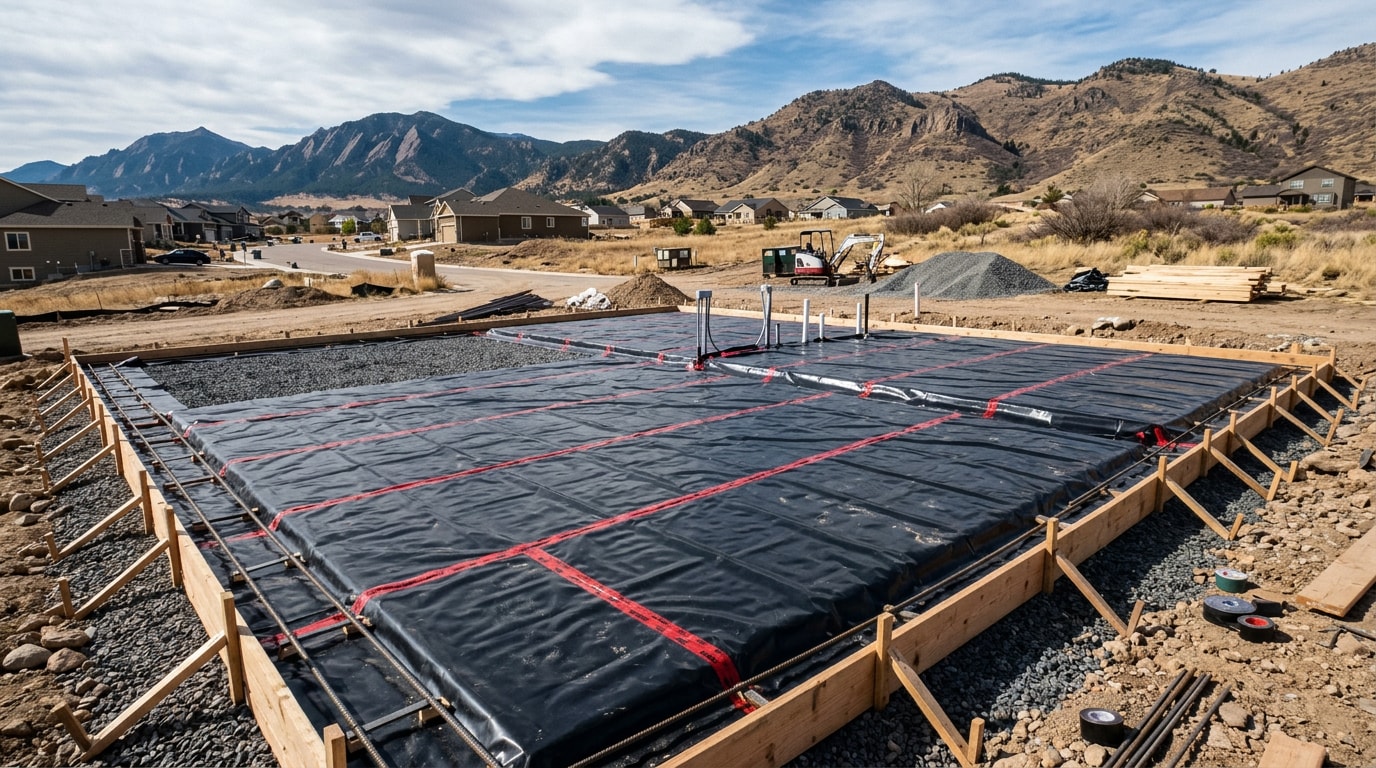
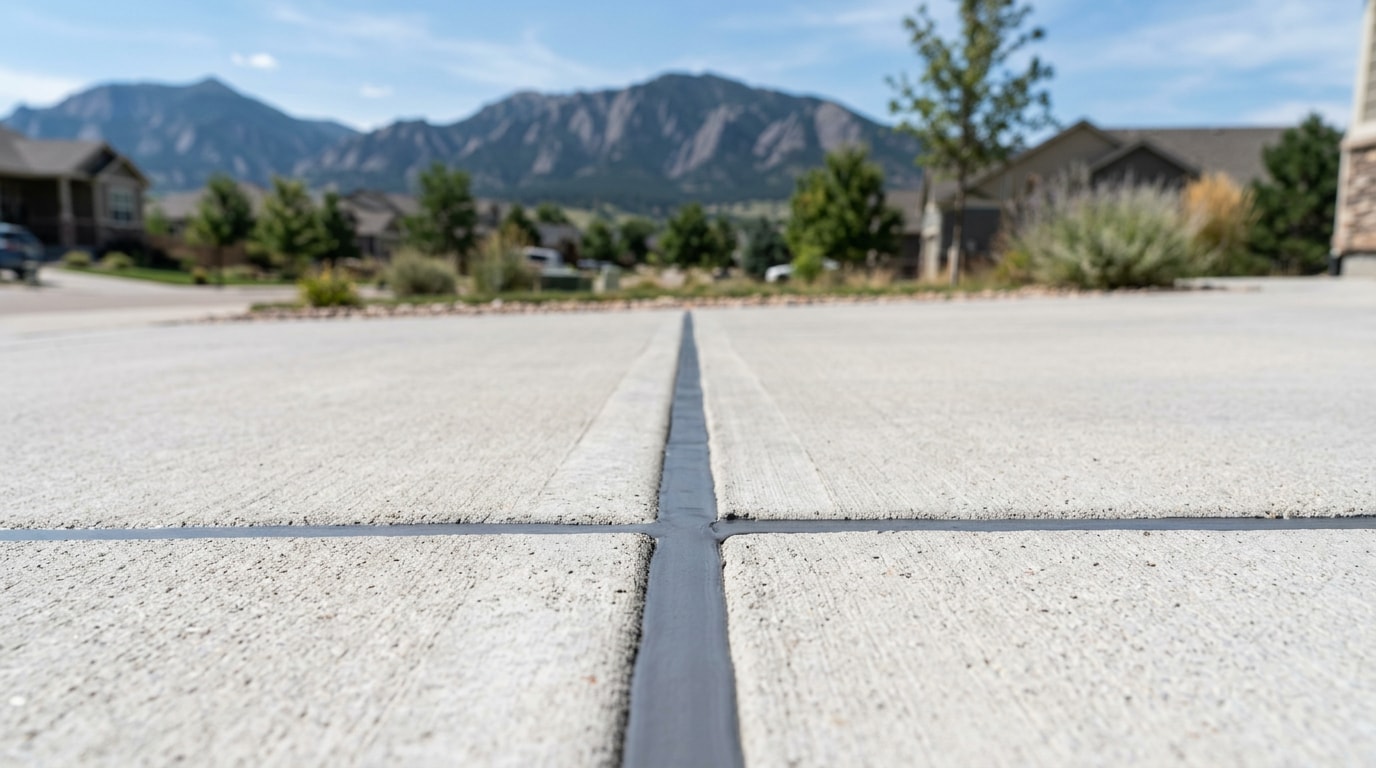
Concrete caulking in East Metro & Castle Rock, CO is the single cheapest way to keep a driveway, patio, or sidewalk from turning into a bigger repair bill. Skip it, and water gets into every open joint, freezes, and pries the slab apart one winter at a time. Here's what the process actually involves, why it fails so often on Douglas County's clay, and how to tell if your slab just needs sealant or something more.
Visit Peppers Landesign Services to see our services and request a free estimate.
What Is Concrete Caulking? Crack vs. Joint Sealing Explained
Concrete caulking means pressing a flexible sealant into a crack or a joint so water, dirt, and ice can't get underneath the slab. It's not structural repair. Caulking protects a crack or joint that already exists instead of fixing why the concrete moved in the first place.
Three terms get mixed up constantly on any concrete job:
- Control joints – intentional saw-cuts that force cracking to happen along a straight, predictable line instead of spreading randomly.
- Expansion joints – the flexible gaps between separate slabs, like where a driveway meets a sidewalk, that let concrete expand and contract without cracking.
- Random cracks – unplanned cracks that sometimes point to a deeper issue, like settlement, that needs fixing before any sealant will hold.
If a slab is sinking or uneven, caulking alone won't solve that. In those cases we typically recommend evaluating the slab for full concrete installation instead of chasing a joint that keeps reopening.
Why Castle Rock & East Metro Concrete Cracks So Often
Concrete naturally expands and contracts with temperature. That alone isn't the problem. What turns normal movement into real damage around Castle Rock, Parker, and Aurora is a stack of local factors working against the slab at the same time.
Douglas County sits on expansive clay. Colorado's most significant geologic hazard is expansive or swelling soil, meaning soil laced with layers of various clays. These soils pull joints apart from below as they swell with moisture and shrink again during dry spells, long before the concrete itself shows any sign of failing.
Freeze-thaw cycling makes it worse. Water that seeps into an unsealed crack before an overnight freeze expands as it turns to ice, widening the gap a little more each time. Engineering climate data for the Denver area puts the average annual freeze-thaw cycle count at 105 , which is a lot of chances for a small crack to become a big one over a single winter.
Watch for these warning signs:
- Open or separated expansion joints
- New cracks forming between slabs
- Old, cracked, or missing joint sealant
- Water pooling or disappearing into joints
- Crumbling or spalling edges
- Gaps that keep widening season after season
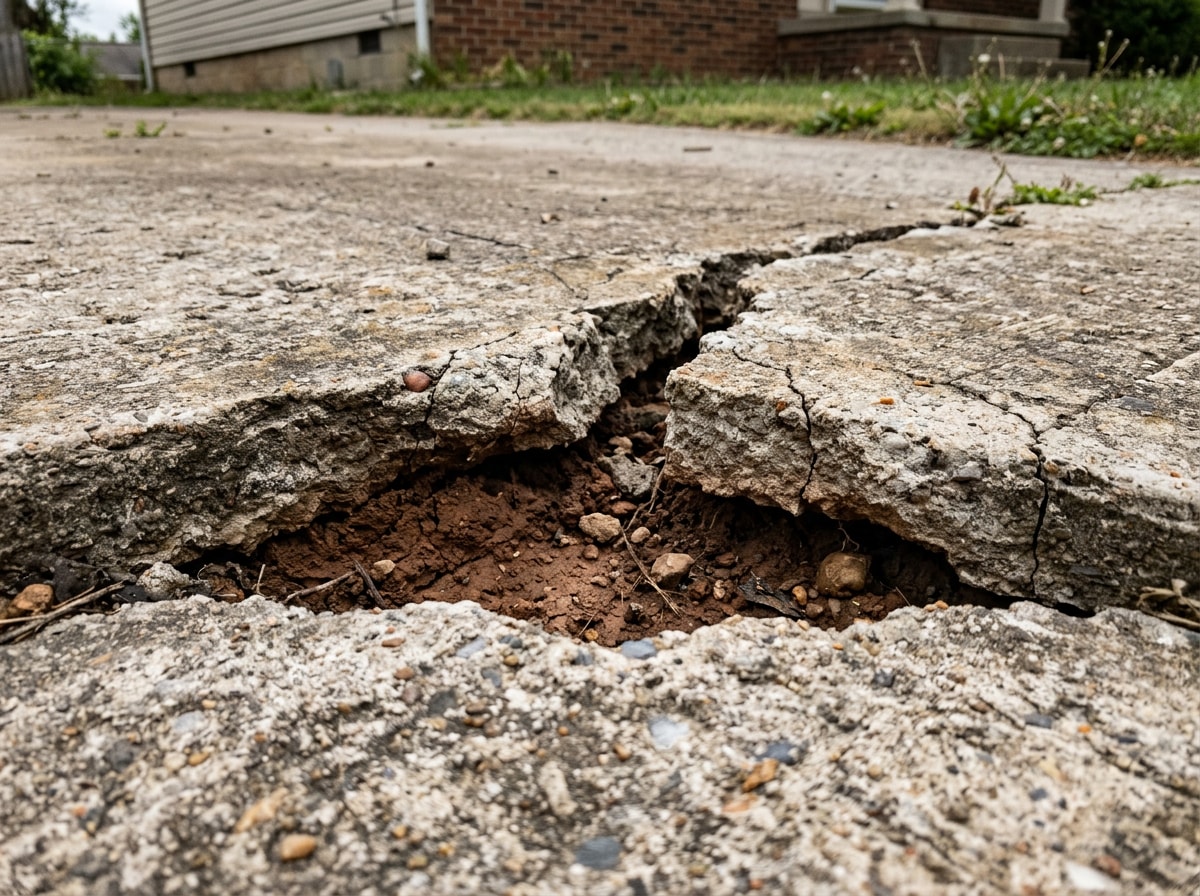
On jobs across the East Metro & Castle Rock area, we've seen brand-new control joints on newer builds open up within their first winter simply because the saw-cuts weren't sealed before the first hard freeze. If a slab is sinking, tilting, or showing erosion underneath, caulking works best as a second step after the concrete is leveled. If the slab is flat and the problem is just open joints or surface cracks, caulking alone is usually the complete fix. Not sure which one you're dealing with? Get a free estimate and we'll tell you straight.
The Concrete Caulking Process
A proper caulking job follows roughly the same sequence whether it's one driveway crack or every control joint on a patio.
Inspection & Surface Preparation
Every job starts with an inspection to confirm whether a crack is cosmetic or tied to settlement, since that changes the plan entirely. Once the cause is confirmed, old failed caulk gets pulled out and the joint is cleaned of debris, vegetation, and loose material. Sealant won't bond to a dirty or damp joint, and rushed prep is the most common reason caulking fails early.
Backer Rod: When It's Needed
Backer rod is a foam rope pressed into a joint before sealant goes on. It's not needed for every crack. It earns its keep when a joint is deep enough that skipping it would waste sealant, or when controlling sealant depth improves how the joint handles movement. Shallow cracks usually skip it.
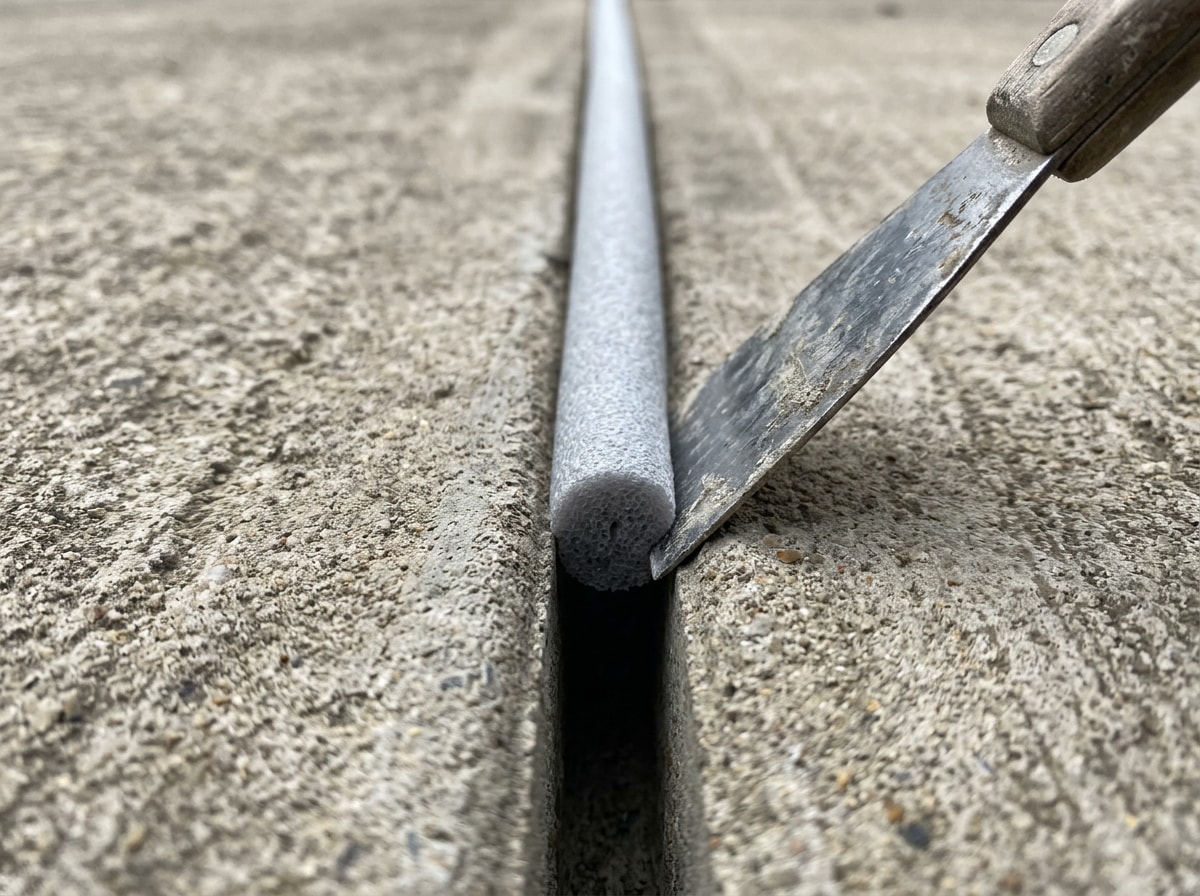
Control Joint Sealing
Control joints are designed to flex, so they still need sealant. An unsealed control joint lets water straight down to the base material, which speeds up erosion and settlement underneath. Sealing saw-cut joints is often the single most cost-effective protective step on a slab.
Smooth, Finish, Cure & Protect
After sealant goes into the joint, it gets tooled so it bonds evenly to both edges and sheds water instead of trapping it. Most flexible sealants reach full flexibility within 24 to 48 hours, though the surface becomes tack-free sooner. Keep heavy foot traffic and vehicles off freshly caulked joints during that window so the sealant isn't disturbed before it sets.
Flexible Sealant vs. Rigid Filler
The real trade-off comes down to flexibility: whether a material can move with the concrete or fights against it.
Rigid fillers, like epoxy patches and hard mortars, bond solidly to concrete. That's exactly the problem. As a slab expands and contracts through a Colorado winter, rigid material can't move with it, and the bond breaks.
Flexible sealants are built to stretch and compress with the joint instead of resisting it. Sealants are classified by movement capability, with Class 100/50, 50, 35, 25, and 12.5 ratings reflecting how much joint movement they can accommodate as a percentage of original width. A standard polyurethane product used on residential driveways carries a movement capacity of ±25%, built for the climate fluctuations that cause unsightly cracks and deterioration when they're not anticipated.
| Rigid Filler | Flexible Sealant | |
|---|---|---|
| Typical lifespan | 1–3 years | 5–10 years |
| Movement capability | Near 0% | 25–50% |
| Relative cost | Lower upfront | Moderate |
| Best use | Static, non-moving cracks | Joints and cracks that flex |
For nearly any crack or joint exposed to Front Range temperature swings, flexible sealant is the more durable choice long-term, even at a slightly higher upfront cost.
What Does Concrete Caulking Cost in East Metro & Castle Rock, CO?
Pricing depends on how many cracks or joints need attention, their length and width, and how much prep work the old sealant requires.
| Job Size | Typical Range | What's Included |
|---|---|---|
| Basic repair | $150–$350 | A handful of sidewalk joints or cracks, light prep |
| Standard driveway | $350–$600 | Most or all control joints on a single driveway |
| Extensive / whole-property | $600–$800+ | Multiple slabs, heavy prep, or failed old sealant removal |
Penetrating surface sealant for a full slab is priced by square footage rather than per joint, so ask for a specific quote if you're protecting an entire patio or driveway surface rather than individual joints. Most homeowners in Parker, Castle Rock, and Aurora land somewhere in the middle of that range. For an exact number on your project, request a free estimate.
If you're also refreshing the look of a slab while you're at it, our concrete stain colors guide for East Metro & Castle Rock covers how staining pairs with fresh joint work.
FAQ
How Often Should Concrete Caulking Be Replaced?
Quality sealant typically lasts five to ten years, depending on sun exposure, traffic, and how much the joint moves. Inspect it annually and replace it as soon as you see gaps, cracking, or separation from the concrete edge.
Should I Caulk Before or After Leveling?
After. Caulk once any leveling work is finished. Sealing first means redoing the work, and it skips the real goal: keeping water from re-entering the joints and causing the same settlement all over again.
Can I Caulk Concrete Cracks Myself, or Should I Hire a Pro?
A single hairline crack on a low-traffic walkway is a reasonable DIY job with a caulking gun and the right sealant. Driveways, patios, multiple joints, or cracks tied to settlement are a different story. A pro will grind out old failed caulk properly, size the backer rod correctly, and tool the joint so it actually bonds instead of peeling out within a season.
What's the Difference Between Concrete Caulking and Crack Filler?
Caulking uses a flexible sealant designed to move with the joint. Rigid crack fillers, like epoxy and hard mortar patches, bond solid and don't flex. On a static interior crack that never moves, rigid filler can work. On any exterior joint exposed to Colorado's temperature swings, flexible sealant holds up far longer.
Do I Need Backer Rod for Every Crack?
No. It's useful on deeper cracks and joints where it controls sealant depth and improves how the joint handles movement. Shallow cracks usually don't need it.
What Causes Concrete to Crack in Colorado?
Soil settlement, freeze-thaw cycles, tree roots, improper installation, heavy loads, and normal aging all contribute. In Douglas County specifically, expansive clay soil and wide temperature swings make cracking especially common, which is why joints often fail well before the slab itself has any structural problem.
Caulking is maintenance, not a one-time fix. If your driveway, patio, or walkway in East Metro or Castle Rock has open joints, spalling edges, or cracks that keep coming back, contact the team at Peppers Land Design for a free inspection. We'll tell you whether sealing alone does the job or if leveling needs to happen first, and you can browse recent concrete and hardscape projects on our site before you book.