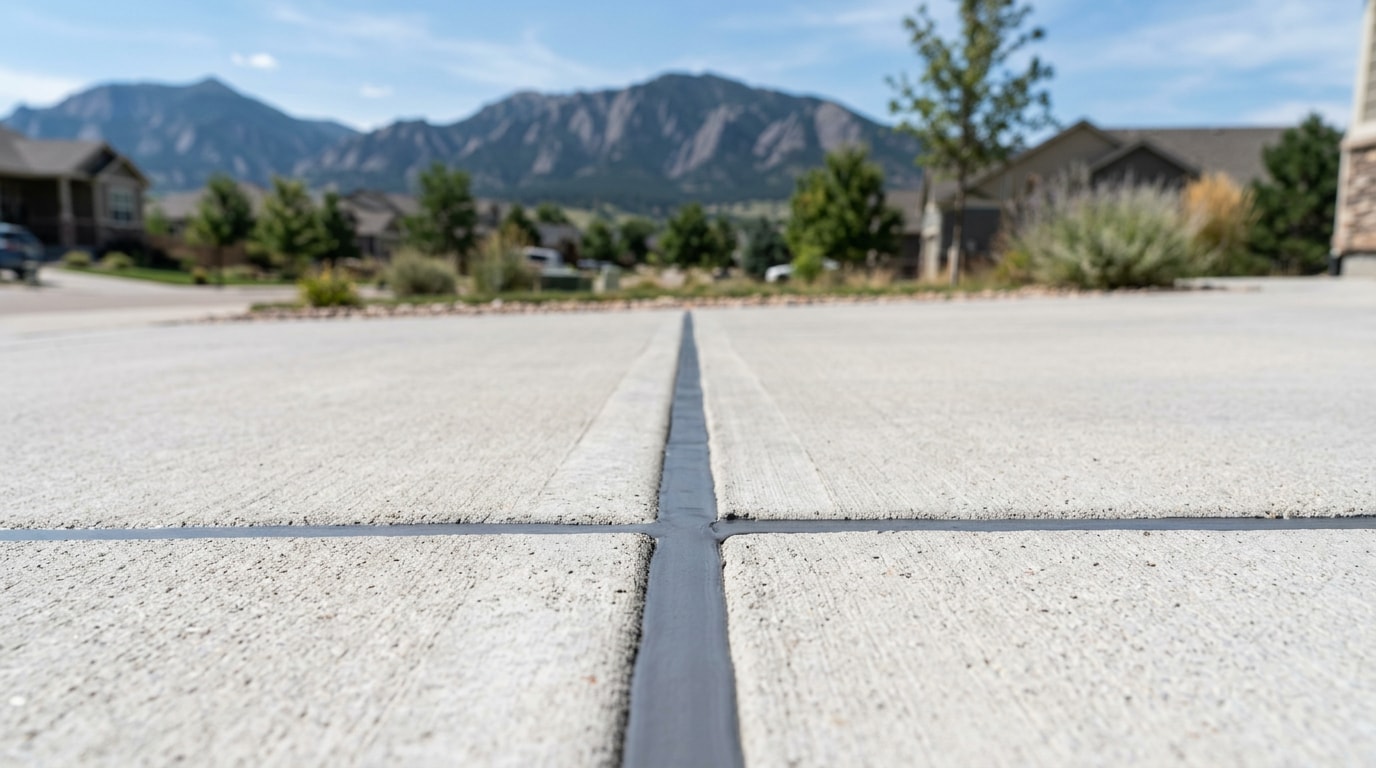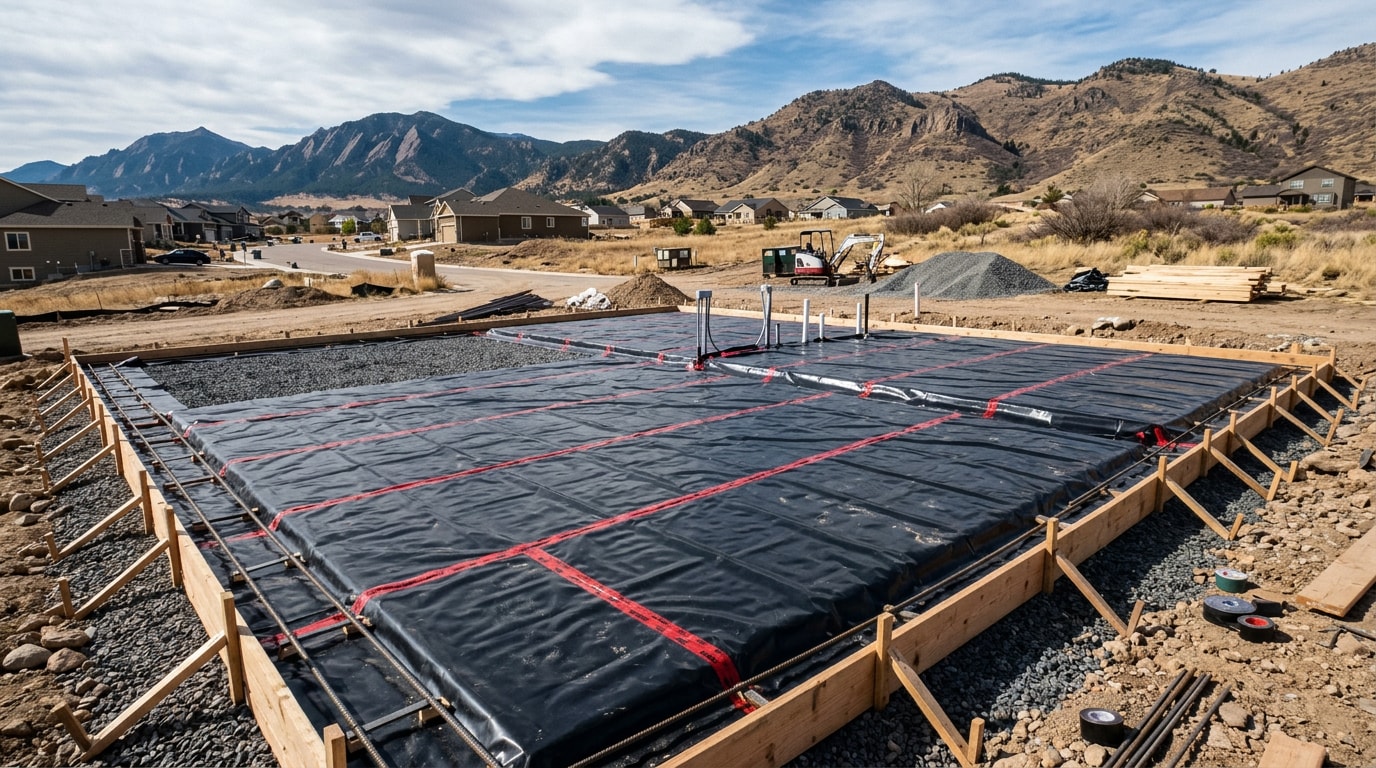
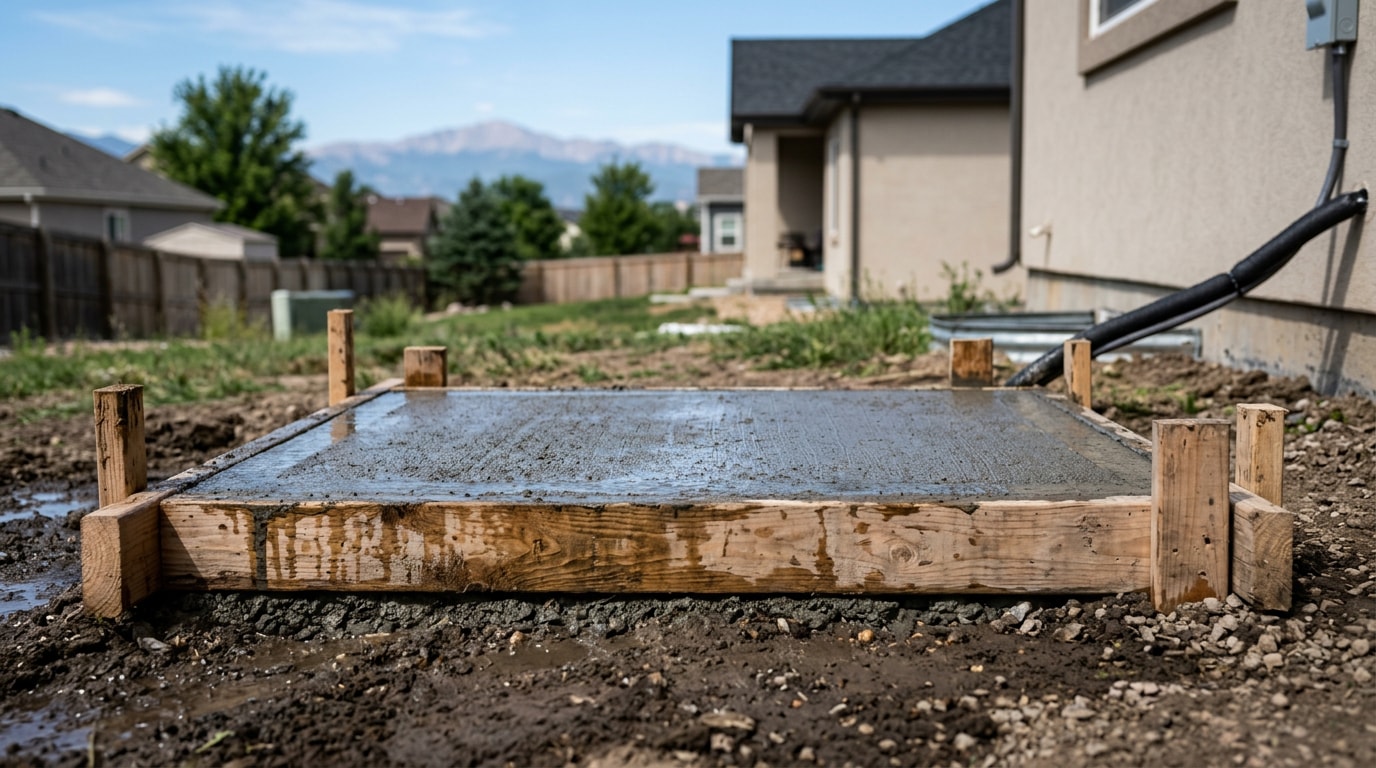
A dry pour concrete slab in Downtown Denver & Cherry Creek, CO lets you skip the ready-mix truck for small jobs like a firewood pad, an AC unit base, or a shed floor. Instead of mixing water in first, you pour dry bagged mix straight into a form and water it in place. This guide covers the full process, where the method holds up, and where Denver's thin air and late-spring freezes change the rules other guides won't mention.
Visit Peppers Landesign Services to see our services and request a free estimate.
What Is Dry Pour Concrete?
Dry pour concrete, also called "dry pack," refers to placing dry concrete mix, typically straight from the bag, into a form, hole, or prepared area, and then adding water over the top without mixing it first. It's a legitimate shortcut for small, low-load pads. It isn't a substitute for a driveway, a walkable patio, or anything that needs to carry structural weight.
Denver-area homeowners deal with a few variables a generic how-to skips. The air is thin and dry, the sun at altitude is intense, and hard freezes can hit Cherry Creek and Downtown Denver into early May most years. Those conditions make watering, not the pour itself, the step most likely to trip up a first-time dry pour here. On jobs we've walked near Cherry Creek, a slab poured in direct afternoon sun needs misting far sooner than one poured in morning shade.
How to Dry Pour a Concrete Slab Step by Step
Good results come down to prep, a steady pour, and careful screeding. None of the individual steps are hard, but skipping one shows up later as a weak spot or an uneven surface.
Tools and materials you'll need:
- 2×4 or 2×6 lumber for the form
- Stakes and screws to hold the form square
- Wire mesh for light reinforcement
- Bagged dry concrete mix, enough for your pad's area and thickness
- A garden hose with a mist or fan nozzle
- A straight board for screeding
- Compacted gravel for the sub-base
- A hand tamper and an edging tool
Dry pour concrete steps:
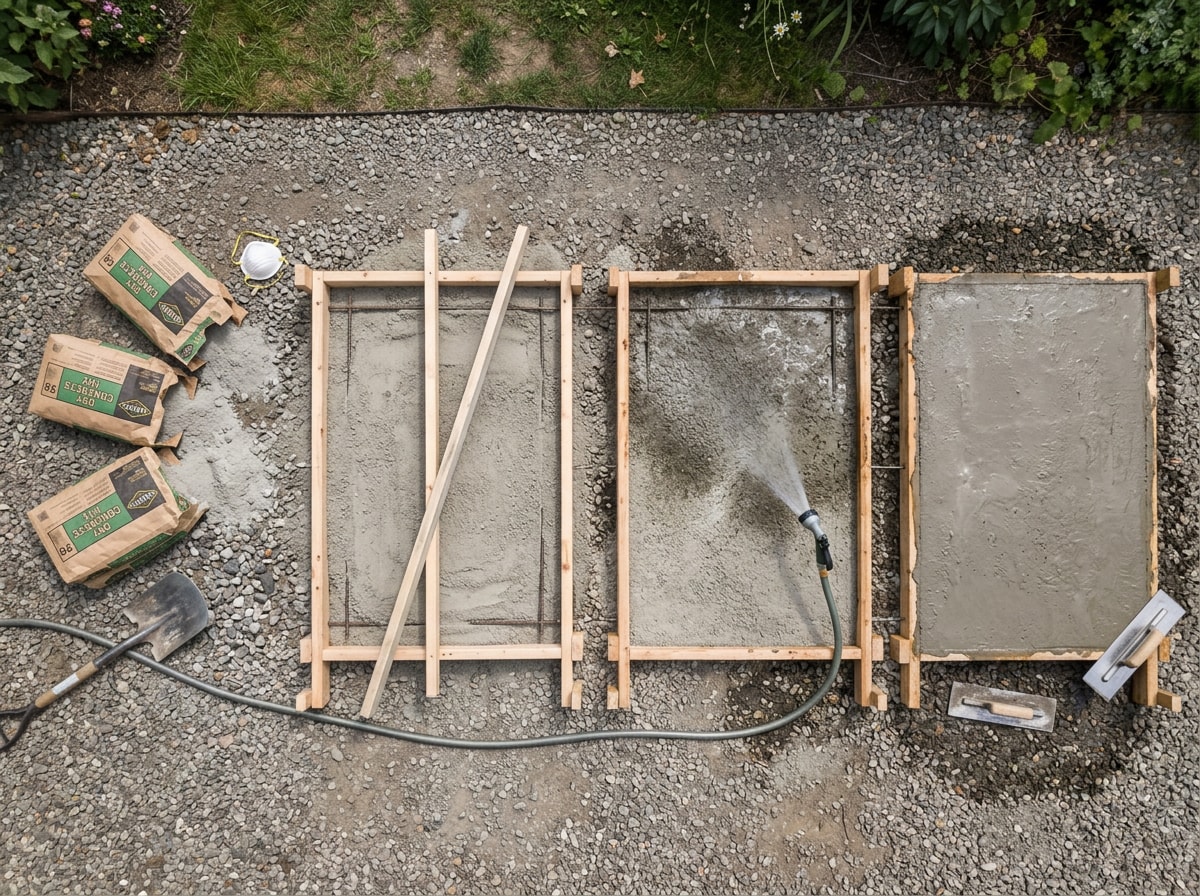
- Prep the site. Excavate a few inches, add compacted gravel, and slope the area away from any structure.
- Build the form. Set 2×4s on level ground with a slight slope for water runoff, then stake them in place.
- Add reinforcement. Lay wire mesh inside the form to help hold the slab together as it cures.
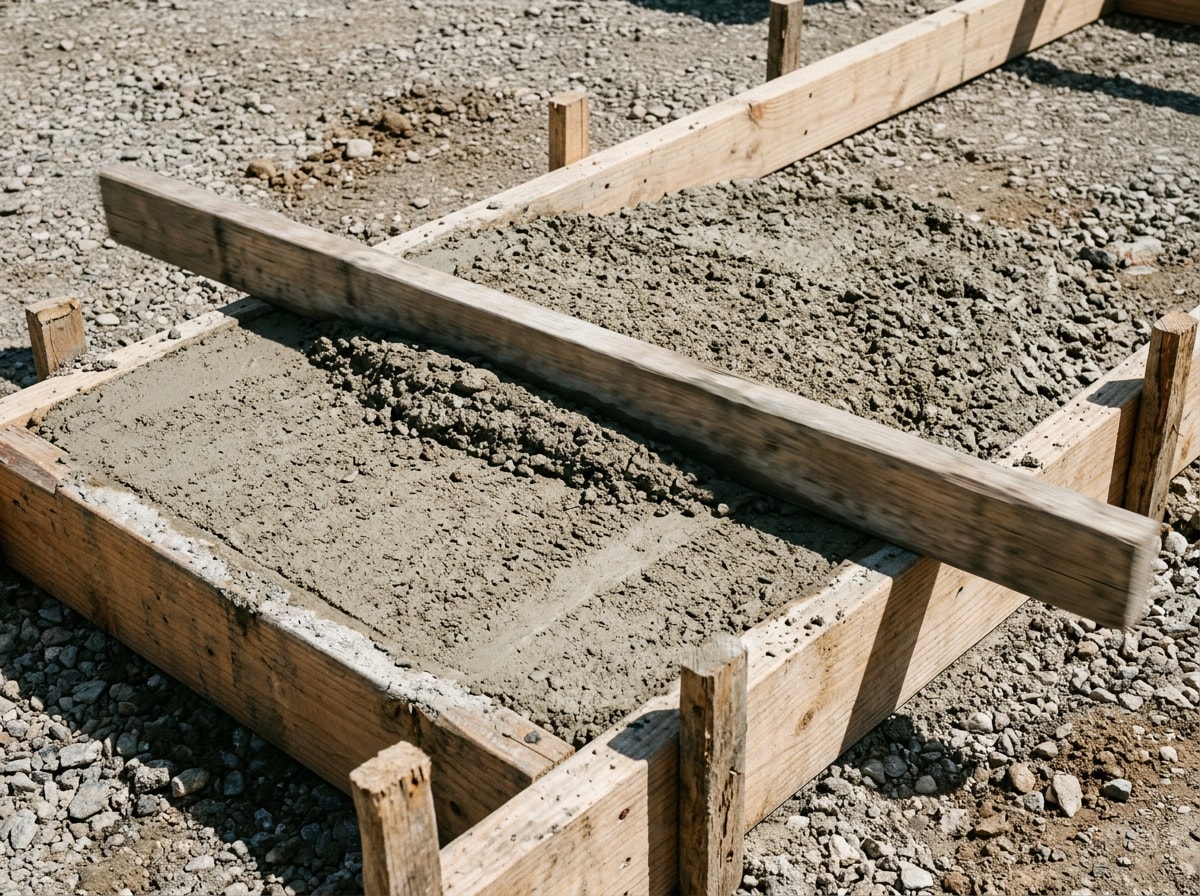
- Pour the dry mix. Slice open the bags and dump the dry concrete directly into the form, filling it evenly to the top edge.
- Screed the surface. Drag your screed board across the form in a side-to-side, see-saw motion instead of back-to-front. This packs the mix more evenly and avoids dragging dry material out of low spots.
- Compact and edge. Gently tamp the surface and run an edging tool along the form before you start watering.
This is also the point to decide whether a DIY pour fits your project, or whether a quick call to a local crew saves a redo. For larger or load-bearing work, a look at our concrete installation services is worth it before you commit to dry pour.
Wetting and Curing a Dry Pour Slab in Denver's Climate
Watering is where most dry pour projects succeed or fail. Once the dry mix is screeded and compacted, mist the slab by hand roughly once an hour for about six hours. Let water soak in gradually instead of flooding the surface.
Use a mist or fan setting, never a direct jet. A strong blast displaces the dry mix and creates uneven, weak spots before the concrete has a chance to set. Gentle, repeated misting lets water work its way down through the mix at a controlled pace.
Curing properly means keeping the slab damp and protected for several days, not just the first six hours. This prevents shrinkage cracks, surface dusting, and early deterioration. Low humidity and high-altitude sun pull surface moisture out of concrete faster here than in wetter climates, so local slabs often need more frequent misting sessions than a generic guide would suggest.
Timing matters too. Denver's average date of last freeze is May 5th , but the latest recorded freeze on record hit June 8, 2007 . A slab poured and curing during a late cold snap can see hydration slow or stall partway through. If you want a deeper look at how long fresh concrete needs before it can safely bear weight in this region, our guide on how long concrete should cure before you put weight on it breaks down the timeline by project type.
Dry Pour vs. Wet Pour: Comparing the Techniques
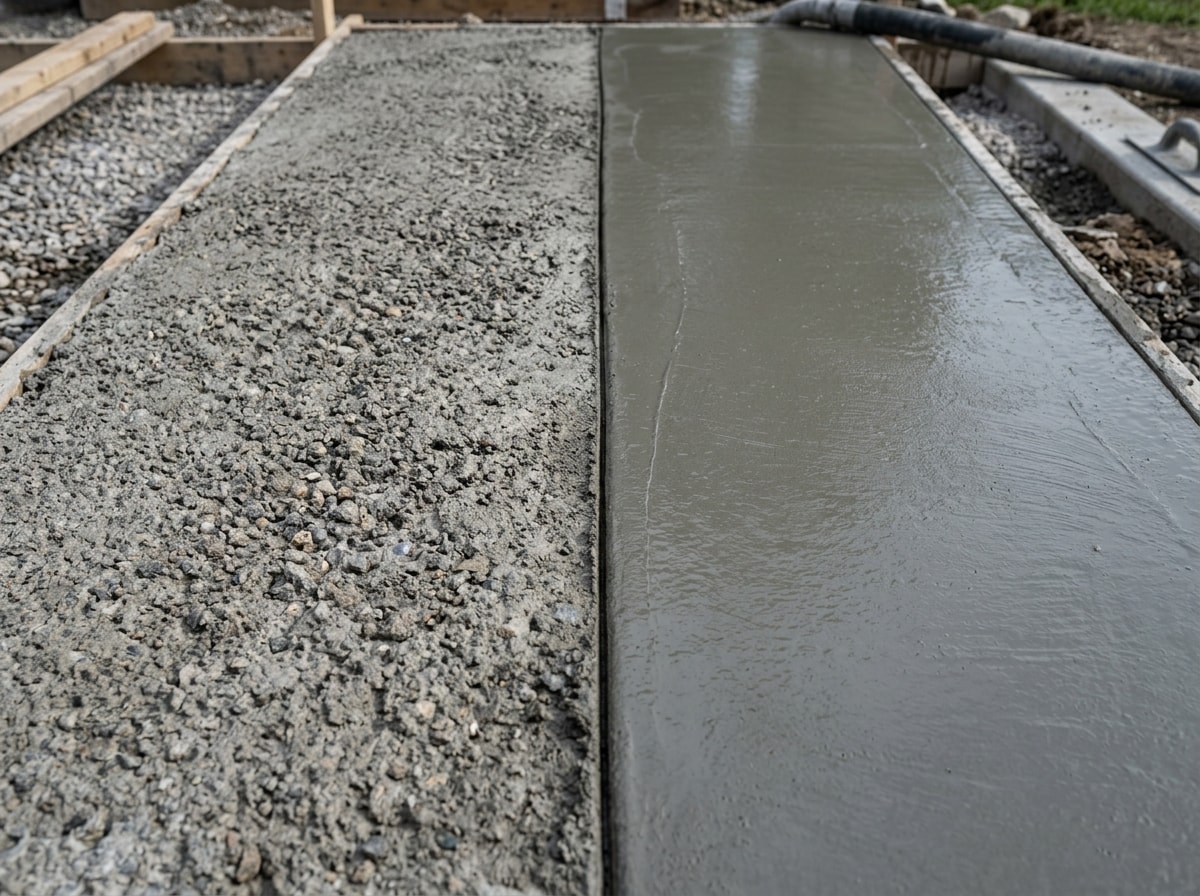
The biggest trade-off comes down to control. With a traditional pour, the water-to-cement ratio is measured before the mix ever touches the form, so the crew knows roughly what strength to expect. With dry pour, water soaks in unevenly, and there's no reliable way to confirm the mix is fully saturated.
| Factor | Dry Pour | Wet Pour (Traditional) |
|---|---|---|
| Mixing process | Water added after mix is in the form | Mixed to a set ratio before pouring |
| Typical strength | Often below 2,500 PSI, variable | Commonly 3,000–4,000+ PSI, engineered |
| Labor/equipment | Low, hand tools, no mixer needed | Higher, mixer or ready-mix delivery |
| Best uses | Small, low-load pads | Driveways, patios, footings, structural slabs |
| Strength predictability | Inconsistent across the slab | Well-documented cure curve |
The International Building Code and the ACI 318 standard set a minimum specified compressive strength of 2,500 psi for structural concrete. A dry pour slab often falls short of that benchmark in sections that don't hydrate evenly, which is exactly why it's reserved for non-structural pads.
Benefits and Drawbacks of Dry Pour Concrete
Weighing dry pour against a traditional pour comes down to convenience versus consistency.
Benefits:
- Pre-measured bagged mix keeps cement and aggregate proportions even going into the form.
- Faster to install. No mixer, no ready-mix delivery window to coordinate around.
- Lower labor and equipment needs, which matters for a one-person weekend project.
Drawbacks:
- Uneven water distribution is the core risk. Sections that don't hydrate evenly end up with real weak spots and lower compressive strength.
- Overall mix quality is harder to verify than with a batched, wet-mixed pour.
- Dry pour slabs often need more ongoing maintenance and show surface wear sooner.
When Dry Pour Works, and When to Call a Pro
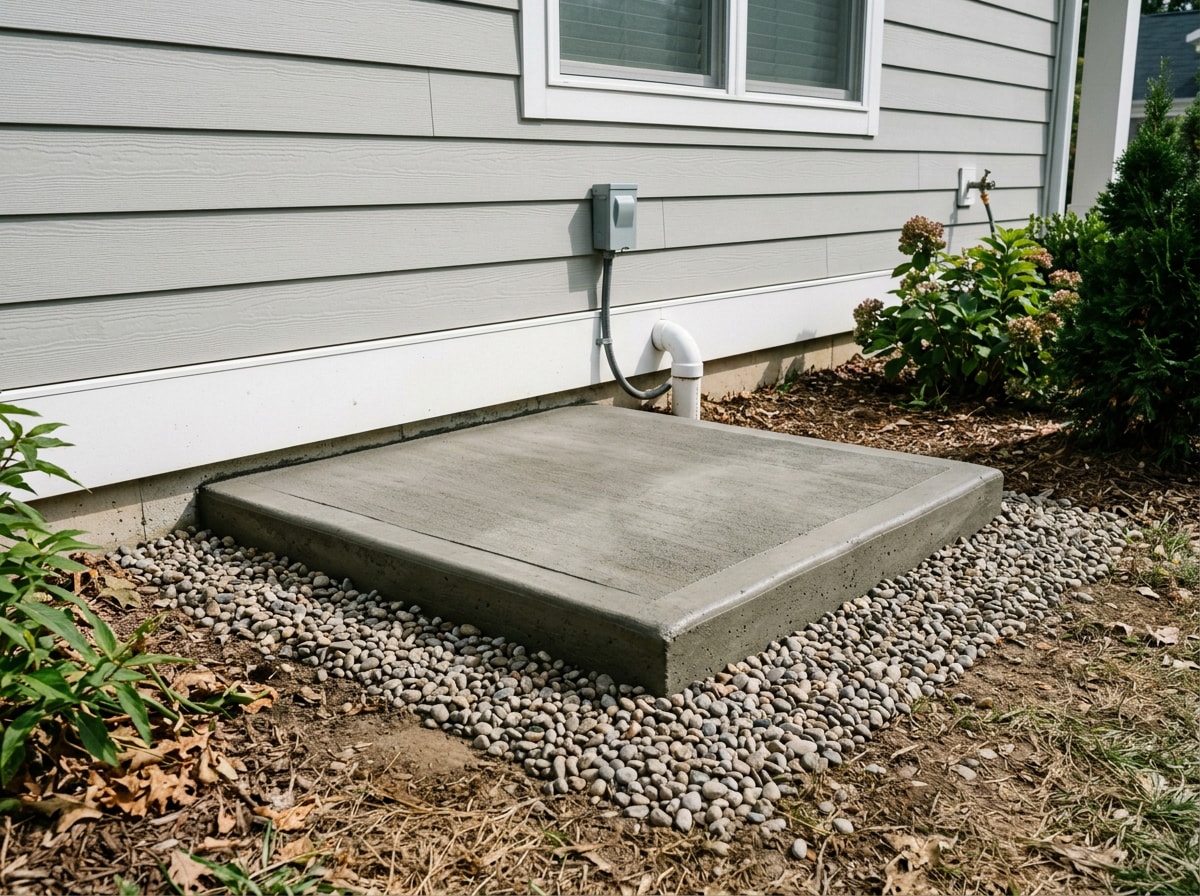
Dry pour limitations mostly come down to load and size. It's a solid fit for a small pad, think firewood platforms, AC condenser pads, or a modest shed base. It's not a substitute for a driveway, a patio people walk on daily, or any footing carrying structural weight.
Temperature matters just as much as load. Temperature of placed concrete should be maintained above 50°F , since colder temperatures slow the hydration reaction and create inconsistent curing across the slab. That's a real constraint here, where overnight lows can sit below that threshold well into spring and return early in fall, shrinking the realistic pour season more than homeowners from milder climates might expect.
If your project sits anywhere near the line between a low-load slab and something load-bearing, it's worth a conversation before you commit. Browse recent work on our projects page, or get a free estimate and we'll tell you straight whether dry pour fits or whether you need a scheduled pour.
FAQ
Is dry pour concrete strong?
Dry pour concrete is strong enough for small, low-load slabs like firewood pads, AC pads, and small shed bases. It's generally weaker and less consistent than traditional wet-mixed concrete, often falling short of the 2,500 psi minimum set for structural work.
Can dry pour concrete be used outdoors?
Yes, for appropriately sized outdoor pads. The main risk is exposure. Rain or a freeze before the slab fully cures can weaken it, so timing the pour around stable weather matters more in Denver's swing seasons than in milder climates.
Can you dry pour concrete for a shed foundation?
Small, light sheds on a modest pad are generally fine. Larger sheds, or anything with meaningful floor loads, usually call for a wet pour or at least a quick check with a professional. Reach out with your project details if you're unsure which category yours falls into.
How long does a dry pour slab take to cure?
Plan on misting hourly for about six hours on the pour day, then keeping the slab damp for several more days. Full strength develops over weeks, similar to a wet pour, but the strength you end up with is less predictable.
Can you dry pour concrete in cold weather?
Avoid it below roughly 50°F. Cold slows hydration and creates cold spots that cure unevenly. Given Denver's typical frost pattern, most homeowners here get a reliable window from mid-May through September.
What's the biggest mistake people make with dry pour concrete?
The two most common mistakes are blasting water from the hose instead of misting, which displaces the dry mix and creates weak pockets, and screeding back-to-front instead of side-to-side, which leaves the surface uneven.
If your slab needs to handle real weight or daily foot traffic, {{SITE_URL}}/ builds concrete flatwork across Downtown Denver and Cherry Creek that's engineered for it, not watered into shape. See our local coverage area on the Downtown Denver & Cherry Creek page or explore the full hardscape contractor services we offer.
About the Author
This guide was reviewed by the hardscape team at Pepper's Land Design, a Denver-area landscape, hardscape, and fence contractor that has installed concrete flatwork throughout Downtown Denver, Cherry Creek, and the surrounding metro for years. Questions about your specific slab? Contact our team for a free estimate.