Concrete screws in Denver Metro, CO have to survive freeze-thaw cycles, de-icing salt, and some of the hardest cured slabs along the Front Range, so the fastener aisle at the hardware store rarely tells the whole story. Our hardscape crews drive these screws into footings, ledgers, and fence hardware on jobs across the metro every week, and the gap between a screw that holds for 20 years and one that strips out in month three almost always comes down to three decisions made before the drill ever touches concrete. Here's how to make those calls correctly.
What Are Concrete Screws & How Do They Work?
Concrete screws are self-tapping masonry fasteners with hardened threads that cut their own grooves into a pre-drilled pilot hole, creating a tight mechanical lock in solid masonry. A standard wood screw strips almost instantly when driven into cured concrete because the material is too dense and brittle to deform around the threads.
Concrete screws solve that problem with a thread-cutting design. Unlike expansion anchors, concrete screws cut their own threads directly into concrete as they're driven , so the screw itself becomes the anchor rather than relying on a separate expanding sleeve.
Three terms get used almost interchangeably at the hardware counter, which causes confusion:
- Concrete screw and masonry screw usually refer to the same thread-cutting fastener family.
- Concrete anchor is the broader category that also includes wedge anchors, sleeve anchors, and expansion bolts, mechanically different products that work alongside, not instead of, screws.
- Knowing which one you actually need saves a return trip to the store.
How to Install Concrete Screws: Step-by-Step
Tools You'll Need
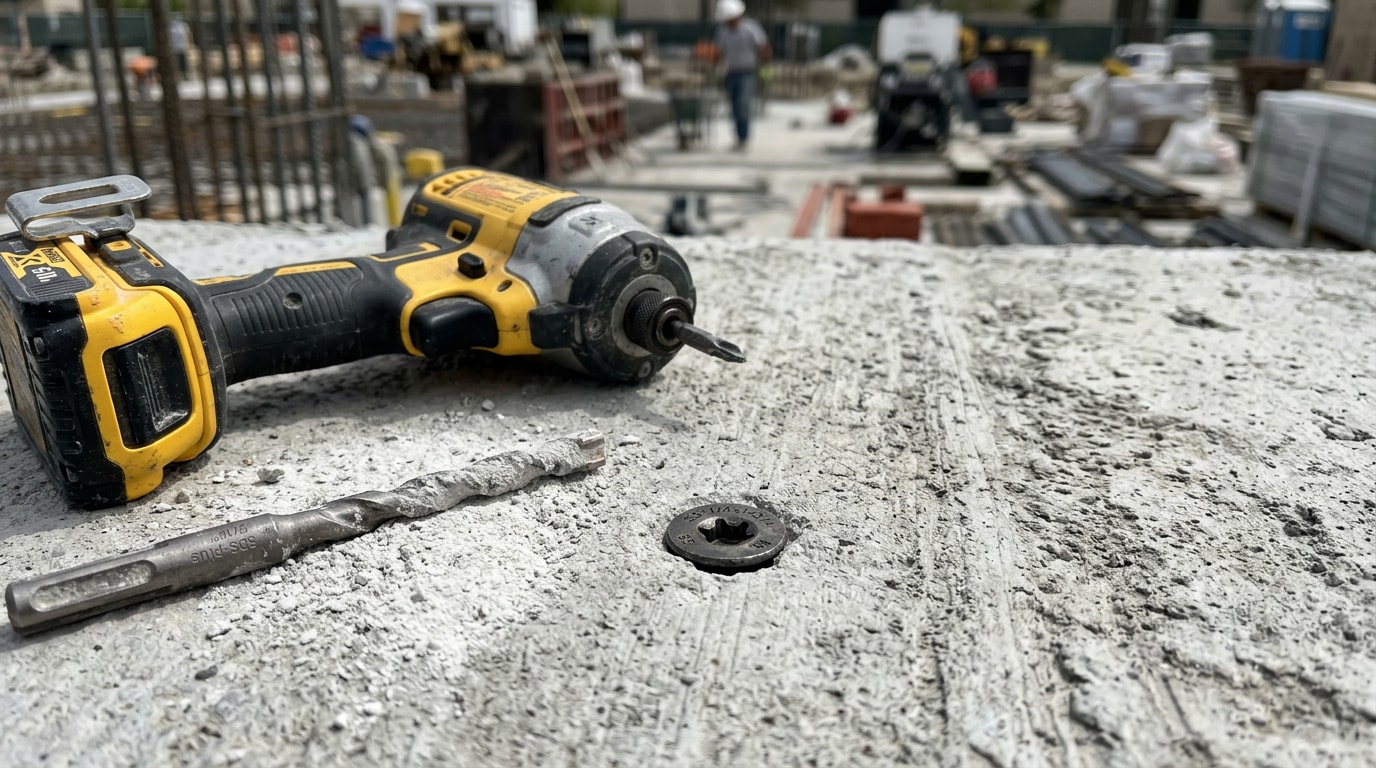
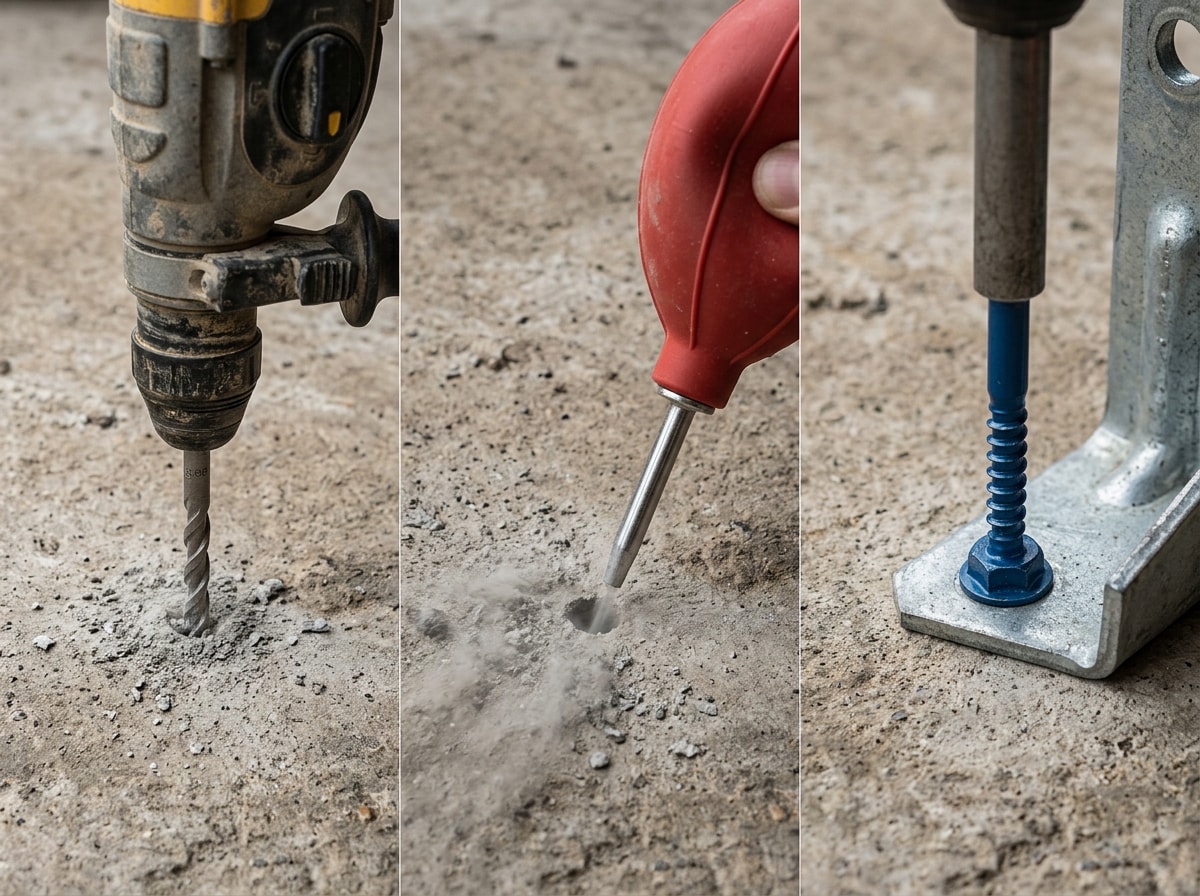
Before drilling, gather a short checklist: a hammer drill, a carbide-tipped masonry bit matched to the screw's rated diameter, a blow-out bulb or stiff nylon brush for dust removal, and a variable-speed driver. Having all four on hand before you start prevents mid-job trips back to the truck.
A standard rotary drill will not get you there. A standard rotary drill will not penetrate concrete cleanly , which is why a hammer drill is non-negotiable for anything but the softest mortar joints.
Step-by-Step Sequence
- Mark your hole location and confirm you're at least five screw-diameters from any slab edge.
- Select the correct bit diameter.
The screw requires the correct diameter of hole for the diameter of the screw being installed; a 1/4-inch screw needs a 3/16-inch hole, and a 3/16-inch screw needs a 5/32-inch hole .
- Drill the pilot hole deep enough.
The hole needs to be drilled to a length that ensures the screw, once fully installed, does not bottom out . Recommended embedment depth runs 1 inch to 1-3/4 inches into concrete , but always check the manufacturer's spec for your specific screw length.
- Clean the hole using the blow-brush-blow method: blow out loose dust, scrub the walls with the brush, then blow it out again. Skipping this step is one of the most common causes of reduced holding power.
- Drive the screw at a steady, moderate speed.
Use a variable-speed drill or driver, not an impact driver at full torque, which can over-drive the screw .
- Stop once the head seats flush. Driving past that point strips the hole and ruins the connection.
One Denver-specific wrinkle: slabs poured before the 1980s tend to be noticeably harder and more brittle than newer pours, which increases bit wear and the risk of edge spalling. Go slower and check bit sharpness more often on older concrete.
Common Mistakes That Ruin a Concrete Screw Install
- Wrong pilot hole size. Even a fraction of an inch off either prevents thread engagement or makes the screw nearly impossible to drive.
- Skipping dust removal. Leftover dust cushions the threads against the hole wall and dramatically reduces pull-out strength even when everything else was done right. Thorough hole cleaning also limits airborne dust, which matters because
federal rules protect construction workers from the respirable crystalline silica dust created when cutting, grinding, drilling, or crushing concrete, stone, brick, and mortar , as detailed in OSHA's construction silica standard.
- Over-torquing. The threads spin freely in a hole that's lost its grip, usually because the driver kept going past the seated point.
- Installing too close to an edge.
Install concrete screws at least five times the screw diameter from any edge to avoid spalling or cracking the surrounding material.
Pro Tips for a Clean Install
Use a driver with an adjustable clutch so the tool stops delivering torque once the screw seats. Test-fit a screw in scrap concrete first if you're unsure about bit size. Mark every hole with a center punch before drilling, since a wandering bit on a hard, textured slab is a common source of misaligned holes.
Choosing the Right Concrete Screw for Denver's Climate
Head style is the first decision: hex head screws accept a nut-driver or socket and suit structural or repeated-torque applications, while flat head screws sit flush for trim, electrical boxes, and anywhere a protruding head would interfere.
Diameter is the second variable. Standard 3/16-inch screws cover most light-duty anchoring, but a larger-diameter screw (1/4-inch or 3/8-inch) delivers meaningfully higher pull-out strength for heavier fixtures like handrails or equipment mounts.
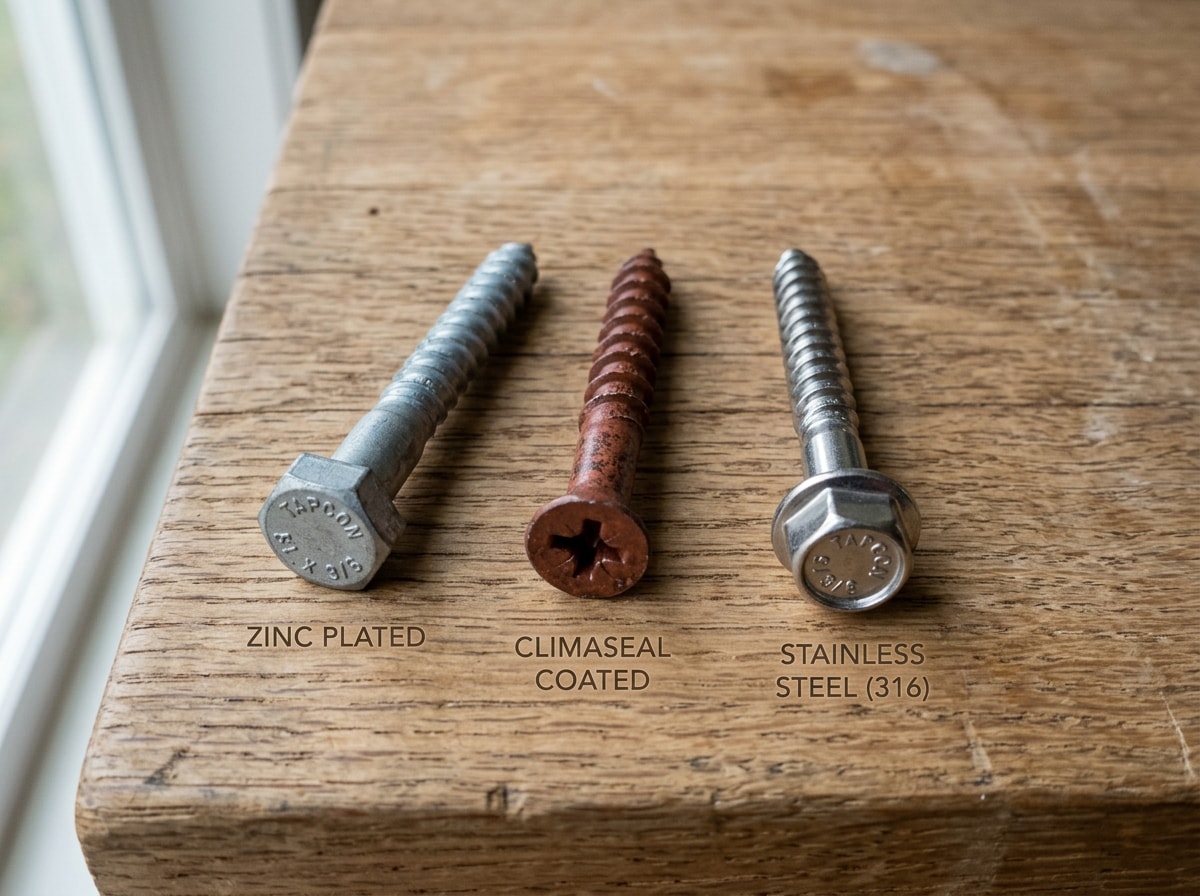
Coating matters most along the Front Range. Blue Climaseal coatings handle indoor, dry-climate use fine, but Denver's freeze-thaw cycles and winter de-icing salt accelerate corrosion on exposed exterior fasteners. For outdoor decks, patios, or anything near a driveway, a stainless or mechanically galvanized screw resists that cycle far longer than standard zinc-plated hardware, even though it costs more upfront.
Concrete Screws vs. Other Masonry Anchors
Concrete screws aren't the right tool for every masonry job. The decision comes down to load, substrate, and whether you'll ever need to remove the fastener.
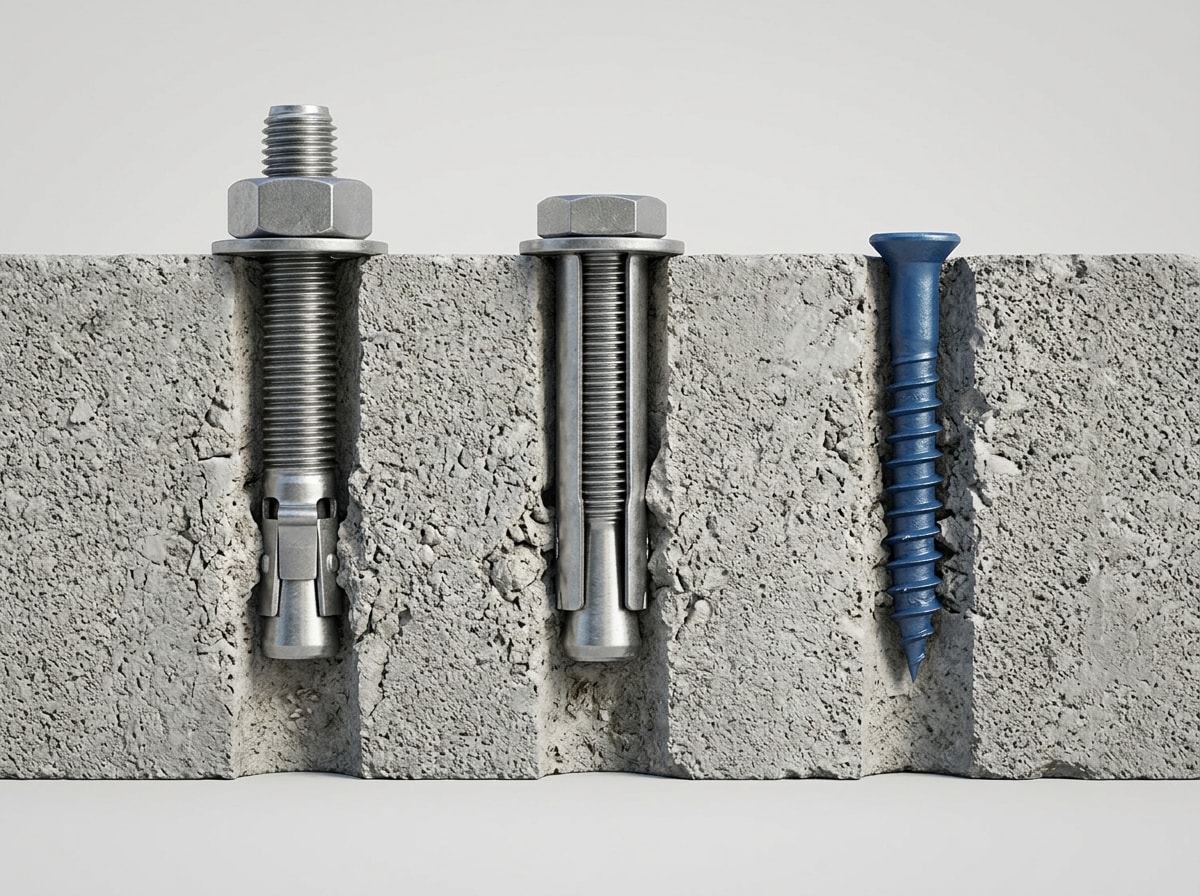
Wedge anchors are built for solid concrete only and deliver the highest holding power available in a mechanical fastener, making them the standard choice for structural loads like ledger boards or heavy equipment bases. Sleeve anchors expand as they're tightened, which suits brick, block, or mortar joints where a wedge anchor's single expansion point might crack the material.
Concrete screws sit in the middle. They're the practical choice for light-to-medium loads, shelving, conduit straps, furring strips, and fixture mounts, where speed and clean removal matter more than maximum holding power.
Standard screws also have a hard limit worth knowing before you spec one for a structural job. Standard thread-cutting screws are not rated for cracked concrete or seismic applications, which are mandatory considerations in most commercial building codes, so anchors used in those conditions must carry an ICC-ES evaluation report confirming performance in cracked concrete . Simpson Strong-Tie's Titen HD heavy-duty screw anchor is one of the more common upgrades for that job; it has been tested and shown to provide outstanding performance in cracked and uncracked concrete under both static and seismic loading conditions .
Load Capacity & Safe Working Loads
Safe working load should never exceed roughly a quarter of an anchor's tested ultimate load. A safety factor of 4:1, or 25%, is generally accepted as a safe working load for concrete anchors. In plain terms: if a screw is rated for 800 lbs of ultimate tension, don't load it past about 200 lbs in real-world use.
This isn't a conservative suggestion, it's standard practice, because pull-out strength varies with concrete quality, temperature, and moisture in ways a single lab number can't fully capture. For projects where reinforcement and fastener loads both matter, like a new footing or slab extension, our guide to concrete rebar in Denver Metro, CO covers how reinforcement placement affects what a slab can safely hold.
Best Concrete Screw & Anchor Kits Compared
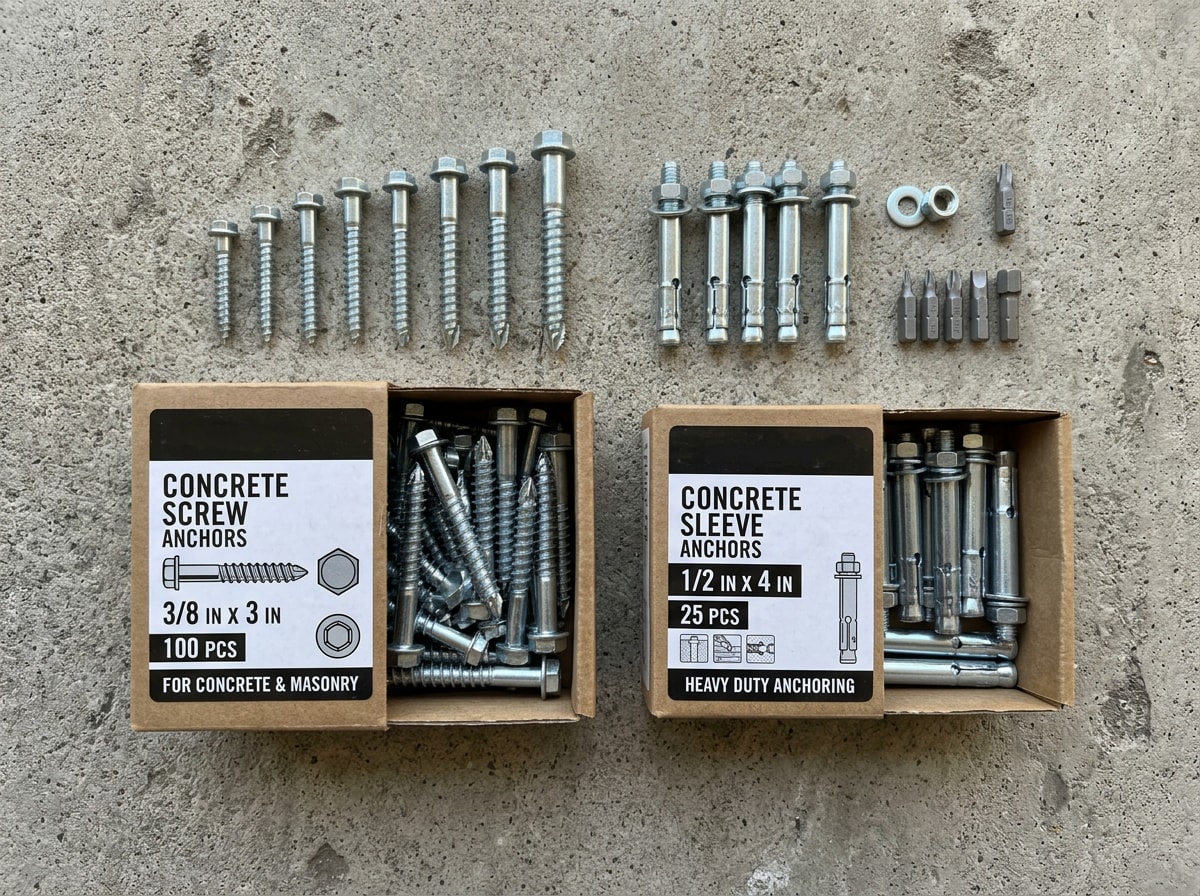
For most light-to-medium jobs, a Tapcon-style screw kit is the best all-around starter option. It installs with a standard hammer drill, works in concrete, brick, and block, and backs out cleanly if you need to remove it later. On hollow block, these screws are limited to the solid face shells, not the hollow cores, so they're not a substitute for a true masonry anchor in that application.
When a job calls for more holding power, Simpson Strong-Tie's Titen HD steps up as a heavy-duty screw anchor rated for meaningfully higher loads, making it a common choice for structural brackets and ledger connections.
| Kit | Best For | Approx. 2026 Price (25-pack) | Removable? | Denver Notes |
|---|---|---|---|---|
| Tapcon Standard | Light-duty, brick/block/concrete | $18-$28 | Yes | Good for interior and covered exterior use |
| Simpson Titen HD | Structural, heavier fixtures | $35-$55 | Yes | Rated for cracked concrete and seismic loads |
| Hillman Sleeve Anchor | Older brick/block homes | $20-$32 | No | Better grip in softer, older mortar joints |
| Stainless Tapcon | Exposed outdoor, freeze-thaw zones | $30-$45 | Yes | Best choice for Front Range winters |
These are general market ranges, not quotes from a specific retailer, so confirm current pricing before you buy. For Denver's older brick and block neighborhoods, a sleeve anchor often outperforms a screw in aging, softer mortar joints. Newer poured-concrete construction in suburban developments generally favors a straightforward Tapcon or Titen HD install, with a stainless or galvanized coating recommended anywhere the fastener faces direct weather exposure.
Stick to brands backed by a current ICC-ES evaluation report, since that testing covers performance in cracked and uncracked concrete under real load conditions, not just a marketing claim. ICC-ES Evaluation Report ESR-2202, reissued in October 2024, evaluates Tapcon screw anchors for use in uncracked concrete for compliance with current International Building Codes , and that report is a useful reference before specifying anything load-bearing. You can review the full ICC-ES evaluation report directly.
When Denver Metro Homeowners Call a Professional Instead
Concrete screws handle plenty of DIY work, shelving, conduit, fence brackets, trim. They stop being a DIY decision the moment a fastener carries structural load: a deck ledger bolted to a foundation wall, a patio cover post base anchored to a new slab, or a retaining wall cap tied into an existing footing. Our crews see failed ledger connections more often than any other fastener-related callback, usually from an undersized screw or a pilot hole drilled a size too big.
If your project involves a deck installation, a fence installation that needs posts anchored to existing concrete, or a new concrete installation that will carry fasteners later, it's worth having a contractor spec the anchor before the slab is even poured. Get a free estimate and we'll walk your project in person before you buy a single screw.
Homeowners anywhere in the Denver Metro, CO area can reach our team through that same page for questions specific to their slab age, substrate, or load.
FAQ
Can I Install Concrete Screws With Just a Regular Drill?
Most concrete screws require a hammer drill, since standard drills lack the percussive action needed to bore efficiently through cured concrete. The narrow exception is very small-diameter screws in softer masonry, which some installers manage with a regular drill, though results are slower and less consistent.
Do I Need to Pre-Drill for Concrete Screws?
Yes, always. Concrete screws cut threads into the sidewalls of a pre-drilled pilot hole; they don't drive directly into solid concrete the way a wood screw drives into lumber. Skipping the pilot hole or using the wrong bit size is the fastest way to strip a screw or crack the surrounding material.
What's the Minimum Edge Distance for a Concrete Screw?
Keep every screw at least five times its diameter away from any slab or block edge. A 1/4-inch screw needs roughly 1-1/4 inches of clearance; going tighter risks spalling or cracking the material under the screw's cutting action.
Can Standard Concrete Screws Be Used in Cracked Concrete or Seismic Zones?
No. Standard thread-cutting screws are rated for uncracked concrete only. Projects in cracked concrete, seismic design categories, or post-tensioned slabs need an anchor with an ICC-ES evaluation report confirming performance under those specific conditions, such as Simpson Strong-Tie's Titen HD.
What's the Difference Between a Concrete Screw and a Masonry Screw?
In practice, these terms are used interchangeably across the trade and refer to the same self-tapping, thread-cutting fastener. Some manufacturers use "masonry screw" more broadly to include brick and block applications, but the product itself is typically identical.
Can I Reuse a Concrete Screw?
A concrete screw can technically be removed and reinstalled into the same hole, but it's not recommended for load-bearing use. Reinserting it degrades the original thread grooves, which significantly reduces holding power the second time around.
What Is the Safe Working Load Calculation for Concrete Anchors?
Safe working load is calculated by applying a 4:1 safety factor to the anchor's tested ultimate load capacity, meaning working load shouldn't exceed about 25% of that rated maximum. This margin accounts for real-world variables like concrete condition, moisture, and installation quality. For help applying that math to your specific project, visit {{SITE_URL}}/ or reach out through our contact page.