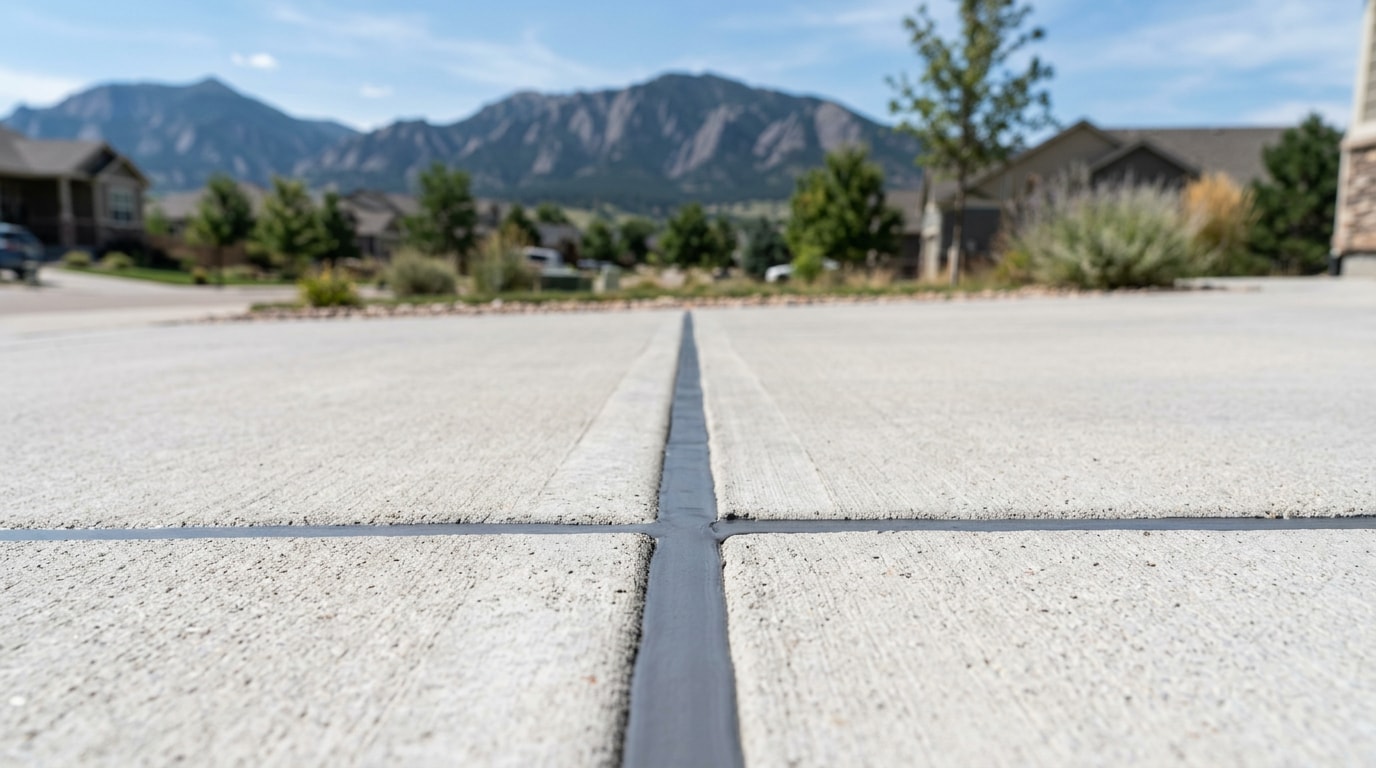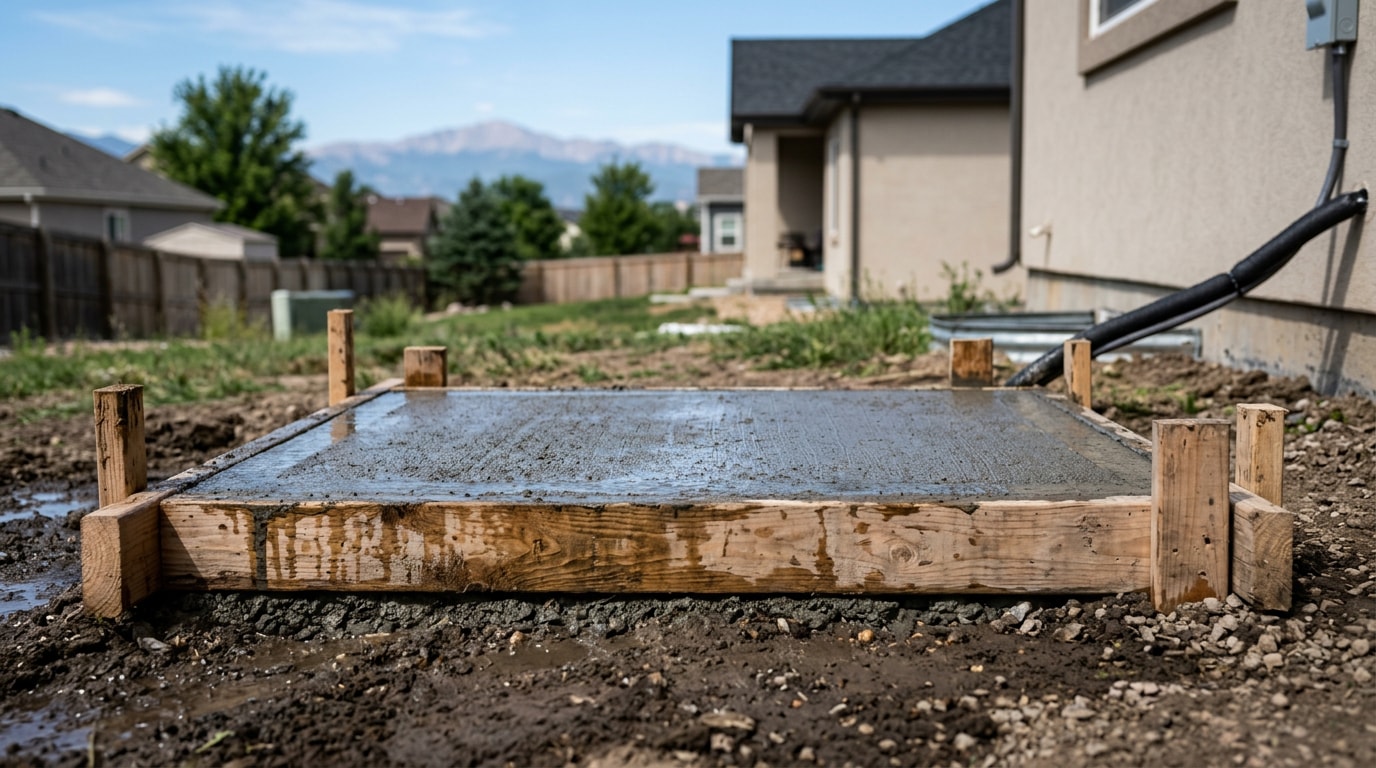
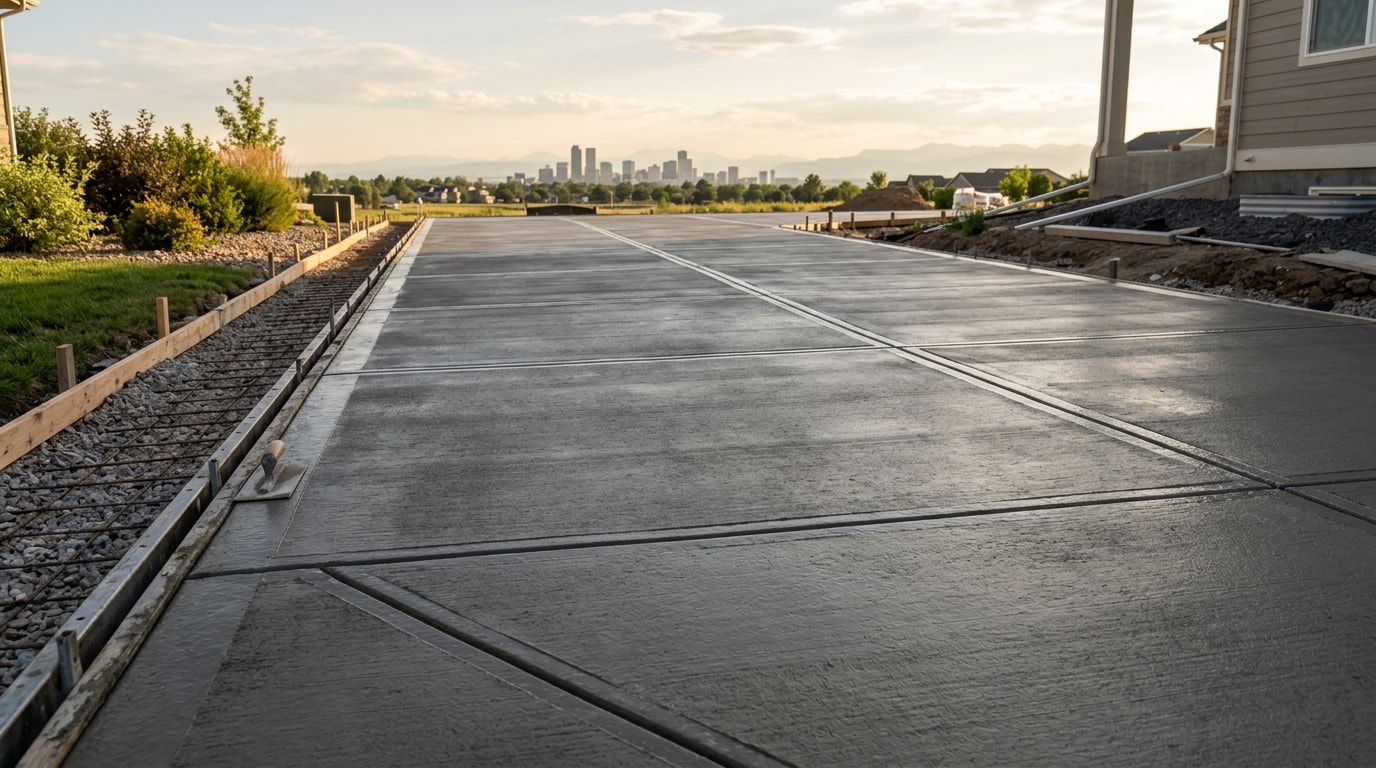
How long should concrete cure before putting weight on it in Downtown Denver & Cherry Creek, CO? Plan on 24 to 48 hours before walking on it, about 7 days before parking a car on it, and the full 28 days before anything heavy touches the slab. Denver's thin, dry air at 5,280 feet speeds up surface drying, which tricks a lot of homeowners into loading a driveway or patio long before it's actually ready underneath.
Quick Answer: Concrete Cure Times Before Weight
Here's the version you can screenshot and send to whoever's asking if it's okay to park on the new driveway yet.
| Time After Pour | What's Safe |
|---|---|
| 24–48 hours | Light foot traffic only |
| 3–7 days | Light furniture, bikes, foot carts |
| 7 days | Passenger vehicles, moderate loads |
| 14 days | Most normal residential use |
| 28 days | Heavy vehicles, hot tubs, full structural load |
These numbers assume a standard residential mix poured in moderate weather. Cold snaps, a fast-set additive, or a thick structural slab can shift every column in that table, which is exactly why the rest of this guide exists.
What Is Concrete Curing, and Why "Dry" Doesn't Mean "Ready"
Concrete curing is the chemical reaction between cement and water, called hydration, that builds strength over weeks rather than hours. It is not the same thing as drying, and mixing the two up is the single most common reason homeowners load a slab too early.
Surface moisture can evaporate in a matter of hours, especially under Colorado's intense high-altitude sun. A driveway that looks bone-dry the day after a pour has only lost surface water; it hasn't come close to building the internal strength needed for a car, let alone a trailer. According to the National Ready Mixed Concrete Association, external curing maintains newly placed concrete at adequate moisture and temperature conditions so it can develop the strength and durability properties the mixture was designed to achieve, and curing should continue for a sufficient period, typically 3 to 7 days .
This gap between "looks done" and "is done" is wider in Denver than in humid climates. Low humidity, strong sun, and the altitude's lower atmospheric pressure all pull surface water out fast, so a slab can look fully cured a day after the pour while it's still structurally immature a half-inch below the surface.
When Can You Walk on New Concrete?
Most residential slabs are ready for light foot traffic 24 to 48 hours after the pour. Cold or humid weather can push that window out further, so check that the surface feels firm and doesn't dent underfoot before walking on it regularly.
Edges and corners stay vulnerable longer than the center of the slab, since they cure from a smaller mass and lose moisture faster. During the first 48 hours:
- Skip dragging furniture across a new patio or walkway
- Don't let kids run, jump, or ride bikes on it
- Avoid setting anything with a narrow, concentrated footprint, like a table leg or ladder foot, directly on fresh concrete
If you're planning a new patio or walkway in the neighborhood, our patio installation team can walk you through a timeline that fits your schedule and the season.
When Can You Drive on New Concrete?
Passenger vehicles can generally use a new driveway around the 7-day mark, once the slab has reached a meaningful share of its design strength. Heavier vehicles, trailers, and equipment should wait closer to 28 days, when the concrete is near full strength. A national precast industry review of curing standards notes that it's estimated that concrete reaches 75% of this 28-day compressive strength in seven days, and its strength will remain stable or even increase over time , which is why 7 days works for everyday driving but not for a delivery truck or RV.
Driveway edges typically need more time than the slab's interior because they're thinner and more exposed to temperature swings. Hold off on heavy trucks, RVs, or loaded trailers until the full 7-day mark has passed, and longer if the weather's been cold.
When Can You Put Weight on Concrete? (Furniture, Grills, Hot Tubs)
Beyond foot traffic and vehicles, Cherry Creek homeowners often ask about patio furniture, grills, and planters. Moderate loads like these are generally fine around the 7-day mark, once the slab has built real strength.
Heavier, concentrated loads, like hot tubs, large planters, or outdoor kitchen equipment, should wait closer to the full 28 days. A concentrated point load on young concrete can cause local cracking even if the rest of the slab looks solid. If you're planning an outdoor kitchen build on new concrete, talk to your contractor about sequencing the pour and the installation separately rather than loading equipment on day-old slab.
Concrete Strength Development Timeline
Concrete doesn't gain strength all at once; it builds in predictable stages tied to hydration. Most structural strength develops within the first 28 days, though hydration technically continues at a much slower rate for months afterward.
| Day | Approx. % of Design Strength | What You Can Safely Do |
|---|---|---|
| 24–48 hours | ~10–15% | Light foot traffic only |
| 7 days | ~70–75% | Drive passenger vehicles, place light furniture |
| 14 days | ~85–90% | Most normal residential use |
| 28 days | ~90–100% | Heavy vehicles, full structural load |
This progression is why patience matters more than how the slab looks. According to ACI 318-19, the structural code American contractors build to, the specified compressive strength shall be based on the 28-day test results unless otherwise specified in the construction documents , and 3- or 7-day test results are used to monitor early strength gain but are not commonly used for acceptance purposes . In plain terms: 28 days is the number your concrete is actually rated to hit, not 7.
Factors That Affect Concrete Curing Time in Denver's Climate
Every timeline above assumes average conditions, but three variables speed things up or slow them down: temperature, moisture, and the concrete mix. Colorado's climate makes these factors especially relevant.
Temperature and Altitude
Concrete cures faster in warm weather and noticeably slower in cold weather, and Denver's climate adds its own twist. The region's dry air, intense sun, and sharp day-to-night swings accelerate surface moisture loss, which can leave a slab looking cured while the interior still lags behind. The National Ready Mixed Concrete Association defines cold-weather concreting conditions as a period when for more than 3 consecutive days the average daily temperature is less than 40°F and the air temperature is not more than 50°F for more than one-half of any 24-hour period , which describes much of a Front Range fall and winter. Under those conditions, a drop in concrete temperature by 20°F will approximately double the setting time , so a pour scheduled for a cold week should plan on a longer wait before any weight goes on it.
Pours timed for late fall through early spring should include insulated blankets or covers and a built-in buffer on the schedule. You can check current conditions and seasonal outlooks from the National Weather Service Denver/Boulder forecast office before locking in a pour date. Summer pours face the opposite problem: fast surface drying that calls for diligent moist curing rather than cold protection.
Moisture
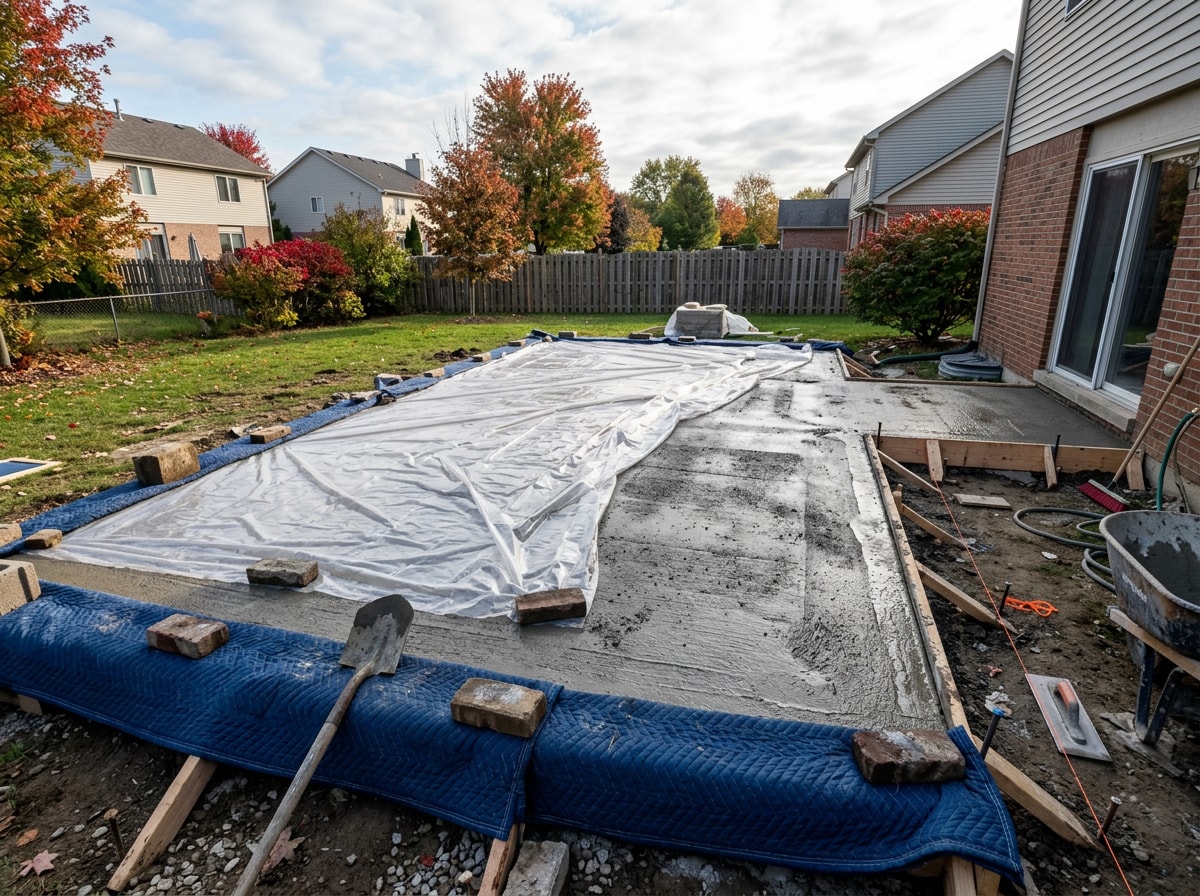
Concrete needs retained moisture to hydrate properly, not just an initial soak. If the surface dries out too quickly, hydration stalls, leaving the slab weaker and more prone to surface cracking. Covering fresh concrete or applying a curing compound helps hold moisture in during the first several days.
Concrete Mix Design
Mix design changes how fast a slab becomes usable. Fast-setting mixes and certain additives can shorten the early-stage waiting period, while standard residential mixes follow the 24–48 hour and 7-day benchmarks above. Our guide to sand mix concrete in Downtown Denver & Cherry Creek breaks down which mix fits small repair jobs versus full slab pours.
Why the 28-Day Mark Matters
Twenty-eight days isn't an arbitrary waiting period; it's the standard testing age engineers use to evaluate a concrete mix's design strength. Lab cylinders poured alongside a real project are tested at this mark to confirm the mix meets its rated compressive strength, and the full math behind it is laid out in ACI's technical FAQ on strength testing.
That's why contractors treat 28 days as the finish line for full structural loading, even though the slab is usable well before then.
Special Situations: Pouring Concrete Over Multiple Days
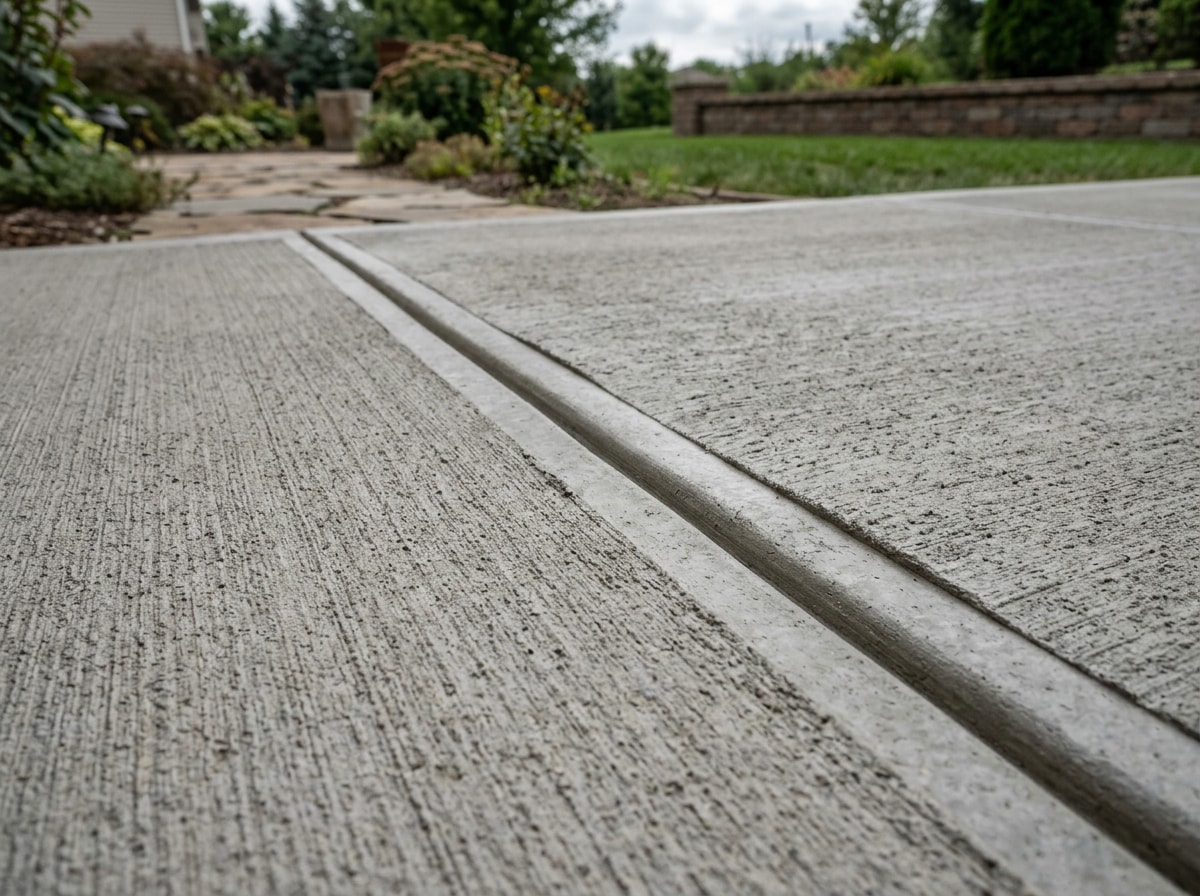
Larger Cherry Creek patios and driveways sometimes can't be poured in a single session. When that happens, jointing and surface prep between pours matter as much as the cure time itself.
Skipping proper jointing risks a cold joint, a weak seam where the two pours never fully bond, which can crack or separate over time. On a Cherry Creek patio we finished last fall, we held off setting the stamped border section for a full extra week after an early cold snap hit mid-pour; that patience kept the joint tight through the following spring thaw with zero separation. Anyone planning a stamped concrete or multi-day pour should talk through jointing details with their contractor before work begins.
Best Practices for Protecting New Concrete
Follow these through the first two weeks, and the slab will reward you for decades:
- Follow the mix-specific guidance from your supplier or contractor rather than a generic rule of thumb; fast-set, standard, and reinforced mixes all behave differently.
- Keep the surface moist for the first 7 days with a covering or regular misting.
- Protect fresh concrete from freeze-thaw cycles with insulated blankets during shoulder-season pours.
- Resist loading the slab just because it looks ready. A dry, hard surface doesn't guarantee the internal strength needed for vehicles, furniture, or equipment.
- When in doubt, give it more time, not less.
If you'd rather have someone else manage the timeline, our concrete installation crew handles pour scheduling, curing, and protection for every project we take on. You can see finished examples of our work in the project gallery.
FAQ
How long should concrete cure before walking on it?
Most concrete is ready for light foot traffic after 24 to 48 hours. Cold weather can slow hydration and extend this window, so check surface firmness before walking on it regularly in winter conditions.
Is concrete fully cured after 7 days?
No. Concrete typically reaches about 70–75% of its design strength at 7 days, but it needs the full 28 days to hit its rated strength. Early use is fine for light loads, not full structural loading.
Can I put weight on concrete after 3 days?
Light foot traffic is generally fine at this point, but heavy objects or machinery should wait until closer to the 7-day mark. The slab hasn't built enough strength yet for concentrated loads.
When is it safe to drive a car on new concrete?
Passenger vehicles can typically use a driveway around 7 days after the pour. Heavier vehicles, trailers, or equipment need more time, closer to the full 28-day cure.
How long does concrete need to cure before placing furniture on it?
Light furniture is usually fine around the 7-day mark. Heavier items like hot tubs or large planters should wait closer to 28 days to avoid concentrated point-load damage.
What factors affect how long concrete takes to bear weight?
Temperature, moisture retention, and the specific concrete mix all change the timeline. Cold weather and dry, high-altitude air, both common in Denver, can either slow hydration or speed up surface drying while the interior is still weak, so always treat the standard 24-hour/7-day/28-day benchmarks as a starting point, not a guarantee.
Ready to Pour With Confidence?
Getting the mix, the weather, and the timeline right the first time is the difference between a slab that lasts decades and one that needs patching in year two. Pepper's Land Design plans every Downtown Denver and Cherry Creek pour around our local climate, not a generic national average. Get a free estimate and we'll map out a cure schedule specific to your project before the truck ever shows up. You can also browse our full range of services on the Pepper's Land Design homepage.