Concrete installation in Golden & Mountain Communities, CO takes more than a mixer truck and a trowel. At 5,600+ feet, freeze-thaw swings and early snow can crack a slab poured on the wrong week. Here's what actually holds up on foothills properties, what it costs in 2026, and which permits you'll need before the first shovel goes in.
2026 Concrete Installation Costs in Golden & Mountain Communities, CO
Pricing here tends to run above flatland Denver averages. Foothills lots often mean steeper grading, longer delivery hauls up winding roads, and more hand-finishing around rock outcroppings or tree roots. These are general planning ranges, not a quote, your final number depends on access, slope, and site prep.
| Project Type | Typical Cost per Sq. Ft. (Installed) | Example Project Range |
|---|---|---|
| Broom-finish driveway | $8 - $12 | $9,600 - $14,400 (1,200 sq ft) |
| Broom-finish patio | $7 - $11 | $4,200 - $6,600 (600 sq ft) |
| Stamped & colored patio | $14 - $20 | $8,400 - $12,000 (600 sq ft) |
| Concrete walkway | $9 - $13 | $2,700 - $3,900 (300 sq ft) |
| Segmental retaining wall | $25 - $45 per face sq. ft. | Varies with height and engineering |
Slope grading, tree-root removal, and rock excavation are the three line items that most often push a Golden or Evergreen-area quote toward the high end. If you're comparing bids, ask each contractor to break out excavation and base prep separately from the concrete pour itself, that's usually where estimates diverge most.
Why Elevation and Freeze-Thaw Change How Concrete Performs Here
Golden and the surrounding foothills sit well above the Denver valley floor, and that elevation changes how concrete cures and ages. Due to Colorado's semiarid climate and changes in elevation across the state, temperatures vary widely from day to night and over short distances. That daily swing matters a lot during a pour: a slab finished in 70°F afternoon sun can sit next to ground that drops well below freezing by 9 p.m.
The concrete industry has a formal name for this problem. ACI 306R-16, "Guide to Cold Weather Concreting," states that cold weather conditions exist when the air temperature has fallen to, or is expected to fall below, 40° F (4° C) during the protection period.
The American Concrete Institute maintains publications, online courses, and other resources specifically to help contractors prepare for cold-weather pours. Crews working in Golden, Evergreen, and the mountain-adjacent neighborhoods watch overnight lows closely from late September through May, because a slab that sets fine at 2 p.m. can still crack if the ground freezes before the mix has enough strength to resist it.
Practical takeaways for homeowners:
- Timing matters more than the calendar season. A sunny October afternoon can still produce a cold-weather pour once the sun drops behind the foothills.
- Base prep has to account for frost heave. A compacted gravel sub-base that drains well reduces the moisture that causes freeze-thaw cracking.
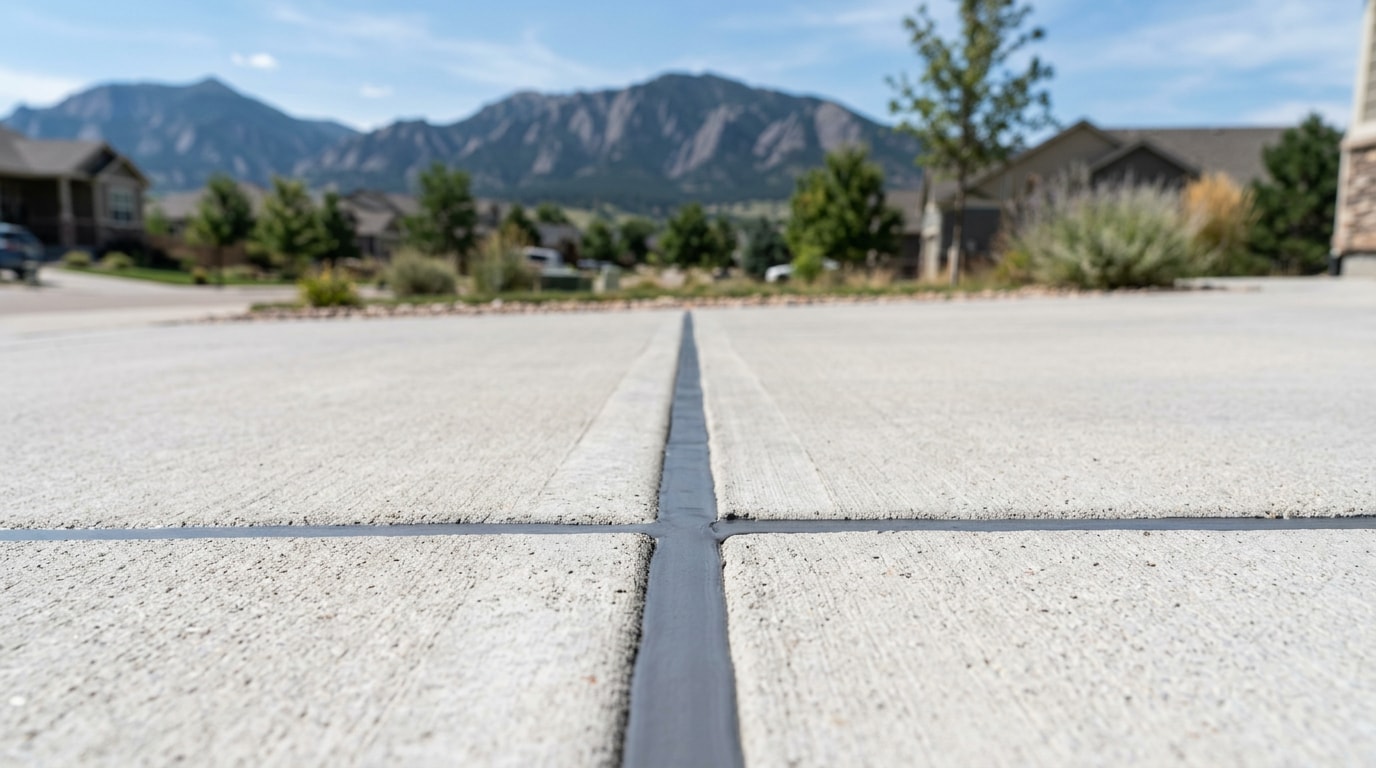
- Control joints aren't optional. Properly spaced joints give concrete a planned place to crack instead of an unplanned one.
Stamped Concrete vs. Plain Concrete for Mountain Properties
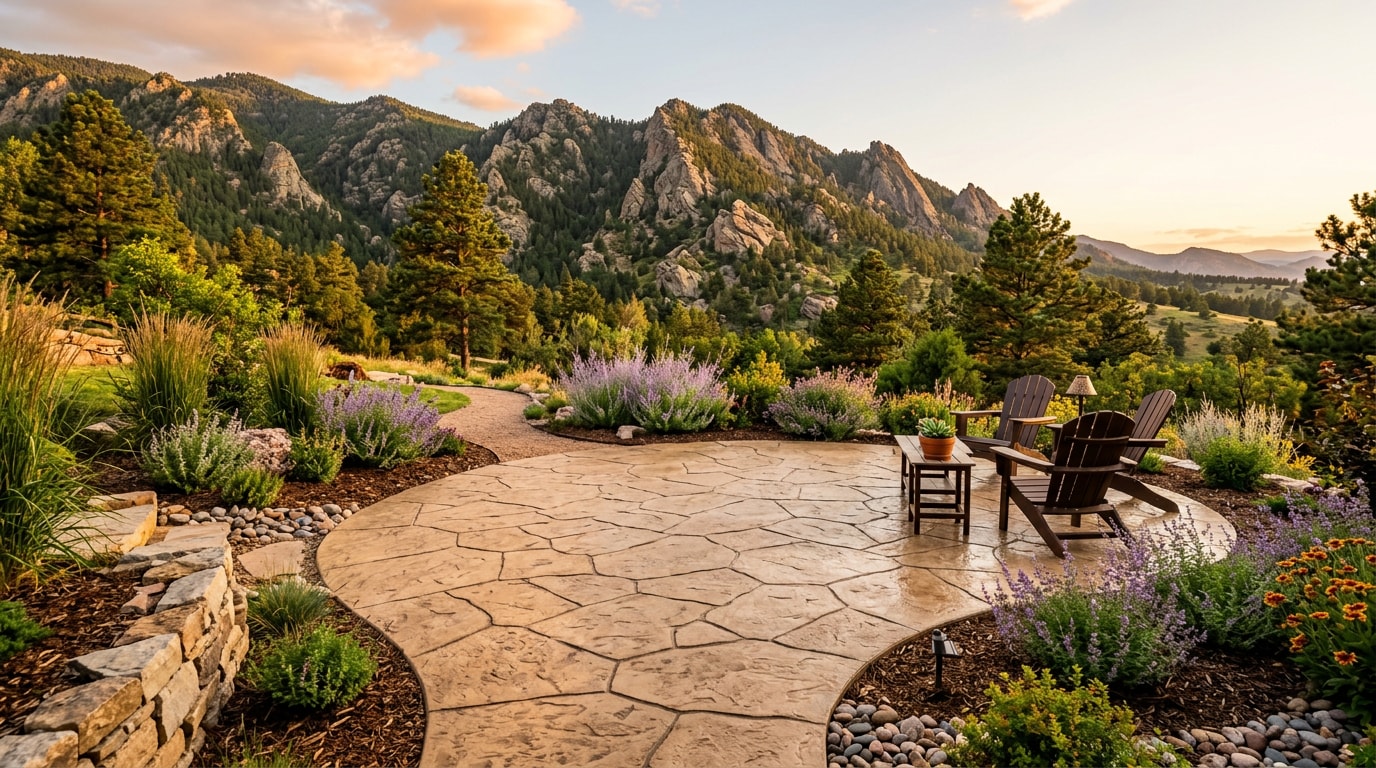
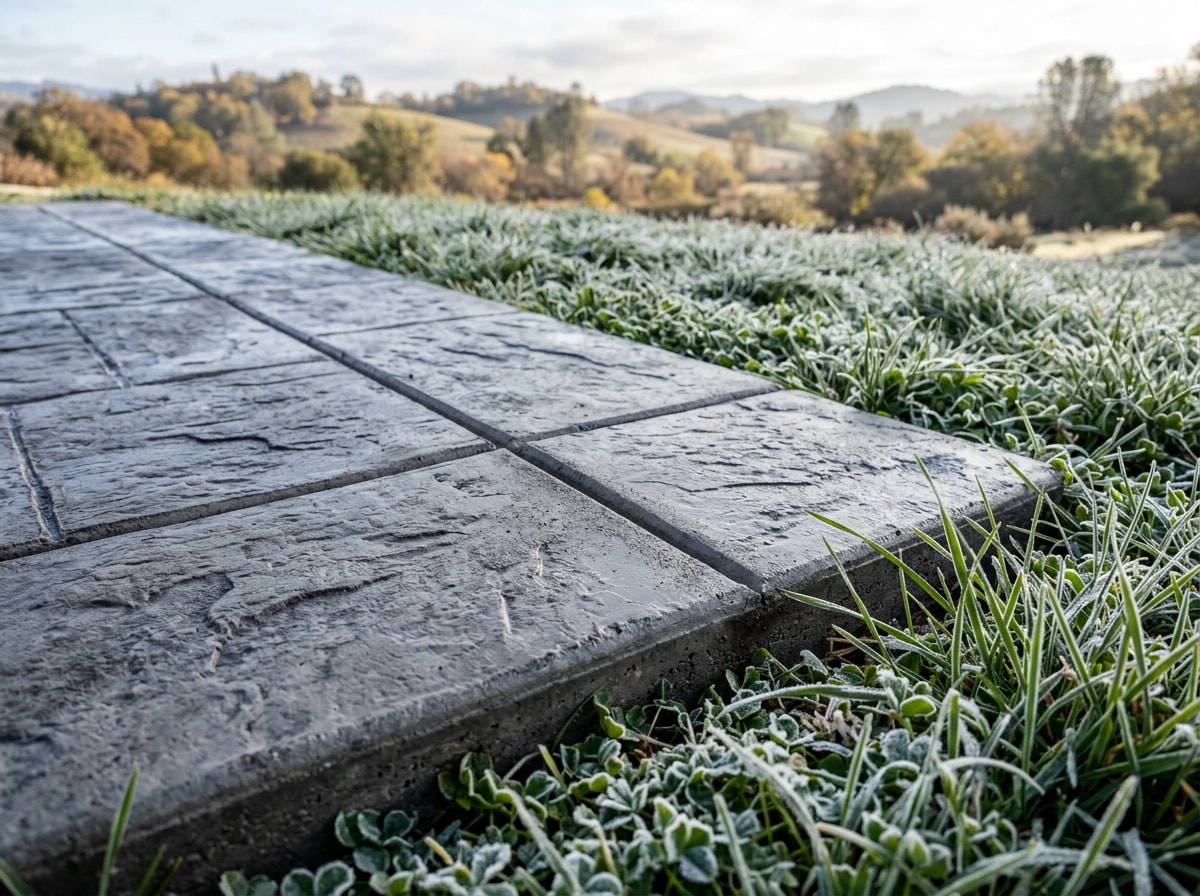
Plain broom-finish concrete costs less and holds up fine for driveways and utility walkways. Stamped concrete costs more upfront but mimics flagstone, slate, or cut stone, which pairs well with the natural rock and timber look common in Golden's foothill neighborhoods.
A few things to weigh before choosing:
- Maintenance: Stamped concrete needs resealing every 2-3 years to protect the color and pattern. Plain concrete needs little beyond occasional cleaning.
- Slip resistance: Textured stamp patterns generally offer better grip than a smooth broom finish when wet or icy, a real consideration on shaded north-facing patios.
- Resale appeal: Stamped patios and entries tend to photograph and show better, which matters if you're listing the home.
- Repair cost: Patching a stamped surface to match existing color and texture is harder than patching plain concrete.
If you're weighing stamped concrete against other patio-hardscape materials, our stamped concrete page walks through pattern and color options we install most often in the foothills.
Pairing Concrete With Retaining Walls, Stone Veneer, and Outdoor Kitchens on Sloped Lots
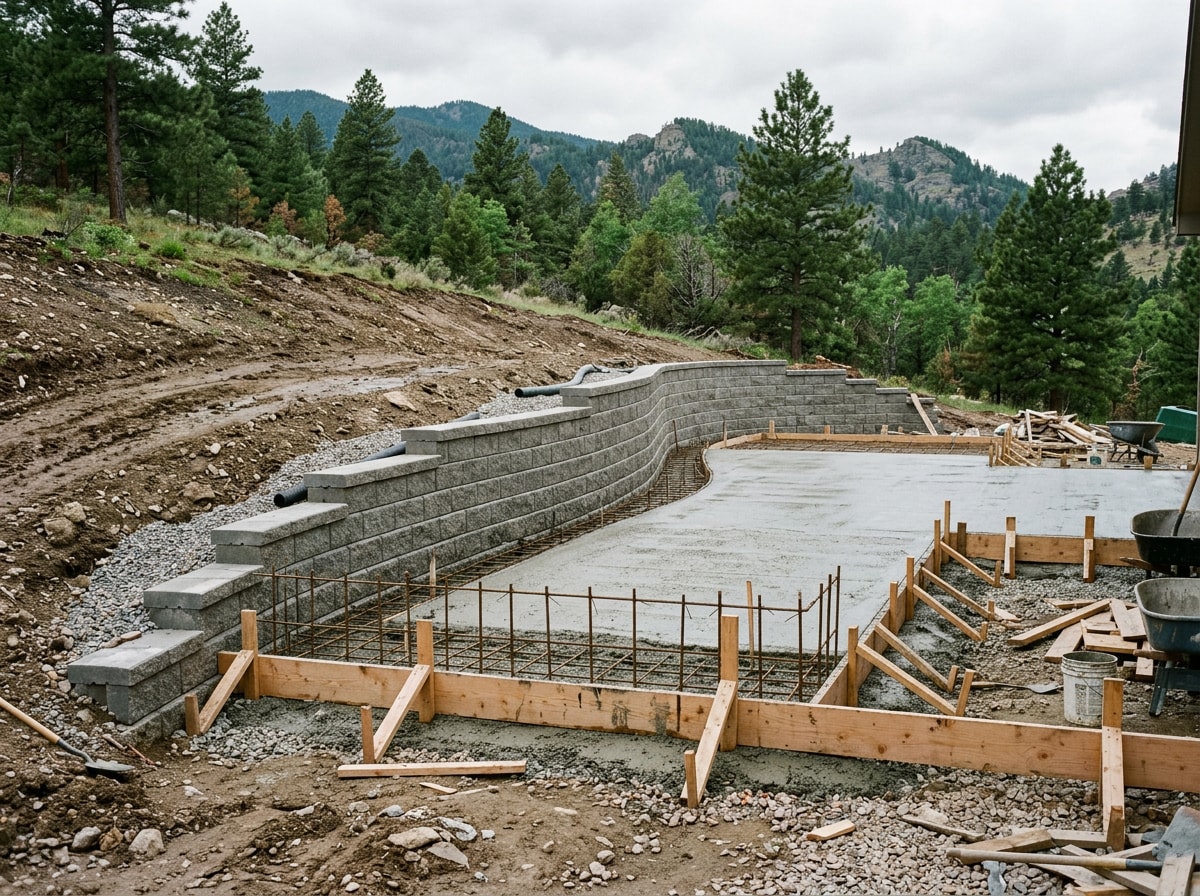
Flat building sites are rare in Golden's foothills, which means concrete work here frequently involves a retaining wall, a graded terrace, or both. A well-placed segmental retaining wall turns a sloped backyard into a usable patio footprint and keeps soil from washing out onto a new slab after spring runoff.
Many homeowners pair the concrete pour with complementary hardscape elements in the same project:
- A retaining wall installation to terrace a sloped lot before the patio goes in
- Stone veneer installation on exposed wall faces or a fire feature to match the foothill aesthetic
- An outdoor kitchen installation built on the new concrete pad
Homeowners dealing with an aging concrete surface around a pool, rather than a new install, should also see our guide on concrete pool deck repair in Ken Caryl & Highlands Ranch, which covers crack repair, resurfacing, and when replacement makes more sense than patching.
The Installation Process: What to Expect
- Site evaluation. A contractor walks the property, checks drainage and slope, and measures for square footage.
- Design and material selection. You choose plain, broom-finish, stamped, or colored concrete and confirm the layout.
- Permit check. See the permit section below, this step varies by jurisdiction.
- Excavation and grading. The crew removes sod or old material and grades the sub-base for drainage.
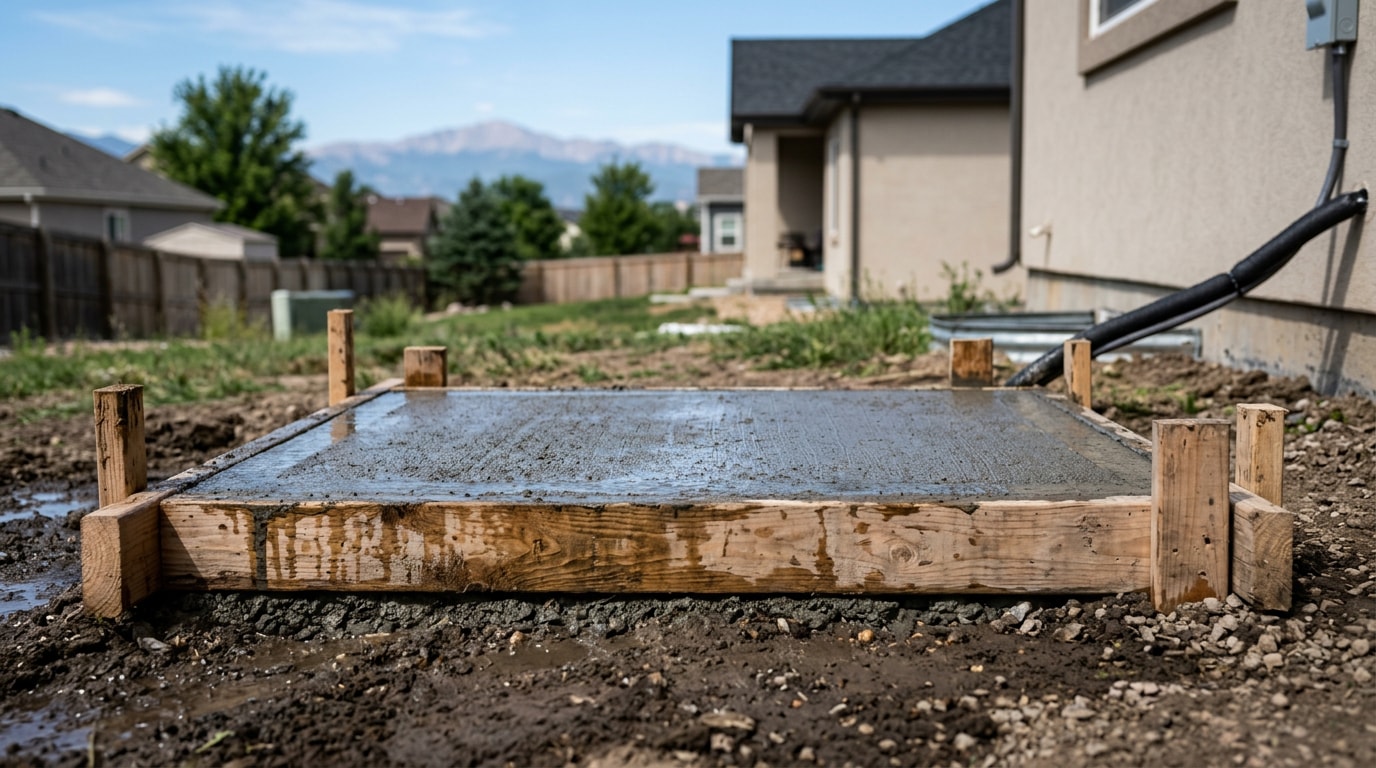
- Forming and reinforcement. Wood or metal forms set the shape; rebar or wire mesh is placed for strength.
- Pour and finish. Concrete is poured, leveled, and finished with the chosen texture or stamp pattern.
- Curing, joint sawing, and sealing. Control joints are cut, the slab cures, and sealer is applied once it's ready.
Permits: What Jefferson County Requires for Concrete Projects
Permit rules catch a lot of homeowners off guard, and they're one of the few areas where this project differs from a flatland Denver job. In unincorporated Jefferson County, which covers much of the Golden and mountain-communities service area, concrete pads do not require a building permit , which covers most standard patios poured at ground level.
That exemption doesn't extend to everything on the property, though. Retaining walls are listed among the projects that do require review, and all new driveways and proposed modifications to existing driveways taking access from a County-maintained roadway require an Access Permit. If your project sits inside city limits (Golden, Evergreen, or another incorporated town) rather than unincorporated Jefferson County, check with that municipality directly, rules differ by jurisdiction even within the same county.
Choosing a Concrete Contractor in Golden & Mountain Communities, CO
Look for a contractor who asks about your soil, slope, and sun exposure before quoting a price, not after. On recent patio and driveway replacements in the foothills west of Denver, our crew has learned to schedule fall pours around overnight temperature drops rather than just the forecast high, a scheduling habit that saves callbacks the following spring when frost heave shows up.
A few questions worth asking any contractor you're vetting:
- Do you pull permits for retaining walls and driveway access cuts, or is that on me?
- How do you handle a cold snap mid-project?
- Can I see recent work in this specific area, not just a general portfolio?
You can browse recent work on our projects page, and our concrete installation services page covers driveways, patios, and walkways in more detail. For the full range of hardscape work we handle in the foothills, start at {{SITE_URL}}/ or go directly to our hardscape contractor services page. If you're ready to talk through your project, get a free estimate and we'll walk the site with you before anything is scheduled.
FAQ
How much does concrete installation cost in Golden & Mountain Communities, CO?
Plain broom-finish concrete typically runs $7-$12 per square foot installed, while stamped and colored patios run $14-$20 per square foot. Foothills lots with steep grading or rock excavation often land toward the higher end of those ranges.
Does concrete crack in Golden's freeze-thaw climate?
All concrete can crack under freeze-thaw stress if it isn't properly cured, jointed, and drained. Control joints, a well-compacted gravel base, and avoiding cold-weather pours without protection measures significantly reduce cracking risk.
Do I need a permit for a concrete patio or driveway in Jefferson County?
A ground-level concrete pad generally does not need a building permit in unincorporated Jefferson County. Driveways connecting to a county-maintained road need an Access Permit, and retaining walls typically require separate review. Check with your specific municipality if you're inside city limits.
Is stamped concrete worth it for a mountain property?
Stamped concrete costs more upfront and needs resealing every few years, but it pairs well with the natural stone and timber look common in foothill neighborhoods and tends to hold resale appeal better than plain concrete.
What's the best time of year to pour concrete in Golden & Mountain Communities, CO?
Late spring through early fall gives the most consistent curing conditions. Pours scheduled for late fall or winter are possible but require cold-weather concreting practices, like insulated blankets or heated enclosures, to protect the mix from early freezing.