Concrete slump in South Denver Suburbs, CO projects is the one field measurement that decides whether a driveway, patio, or pool deck finishes clean or starts cracking within its first winter. It has nothing to do with strength by itself. It is a workability check, run with a metal cone, that tells a crew whether the batch in the truck matches the mix it was ordered to be. Here is what the number means, what range your project actually needs, and why pouring at 6,000 feet changes the math that most generic guides skip.
What Is Concrete Slump, and Why Does It Matter Here?
Concrete slump is a measure of the consistency or workability of fresh concrete, and it indicates how easily the mix flows and is often used to evaluate water content. A low slump means a stiff mix. A high slump means a wetter, more fluid mix.
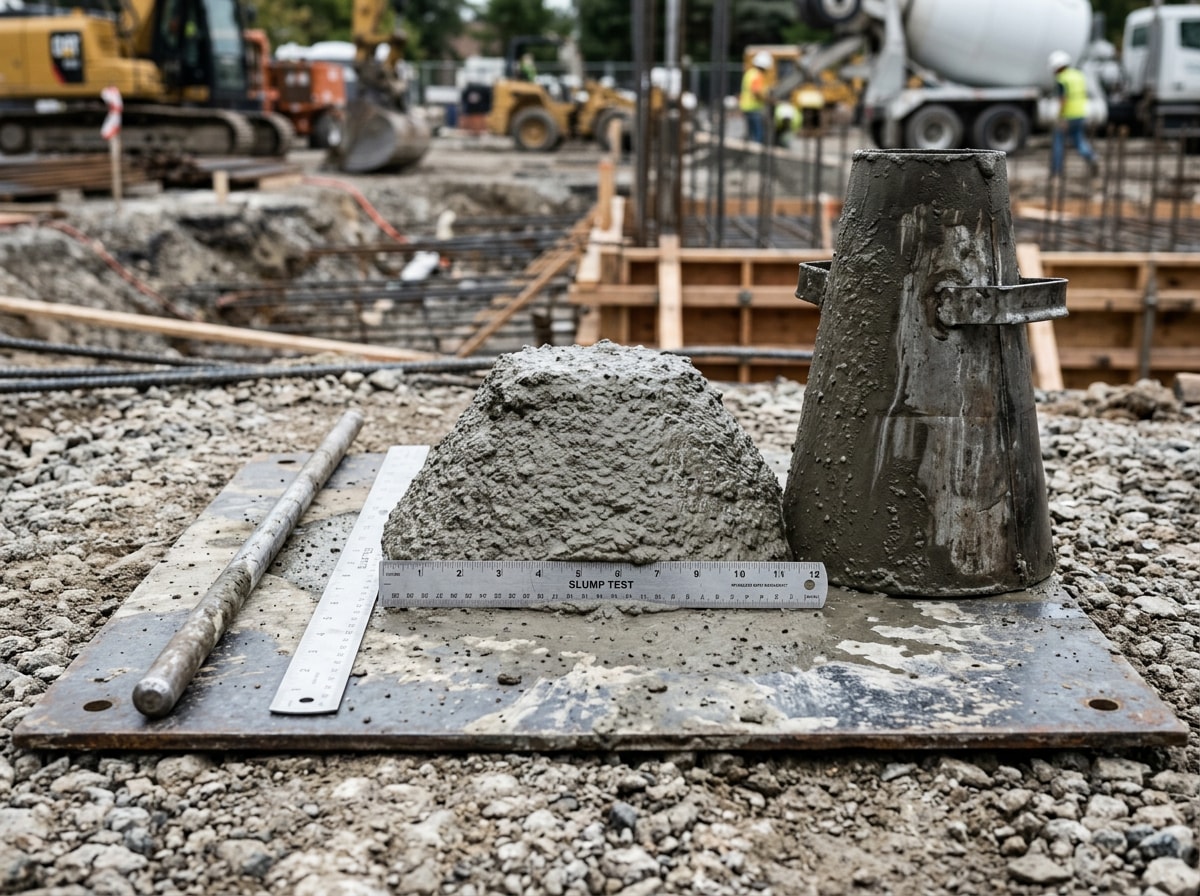
Slump is measured with an Abrams cone, a metal mold shaped like a truncated pyramid. The cone has a height of 12 inches, a bottom diameter of 8 inches, and an upper diameter of 4 inches. Whether a crew is pouring a driveway in Highlands Ranch, a patio slab in Lone Tree, or a foundation in Parker, the same test applies.
Homeowners do not need to run the test themselves. Knowing the basics just means asking better questions before the truck shows up. At Pepper's Landesign, we walk every South Denver suburbs client through the slump spec before the pour date is even set.
Acceptable Concrete Slump Ranges for South Denver Suburbs Projects
There is no single "correct" slump. The right number depends on what is being poured and how it will be placed. For most applications slump required is 3 to 5 inches, while higher slump of 7 to 9 inches may be needed for walls, pumped concrete, or when there is congested reinforcement.
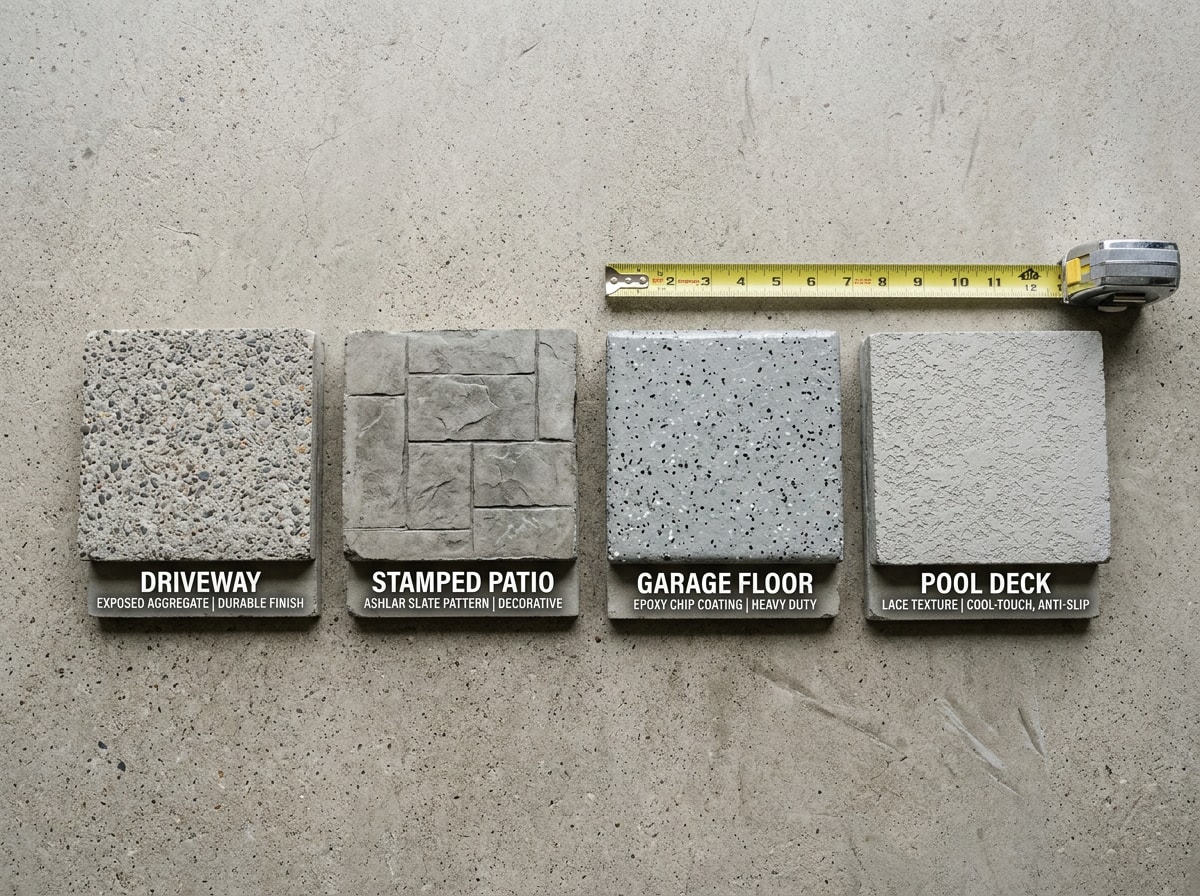
Most residential flatwork in the South Denver suburbs falls into the medium slump range. Here is how that typically breaks down by project type:
| Project Type | Typical Slump Range |
|---|---|
| Standard driveway | 3-4 inches |
| Stamped patio | 4-5 inches |
| Garage floor slab | 3-4 inches |
| Pool deck | 4-5 inches |
| Footings | 1-3 inches |
Stamped and decorative finishes need a touch more flow for detail work, which is why our stamped concrete crews often spec the upper end of that range. Standard driveways and garage slabs stay slightly stiffer to resist sagging and finish cleaner under the sun exposure common across the suburbs.
Not sure what your project needs? Get a free estimate and we will spec the mix, slump, and air content before the truck is scheduled.
What Slump Testing Actually Measures (and What It Doesn't)
Slump testing exists because it is fast, cheap, and catches problems before concrete is placed. A crew can run the test in a few minutes and flag batch inconsistency long before a slab is poured and impossible to fix.
Slump does not measure compressive strength, air content, or set time. It only measures how fluid or stiff the mix is at that moment. Under laboratory conditions slump tends to track with water content and strength, but under field conditions that relationship is not clearly and consistently shown, so results should be interpreted with care.
A common myth is that higher slump always means weaker concrete. That is only true when the extra workability comes from added water, which raises the water-to-cementitious-materials ratio. A mix that reaches the same slump through admixtures instead of water can hold its design strength just fine. Slump also says nothing about air content, which is tested separately and matters for Colorado's freeze-thaw cycles.
Equipment You Need for a Proper Slump Test
A standard slump test uses a short, standardized list of gear:
- A slump cone, 4 inches across the top, 8 inches across the base, 12 inches tall
- A bullet-nosed tamping rod, 5/8 inch diameter, 24 inches long
- A small scoop sized for clean, representative sampling
- A flat, rigid, non-absorbent base plate
- A ruler or tape measure graduated to at least 1/4 inch
The mold must be sufficiently rigid to maintain its specified dimensions and tolerances during use, resistant to impact forces, and non-absorbent. These dimensions are standardized under ASTM C143, so a cone used on a job site in Parker matches one used anywhere else in the country.
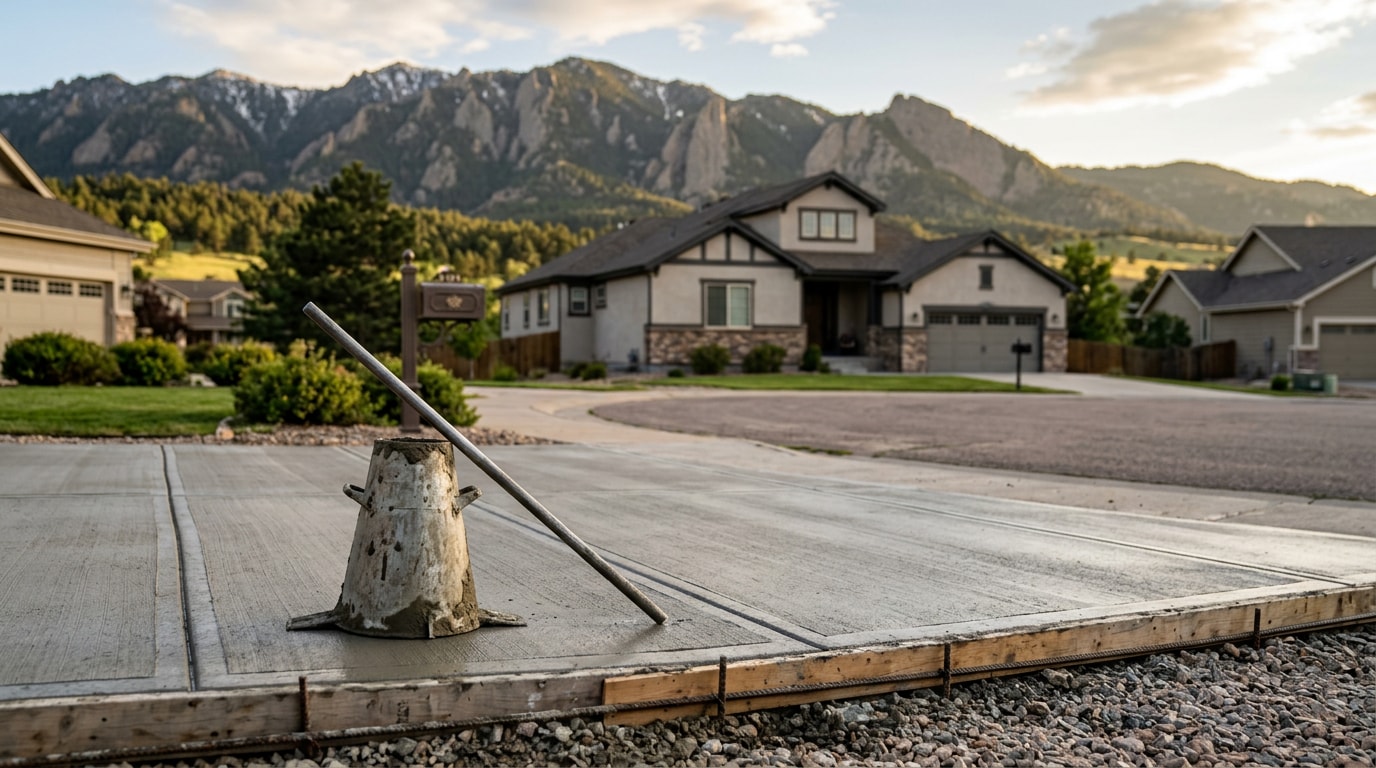
In practice, a South Denver suburbs ready-mix driver usually keeps a cone, rod, and base plate clipped inside the truck cab, ready to pull a sample at the curb before our concrete installation crew signs off on the load.
How a Slump Test Is Performed, Step by Step
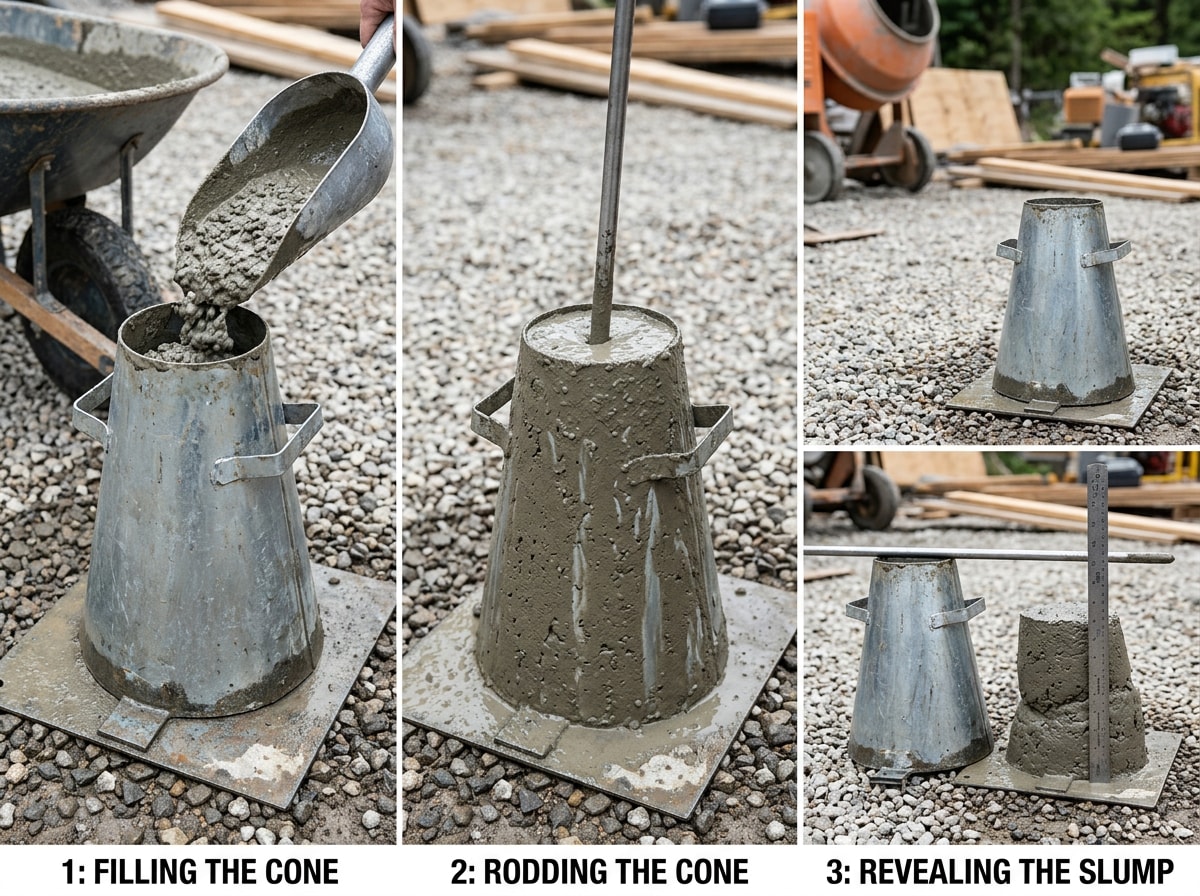
The Abrams cone procedure follows the same sequence on every job:
- Dampen the cone and base plate.
- Fill the cone in three roughly equal layers.
- Rod each layer 25 times with the tamping rod, using slightly angled strokes that penetrate into, but not through, the layer below.
- Strike off the top layer level with the rim.
- Lift the cone straight up in one smooth, steady motion. No twisting, no jerking.
- Measure the vertical drop at the center of the slumped concrete. That measurement, in inches, is the slump.
The cone should be pulled straight up with no twisting, taking anywhere from 3 to 7 full seconds, with specs calling for 5 seconds plus or minus 2.
The 2.5-Minute Rule
Timing matters more than most homeowners realize. The entire test should begin and be completed within two and a half minutes, maximum. Slump loss starts the moment concrete is sampled, so waiting too long gives a falsely low reading that does not reflect the batch as it was actually delivered.
Common Mistakes That Invalidate a Slump Reading
A handful of field errors show up again and again, and every one of them produces a reading that does not reflect true slump:
- Twisting the cone while lifting it instead of pulling straight up
- Jerking the cone upward rather than a steady, even pull
- Uneven rodding between the three layers
- Testing on a soft, sloped, or uneven surface
- Letting too much time pass between sampling and testing
These mistakes typically cause a shear slump, where one side shears off instead of settling evenly, or a collapse slump, where the mix flattens out completely. Either result counts as an invalid test. The correct move is to re-run it on a fresh sample rather than record a bad number.
Slump for Pumped Concrete and Admixtures
Pumped concrete generally needs to run higher and more consistent than concrete placed by chute or wheelbarrow, since a mix that is too stiff can clog the line and strain the pump. On the other hand, slump that is too high risks segregation, where heavier aggregate separates from the paste, along with finishing headaches once it is placed.
Water reducers and superplasticizers solve this cleanly. They raise slump and improve flow without adding extra water, so the mix keeps its designed strength instead of trading it away for workability.
Why Elevation and Climate Change the Slump Equation in the South Denver Suburbs
This is the part most slump guides skip entirely, and it matters more here than almost anywhere else in the country. The South Denver suburbs are not all at the same elevation as downtown Denver's roughly 5,280 feet. Highlands Ranch sits at 5,817 feet.
Lone Tree sits at 6,280 feet.
Castle Pines sits at 6,559 feet. That is a 1,000-plus foot swing across a single service area, and every extra foot of elevation means thinner, drier air pulling moisture off a fresh slab faster.
Humidity compounds the problem. Denver's average relative humidity runs as low as 42 percent in June and climbs only to around 57 percent in the depths of winter. Combined with the Front Range's wide daily temperature swings, fresh concrete can lose workability noticeably faster on a dry South Denver afternoon than at sea level, even at a similar air temperature.
On a Lone Tree driveway pour last fall, our crew specified a slightly lower slump than usual because a gusty, low-humidity afternoon was pulling bleed water off the surface faster than the finishers could keep pace. The slump number on the delivery ticket was correct. The site conditions were the variable that actually decided the finish. That is the gap a slump test alone will never catch, no matter how well it is run.
Cold snaps add another layer. Cold weather concreting provisions apply once the air temperature is below 40 degrees, or is expected to fall below 40 degrees, during the protection period. That threshold shows up more often at Castle Pines elevation than it does in downtown Denver on the same calendar day, which is why pour timing and curing schedules in the higher-elevation suburbs cannot be copied from a lower-elevation playbook. For a side-by-side look at how a similar elevation swing plays out on the west side of the metro, see our Golden & Mountain Communities concrete installation guide.
Crews working across our South Denver Suburbs service area plan pour timing, mix design, and curing schedules around these conditions rather than treating every slab the same way year-round.
About the Author
This guide was written by Derek Pepper, owner and lead hardscape contractor at Pepper's Landesign. Derek has overseen residential concrete, hardscape, and landscape installations across the South Denver suburbs for more than a decade, from stamped patios in Lone Tree to pool deck replacements in Highlands Ranch. For questions about a specific slab or pour date, contact our team directly.
FAQ
What Is a Concrete Slump Test?
A concrete slump test measures the workability and consistency of fresh concrete by recording how much a sample settles after a slump cone is removed, expressed in inches of vertical drop.
What Is a Good Slump for a Driveway in the South Denver Suburbs?
Most residential driveways in the area fall between 3 and 4 inches. That range balances workability with enough stiffness to resist sagging on sloped driveways, which are common across hillier South Denver neighborhoods.
What Is the Standard ASTM C143 Procedure?
The ASTM C143 procedure fills a dampened cone in three layers, rods each layer 25 times, strikes off the top, then lifts the cone straight up so the concrete's settled height can be measured within two and a half minutes.
Can You Add Water to Concrete to Increase Slump?
Adding water is not the only way to raise slump, and doing so lowers compressive strength while increasing shrinkage and cracking risk. Admixtures achieve the same workability without that trade-off.
Does Cold Weather Affect Concrete Slump?
Yes. Cold temperatures slow hydration and can cause slump to read differently than it will once the mix warms back up on site. Crews often target a slightly lower slump in cold weather to reduce bleed water and help the surface finish cleanly before it sets.
What Happens If the Slump Is Too High or Too Low?
Too high, and the mix risks segregation, weaker strength, and a porous, crack-prone surface once it cures. Too low, and the concrete becomes difficult to place and finish, raising the risk of honeycombing around reinforcement or forms. Either way, a batch outside the ordered tolerance should be corrected or rejected before it goes into the forms.