Figuring out how much concrete you need in Evergreen, CO comes down to three numbers: length, width, and thickness. Mountain elevation, frost depth, and bedrock close to the surface push those numbers higher than any flatland calculator assumes. This guide walks through the math and the local factors together, so the cubic-yard figure you bring to a ready-mix supplier actually holds up on delivery day.
Concrete Slab, Footing & Column Calculators
Most Evergreen projects fall into one of three shapes: slabs, footings, or columns and piers. Picking the right calculator below gets you an accurate cubic-yard number before you call a supplier.
Concrete Slab Calculator
To size a patio slab, driveway, or walkway:
- Measure length, width, and thickness in feet.
- Multiply length × width × thickness.
- Divide by 27 to convert cubic feet into cubic yards.
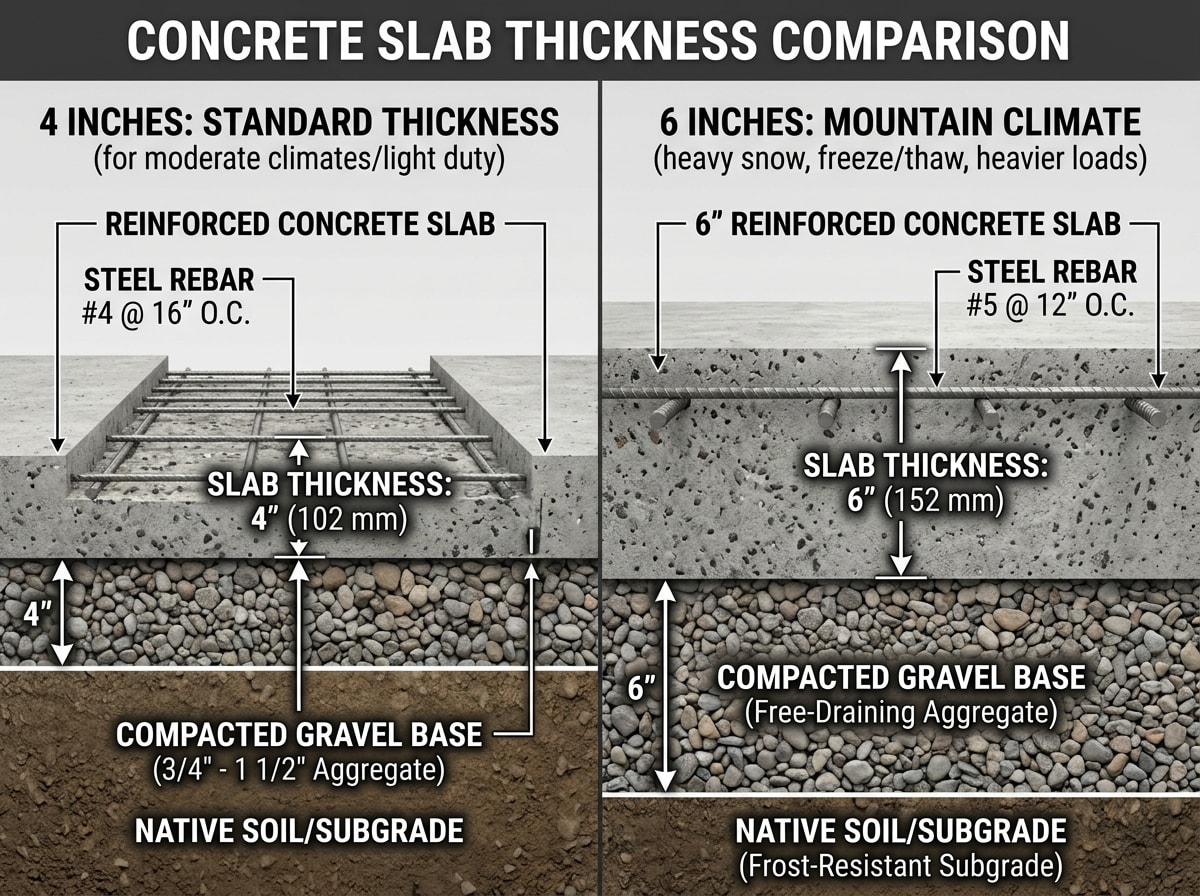
A 12×24 ft driveway slab poured at 6 inches thick is a common driveway depth for mountain freeze-thaw durability. The math: 12 × 24 × 0.5 ÷ 27, or about 5.3 cubic yards. Run the same formula on any patio slab before ordering.
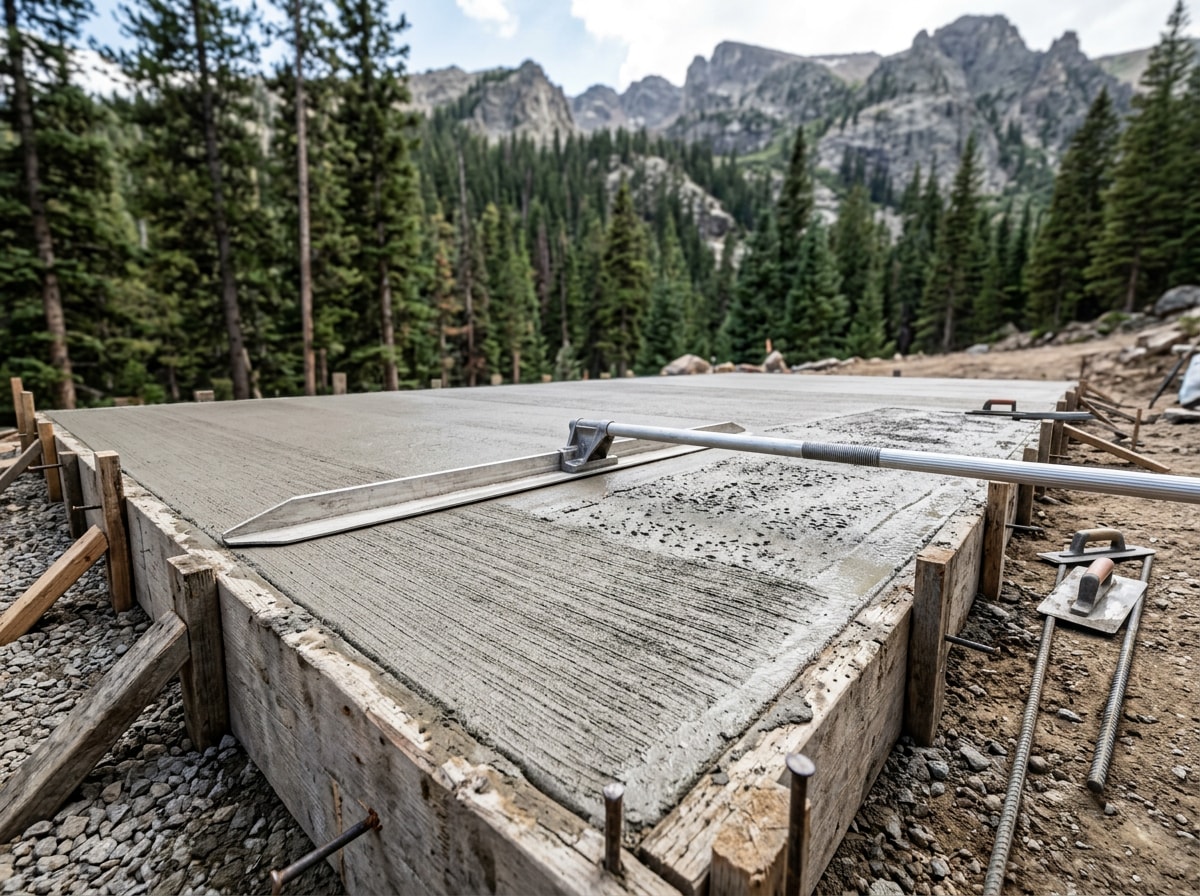
Before you call a supplier, add a buffer. Quantity of concrete ordered should be 4% to 10% more than an estimate calculated from the plan dimensions to account for contingencies , according to the National Ready Mixed Concrete Association. Uneven subgrade, form flex, and spillage all eat into your order on a sloped Evergreen lot faster than they would on a flat city driveway.
Need help sizing a larger pour? Our concrete installation crews handle everything from small walkways to full driveways across the foothills.
Concrete Footing Calculator
A footing's volume comes from width × depth × length, divided by 27. In Evergreen, depth isn't optional. Footings shall not bear on frozen soil unless the frozen condition is permanent , and the applicable code requires frost protection below the locally established frost line. That single requirement often adds more concrete than homeowners expect for a post footing or strip footing.
Jefferson County's own residential code supplement goes a step further for mountain terrain. Foundations located in designated dipping bedrock areas and expansive soils areas fall under additional design criteria beyond the standard frost-depth rule. That's a detail generic national concrete calculators never mention, but it matters on Evergreen lots where shallow granite or shifting soil is common. Confirm your exact footing depth against IRC frost-protection requirements and your county's amendments before finalizing cubic yards.
A retaining-wall footing running 20 feet long, 1.5 feet wide, and 1 foot deep needs 20 × 1.5 × 1 ÷ 27, or about 1.1 cubic yards. If your project includes a wall, our retaining wall installation team can confirm footing depth before you order.
Concrete Column Calculator
Round piers and sonotube columns use π × radius² × height ÷ 27. A 12-inch-diameter sonotube (0.5 ft radius) poured 4 feet deep works out to 3.14 × 0.25 × 4 ÷ 27, or roughly 0.12 cubic yards per pier. Multiply by your total pier count to get your full order.
How to Calculate How Much Concrete You Need
Every concrete estimate boils down to the same method: measure in feet, multiply the dimensions, then divide by 27. The two cases below cover almost everything a homeowner pours.
Slabs, Walls, and Rectangular Footings
Here's the rectangular footing formula, step by step:
- Measure length, width, and thickness in feet.
- Multiply all three dimensions together.
- Divide the result by 27 to get cubic yards.
- Round up slightly to account for uneven ground or spillage.
The Contractor's Magic Number
Contractors use a shortcut for quick estimates: the "magic number" is 81. Divide total square footage by 81 to get cubic yards for a standard 4-inch slab. Evergreen driveways typically pour thicker than that national default, so the number needs adjusting.
| Slab Thickness | Divide Square Footage By | Example: 240 sq ft |
|---|---|---|
| 4 in. | 81 | 2.96 cu yd |
| 5 in. | 65 | 3.69 cu yd |
| 6 in. | 54 | 4.44 cu yd |
Use the 5- or 6-inch column for most Evergreen driveways. The 4-inch column undersells the job for anything carrying vehicle weight through a mountain freeze-thaw winter.
Recommended Concrete Thickness for Evergreen's Climate
Thickness is the single biggest lever on how much concrete a project needs, and Evergreen's elevation and freeze-thaw cycles push recommended thickness above typical Denver norms.
| Application | National Standard | Evergreen-Area Recommended | Why |
|---|---|---|---|
| Patio slab | 4 in. | 4–5 in. | Snow load, surface freeze-thaw |
| Driveway | 4 in. | 5–6 in. | Vehicle weight plus frost cycling |
| Footing | 12 in. minimum | Below local frost line | Prevents frost heave |
Timing matters as much as thickness. A sunny October afternoon at 7,200 feet can still produce a cold-weather pour once the sun drops, which is part of why mountain-area footings and slabs often run thicker and get extra curing protection compared to generic charts. The American Concrete Institute's cold-weather guidance centers on protecting fresh concrete until it reaches a minimum strength threshold before it's exposed to freezing temperatures again, a real risk during Evergreen's shoulder seasons. Review the ACI cold-weather concreting resources before scheduling a late-season pour.
2026 Concrete Installation Costs in Evergreen & Golden/Mountain Communities, CO
Once you know your cubic yards, the next question is cost. Pricing here tends to run above flatland Denver averages. Foothills lots often mean steeper grading, longer delivery hauls up winding roads, and more hand-finishing around rock outcroppings or tree roots.
| Project Type | Cost per Sq. Ft. Installed |
|---|---|
| Broom-finish driveway | $7–$12 |
| Broom-finish patio | $7–$11 |
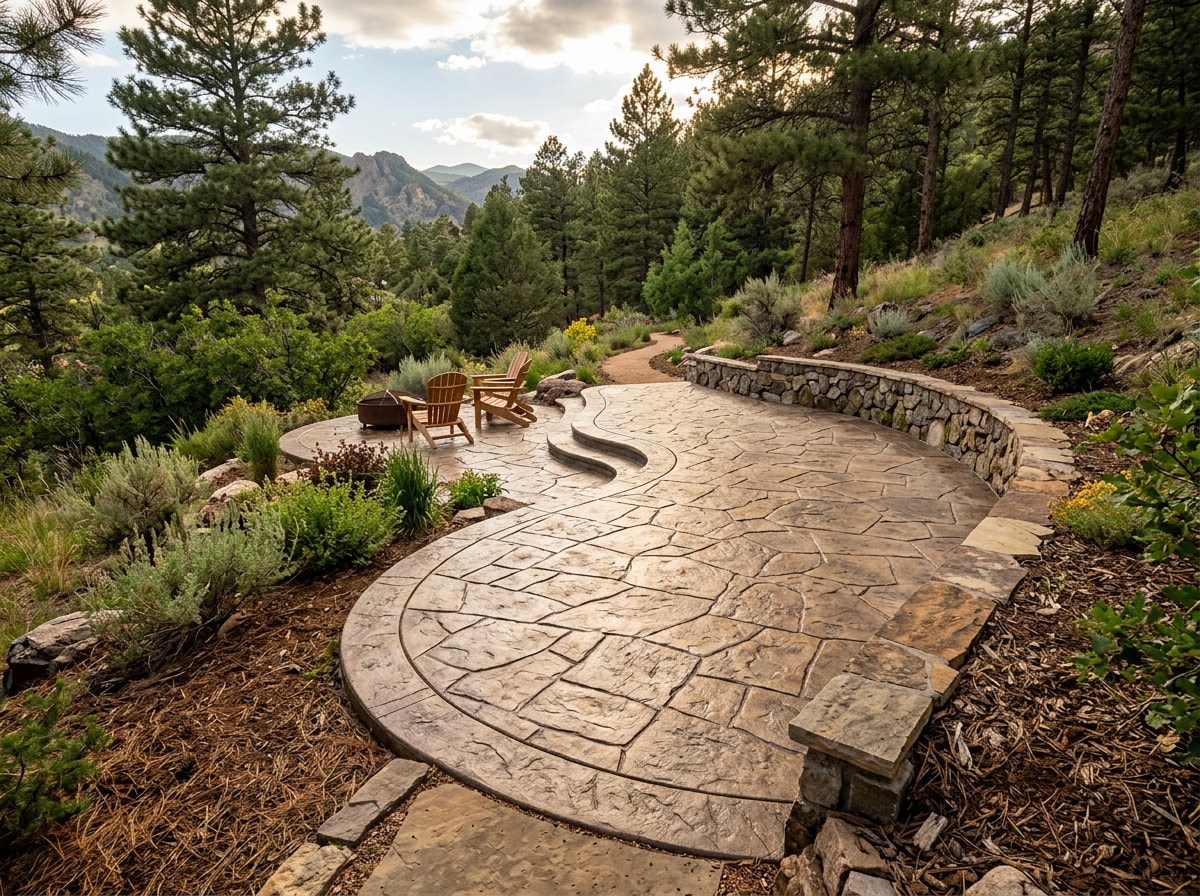
| Stamped/colored patio | $14–$20 |
| Walkway | $8–$13 |
| Retaining wall | $20–$35 |
Installation cost covers the full sequence: forming and reinforcement, the pour and finish work, then curing, joint-sawing, and sealing. Our crews see this play out every pour season across Golden & Mountain Communities, where a driveway on a flat Golden lot and one on a sloped Evergreen lot can need very different crew hours for the same square footage.
Most flatwork in unincorporated Evergreen falls under Jefferson County's building department. Building permits may be submitted electronically and paid for online after the process is completed , so confirm whether your driveway, patio, or footing needs a permit before you schedule delivery. Check current requirements on the Jefferson County permits page.
For a deeper look at cost drivers specific to this terrain, see our Concrete Installation in Golden & Mountain Communities, CO guide.
Ready to turn these numbers into an actual order? Get a free estimate and we'll confirm cubic yards, thickness, and permit needs for your specific lot before anything gets poured.
Why This Math Matters More in Evergreen
Generic online calculators assume flat ground, standard frost depth, and mild curing weather. None of that describes a typical Evergreen building site. Our crews routinely hit shifting cobble and partial bedrock well before reaching standard frost depth on foothill driveways, which means footing volume calculated purely from a flat 36-inch assumption can fall short once excavation starts. That's why every estimate from Pepper's Landscape & Design starts with an on-site measurement, not just a formula.
FAQ
How much concrete do I need for a 10x10 slab?
It depends on thickness. A 4-inch slab needs about 1.24 cubic yards, roughly 56 bags of 80-pound concrete. A 6-inch slab needs about 1.85 cubic yards, or roughly 84 bags.
How many 80 lb bags of concrete do I need for a slab?
Each 80-pound bag yields approximately 0.022 cubic yards. For a 4-inch thick, 100-square-foot slab, that works out to about 56 bags. Ready-mix delivery is usually more practical for anything near or above one full cubic yard.
Does weather affect how much concrete I need?
Weather doesn't change the volume you need, but it changes how that concrete cures. Avoid pouring in extreme heat or below freezing, especially given Evergreen's unpredictable shoulder-season temperature swings between sunny afternoons and freezing nights.
How much does concrete installation cost in Evergreen & Golden/Mountain Communities, CO?
Plain broom-finish concrete typically runs $7–$12 per square foot installed, while stamped and colored patios run $14–$20 per square foot. Foothills lots tend to land toward the higher end of both ranges due to grading and access.
Does concrete crack in Evergreen's freeze-thaw climate?
All concrete can crack under freeze-thaw stress if it isn't properly cured, jointed, and drained. Control joints, a well-compacted gravel base, and avoiding unprotected cold-weather pours significantly reduce that risk.
How much concrete do I need for a fence post?
Most 4×4 or 6×6 fence posts use one 50-pound bag per hole for a standard 8-10 inch diameter, 2-foot-deep hole, roughly 0.05-0.07 cubic yards per post. Count your total post holes and round up. Our fence installation team can size post footings to match soil and wind-load conditions on your property.
Do I need a permit to pour a concrete driveway or patio in Evergreen?
It depends on scope and location. Unincorporated Jefferson County, which covers most of Evergreen, handles residential building permits through its own building safety division. Confirm your specific project against the Jefferson County permits page before you schedule a pour.
How many cubic yards fit in a concrete truck?
A standard ready-mix truck carries roughly 9 to 10 cubic yards per load, though usable capacity can run slightly lower depending on the mix and truck condition. Most residential slabs, patios, and driveways in Evergreen need well under a full truckload, so expect to discuss a partial-load or short-load fee with your supplier.
Ready to get an exact number for your lot? Request a free estimate and we'll measure, calculate cubic yards, and confirm thickness and permit needs before you order a single yard.