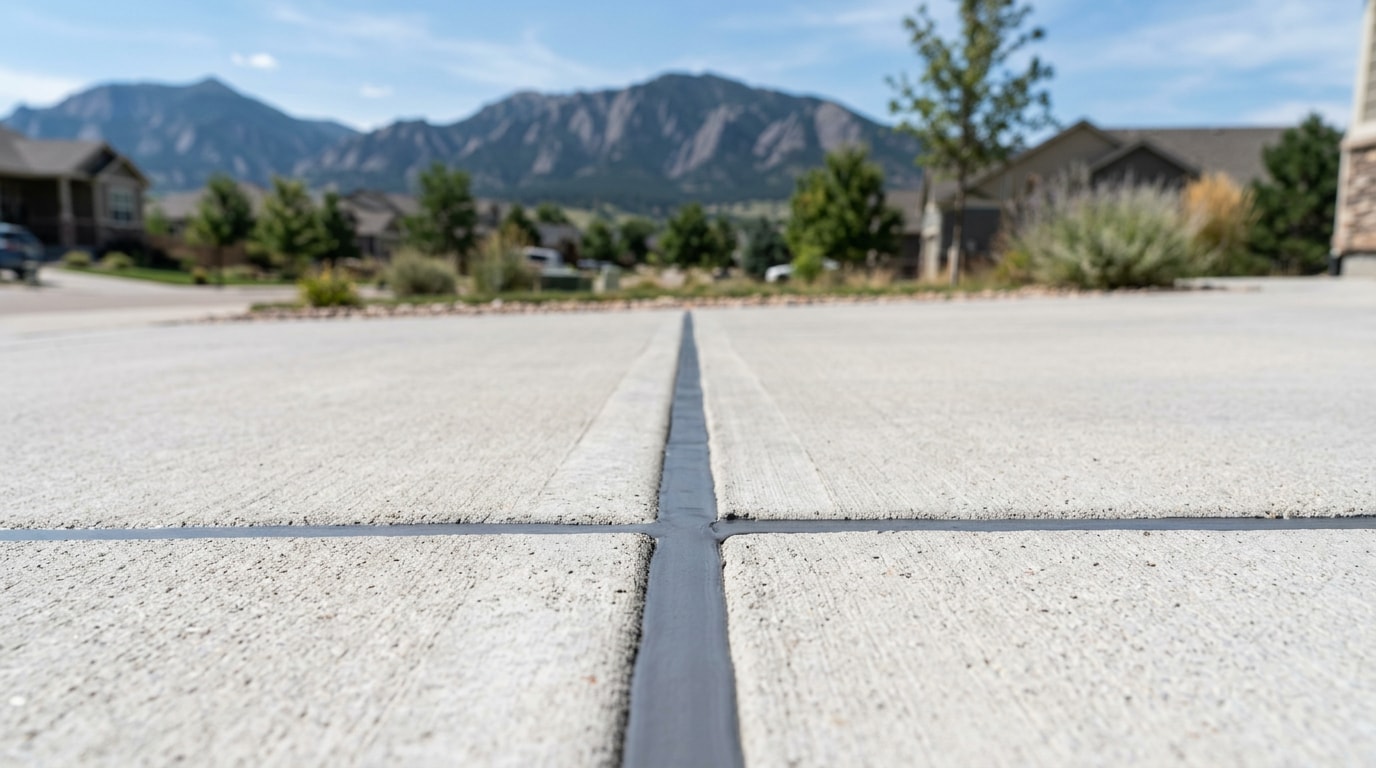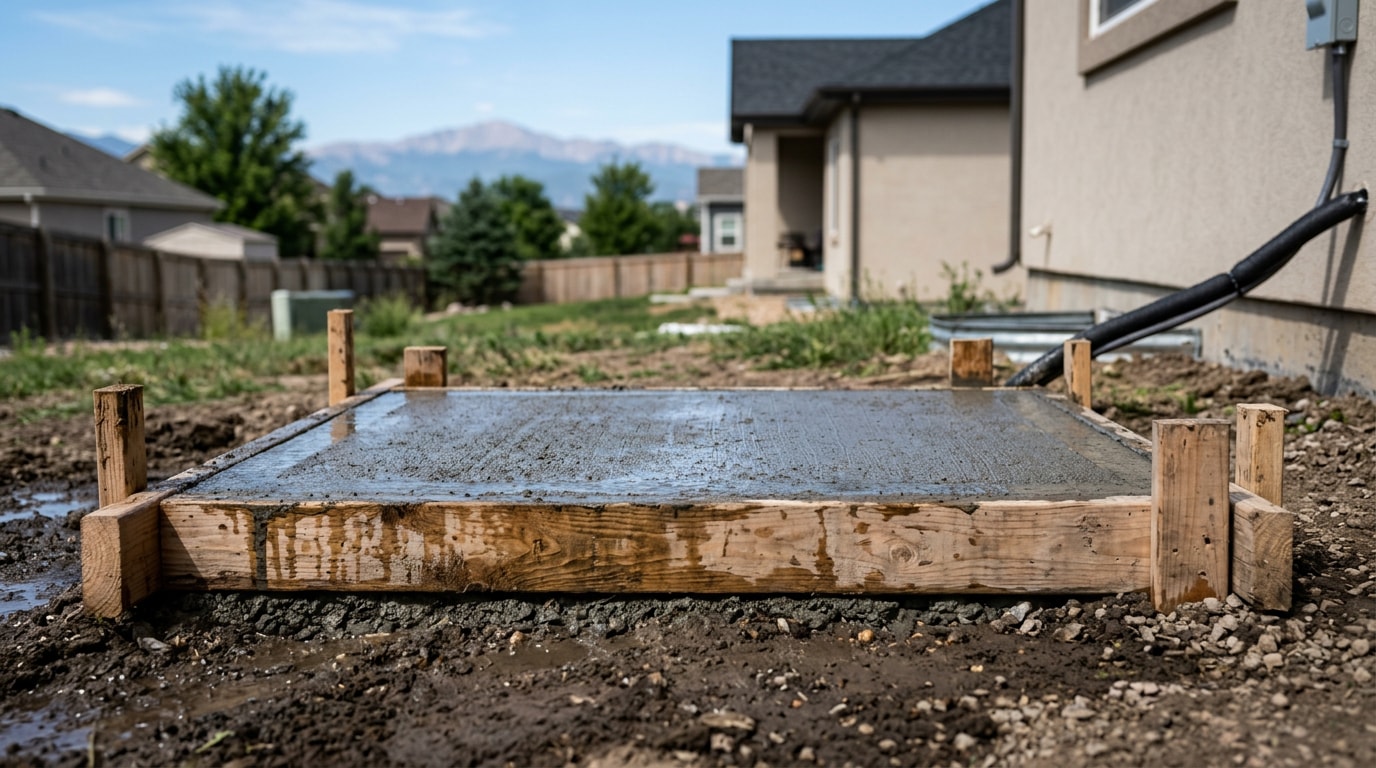
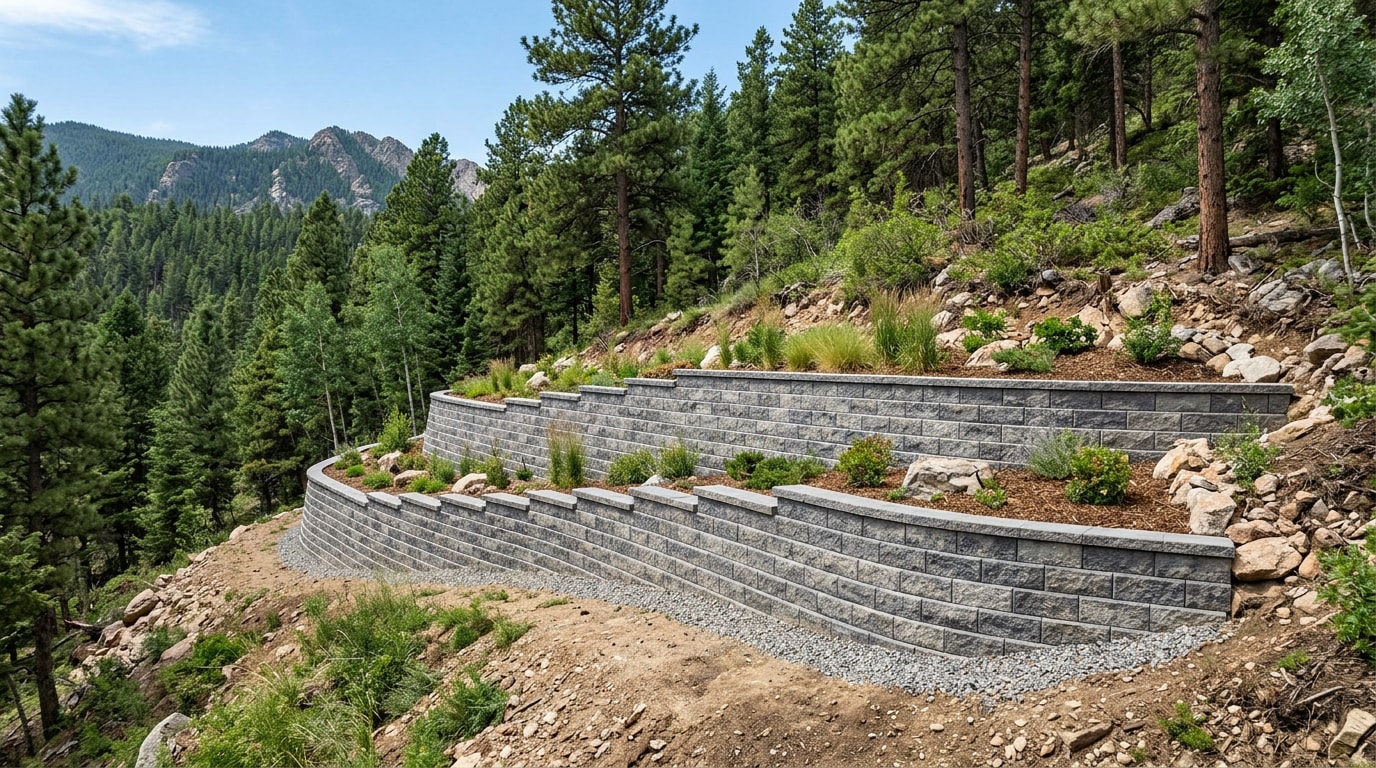
Precast concrete in Evergreen, CO gives homeowners a way to skip the riskiest part of mountain construction: curing concrete through unpredictable weather. At roughly 7,220 feet, Evergreen's freeze-thaw swings can crack a wall or slab before it ever finishes curing on-site, which is exactly the problem precast panels are built to avoid. This guide breaks down what precast actually costs here in 2026, how it compares to poured concrete, and when each approach makes sense for your property.
What Is Precast Concrete, and Why Does It Matter in Evergreen?
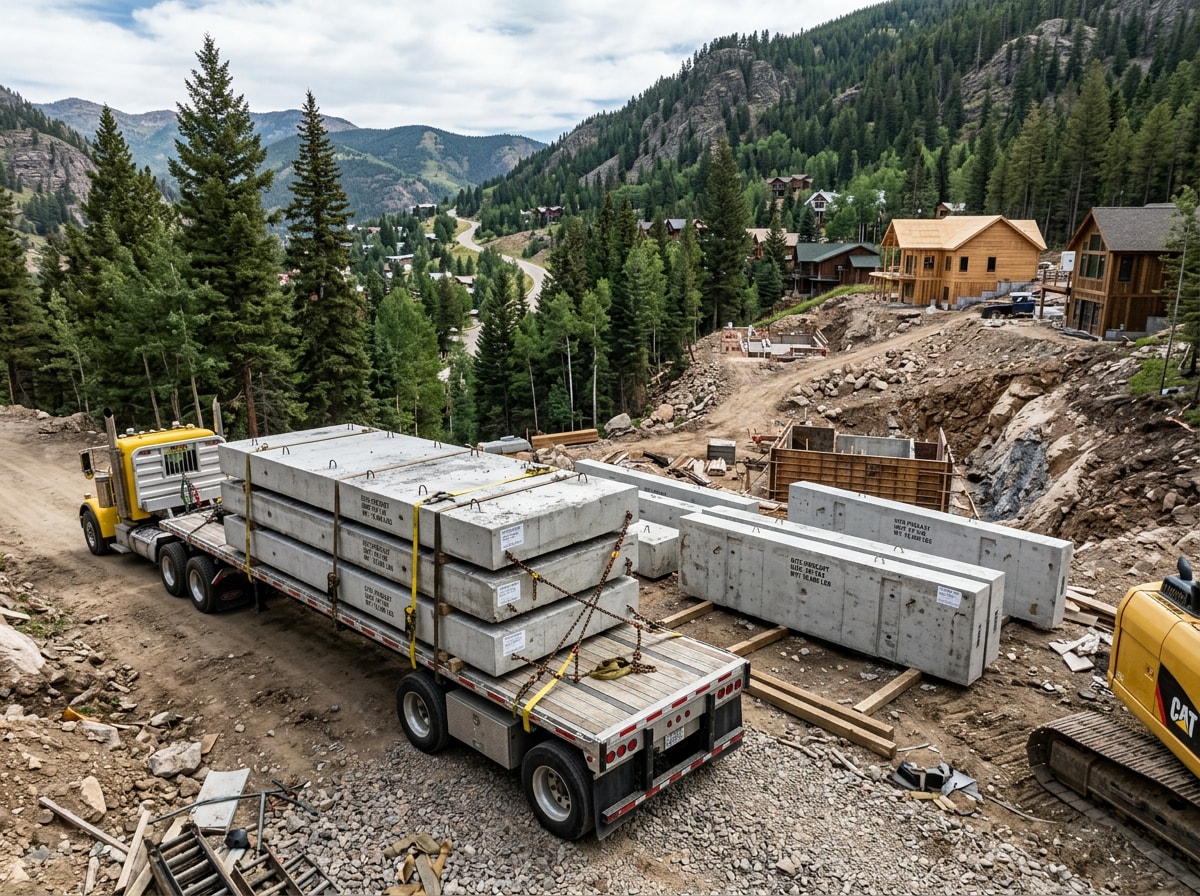
Precast concrete is cast and cured in a factory, then shipped to the jobsite ready to install. For foundations, retaining walls, and precast steps on steep mountain driveways, that single detail changes how the material performs once it hits the ground here.
Evergreen's cold season runs long, and concrete that's still curing on-site during an early snap can crack, weaken, or need costly rework. A precast contractor sidesteps that risk because curing happens in a controlled plant environment long before panels ever reach a Jefferson County lot. That matters when you're racing a short mountain building season.
Precast vs. Cast-in-Place: Which Fits Your Foundation?
Cast-in-place concrete, also called site-cast or poured concrete, is mixed and poured into forms directly at the jobsite, then cured in place. It's the traditional approach most people picture when they think of a foundation or wall going in.
The appeal is flexibility. Site-cast concrete can be shaped to fit unusual geometries that precast panels can't easily accommodate. The tradeoff is weather exposure: jobsite curing depends on ambient temperature and timing. The American Concrete Institute maintains specific guidance for this exact problem. ACI defines cold weather as a period when the average daily ambient temperature is below 40°F (5°C) for more than 3 successive days. Once that threshold hits, a poured foundation needs extra protection just to cure correctly, something ACI's cold weather concreting resources cover in detail.
| Factor | Precast Concrete | Cast-in-Place Concrete |
|---|---|---|
| Schedule | Fabricated off-site, installed fast | Depends on weather and cure time |
| Quality control | Consistent mix design in a factory setting | Varies with jobsite conditions |
| Cold-weather performance | Cured before delivery, unaffected by frost | Vulnerable to freeze-thaw during cure |
| Cost | Higher material cost, lower schedule risk | Lower material cost, higher schedule risk |
For Evergreen's short, often-interrupted build window, that cold-weather row carries real weight. A poured foundation delayed by an early snow can push a project weeks behind. A precast one usually can't.
How to Choose for Your Build
Cast-in-place still makes sense for small, one-off jobs or sites with unusual shapes that don't repeat elsewhere on the property. Precast tends to win when you need speed, repeatable components, or a winter-adjacent build timeline.
- Tight deadline or short building season? Lean precast.
- Irregular, one-time geometry? Cast-in-place may fit better.
- Multiple identical wall or foundation sections? Precast saves on both labor and schedule risk.
Our concrete installation team can walk through which approach fits your lot before you commit to materials. (Note: replace the literal domain above with the {{SITE_URL}} token as instructed below.)
How Much Does a Concrete Retaining Wall Cost in Evergreen, CO (2026)?
Retaining walls are the other project where precast shows up constantly in Evergreen, especially on the area's sloped, hillside lots. Costs vary by wall type, height, and site access, so it helps to see the range before getting quotes.
| Wall Type | Typical Cost per Sq. Ft. | Notes |
|---|---|---|
| Poured concrete | $20 to $45 | Strongest option, most labor-intensive |
| Concrete block | $15 to $35 | DIY-friendly for shorter walls |
| Precast concrete panels | $25 to $40 | Fastest install, limited customization |
These are broad industry ranges, not a fixed quote. A sloped Evergreen lot with limited equipment access will typically land at the higher end once you factor in excavation and crane access for panel sets.
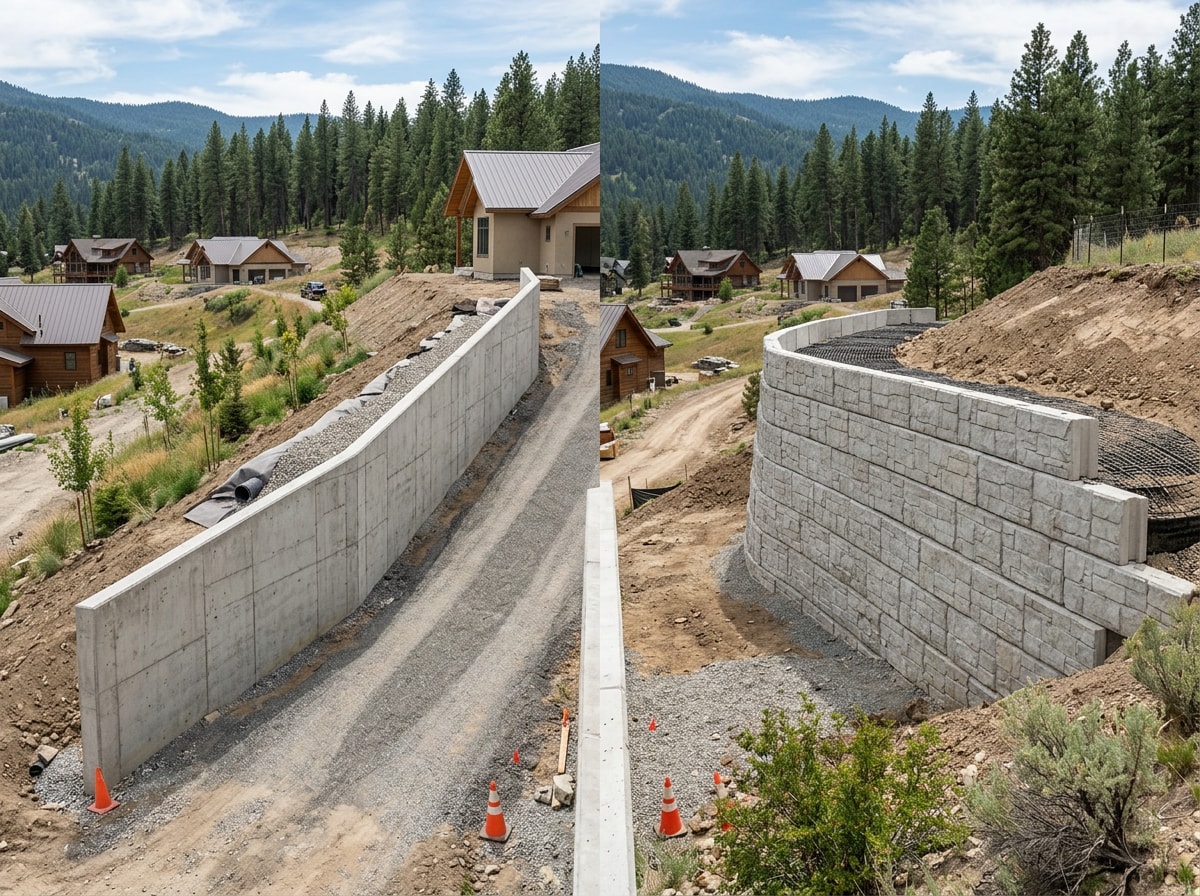
The National Precast Concrete Association notes that issues with wall height, right-of-way, seismic activity, drainage, quality control and aesthetics can all be overcome with a precast concrete earth retaining system , which is part of why NPCA's retaining wall resources are worth a look before comparing bids.
Do You Need a Permit for a Retaining Wall in Evergreen?
Evergreen sits in unincorporated Jefferson County, and the county's own engineering rules set the bar most homeowners here run into. They're more specific than the generic "check your local code" advice you'll find elsewhere.
Retaining walls less than three feet do not require any permits. Walls over three feet must be designed by an engineer. Retaining walls between three and 12 feet require a Miscellaneous Permit. Retaining walls over 12 feet require special approval through a Variance or Minor Variation request.
That's a narrower window than many homeowners expect. A 3.5-foot wall that looks "almost DIY" already needs an engineer's stamp under Jefferson County's current rules. Confirm your exact lot's requirements before you break ground, since combined wall-and-fence heights or surcharge loads (driveways, patios, structures above the wall) can trigger a permit even on a shorter wall.
Quality Control & Speed: Why Precast Works for Mountain Foundations
Beyond the weather argument, two practical benefits explain why precast has become a go-to choice for Colorado foundations: consistency and speed.
Quality Control
Precast concrete is cast in a controlled environment, away from rain, snow, and temperature swings. Every batch follows the same mix design, tested before it leaves the plant.
A foundation poured on-site can vary batch to batch depending on who's mixing, the weather that day, and how fast it's placed. Precast removes most of that variability before the product reaches your lot. Our crews have set foundations and retaining panels on Evergreen's granite-heavy, sloped lots for years, and the pattern repeats every fall: projects that lean on precast rarely lose a week to an early storm, while poured jobs sometimes do.
Foundations in a Day
Because precast arrives pre-cured, there's no on-site cure time to wait out and fewer inspection delays tied to weather. Crews can often set a foundation in a single day rather than spreading the work across a multi-week pour-and-cure cycle.
That compression matters in Evergreen, where the usable construction window can shrink fast once fall weather moves in. Fewer weather delays means fewer surprises on the overall project calendar.
Which Type of Retaining Wall Is Right for Your Property?
Before picking a wall type, confirm you actually need one, and what kind of pressure it will hold back.
Signs Your Yard Needs a Retaining Wall
- Soil washing away or pooling at the base of a slope after rain
- A noticeably steep grade near the house
- Water collecting near the foundation after storms
On Evergreen's hillside lots, these signs show up often simply because of how steep many properties are graded.
Poured Concrete vs. Precast Panels
Poured concrete is generally the strongest residential option and the right call for walls taller than 4 feet or sites carrying heavy soil pressure. It's built in place, so it handles significant structural load, but it takes longer to cure and install.
Precast panels install faster and perform more predictably in variable weather, making them a strong fit for shorter walls or tight timelines. Neither option is universally better; the right choice depends on wall height, soil conditions, and how much schedule flexibility the project allows. Our retaining wall installation crews size both options against your slope and soil before recommending one.
DIY vs. Hiring a Contractor: The Honest Comparison
A DIY concrete block wall under 3 feet can realistically save money on labor. That's real, but it comes with tradeoffs: renting compaction equipment, sourcing proper base material, and pulling the correct county paperwork all fall on you.
Taller walls, sloped sites, or anything bearing significant soil pressure are a different story. At that point, hiring a licensed precast or concrete contractor isn't just convenient, it's the safer structural call. A failed retaining wall can mean property damage, erosion, or worse, and labor savings rarely cover that risk.
If you're unsure which category your project falls into, browse our recent projects or request a free estimate before committing to materials. For a closer look at how much material a typical job actually needs, our guide on how much concrete you need for an Evergreen project breaks down the math by project type.
FAQ
Can I build a concrete retaining wall myself?
It depends on height and wall type. Concrete block walls under 3 feet are the most accessible DIY option in Jefferson County, since they fall below the engineering and permit thresholds. Anything above that height needs professional engineering and installation.
What is the maximum height for a DIY retaining wall in Evergreen?
Jefferson County requires an engineer's design for any retaining wall over 3 feet, and a Miscellaneous Permit for walls between 3 and 12 feet. Staying at or below 3 feet is the only way to avoid both requirements.
How long does precast concrete last?
Precast, prestressed concrete is a strong, durable, flexible material that can deliver a 100-year service life when properly manufactured and installed, according to the Precast/Prestressed Concrete Institute. Actual lifespan varies with exposure conditions, reinforcement, and maintenance, so treat this as a general range rather than a guarantee.
Is precast concrete cheaper than cast-in-place concrete?
It depends on project scale. Precast often wins on total installed cost for repeatable elements like matching wall panels, since it cuts labor time and weather-related delays. For small, one-off residential jobs, cast-in-place can sometimes come out cheaper, since mobilizing precast fabrication for a single irregular piece isn't always cost-effective.
Do I need a permit for a retaining wall in Evergreen, CO?
Usually not under 3 feet. Above that, Jefferson County requires an engineer-designed wall, and walls between 3 and 12 feet need a Miscellaneous Permit. Walls over 12 feet require a variance or minor variation approval.
Ready to see which option fits your lot? Get a free estimate from a team that works Evergreen's slopes every season, or visit our homepage to see the rest of our hardscape and concrete services.