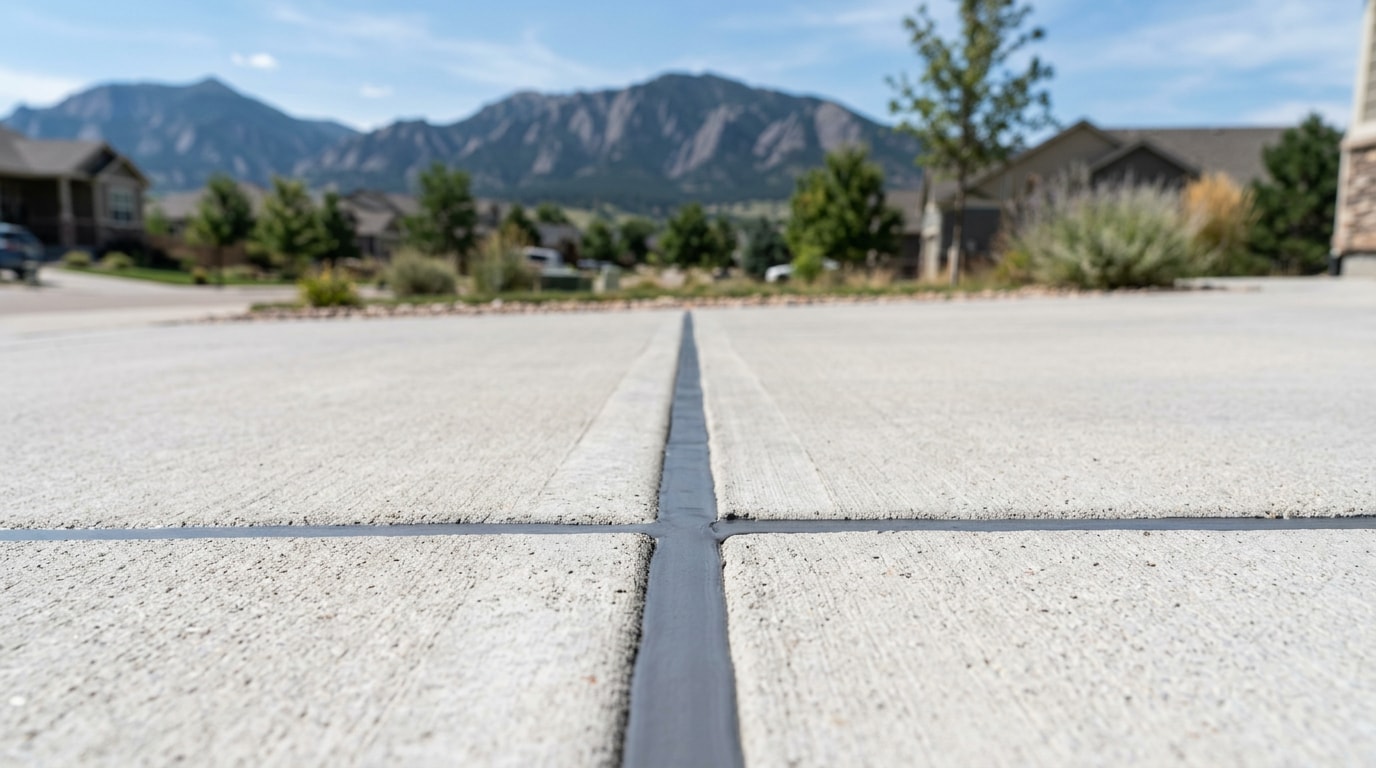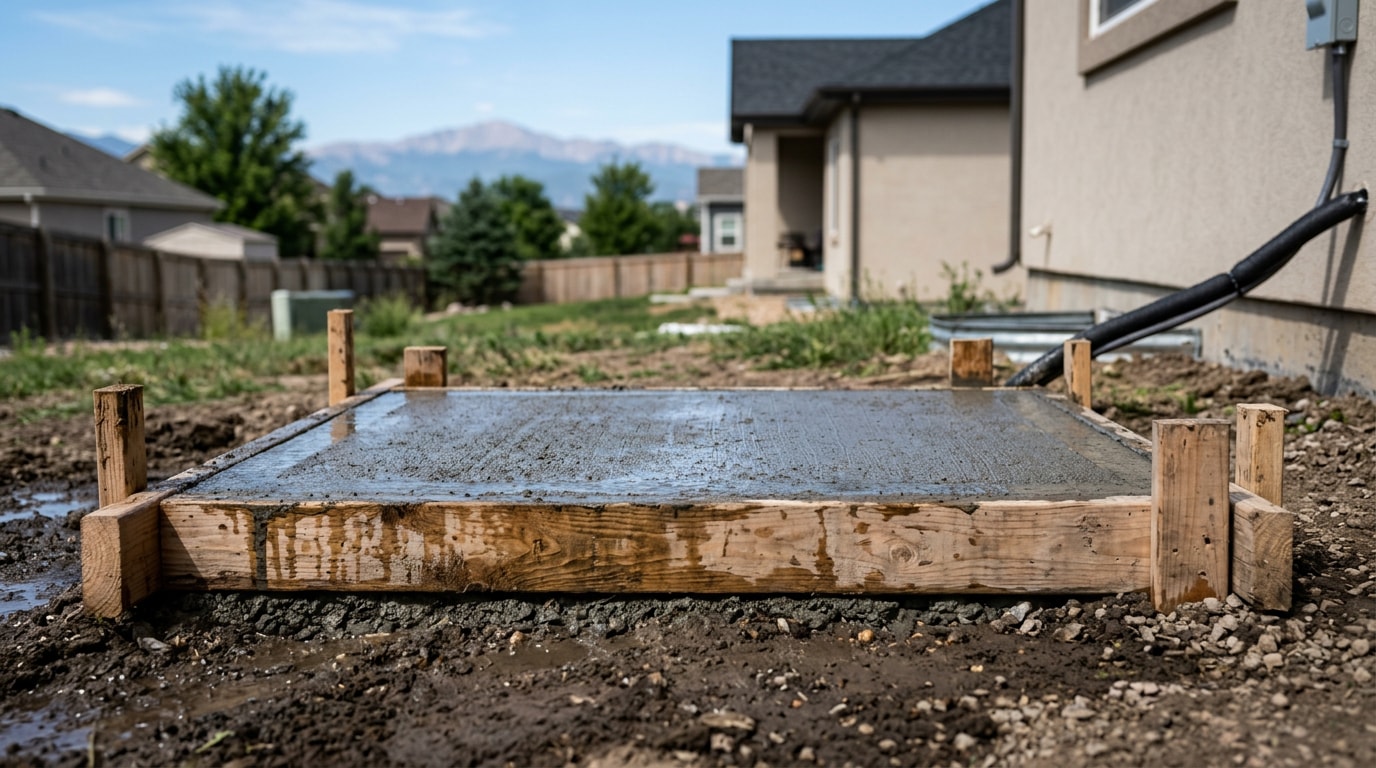
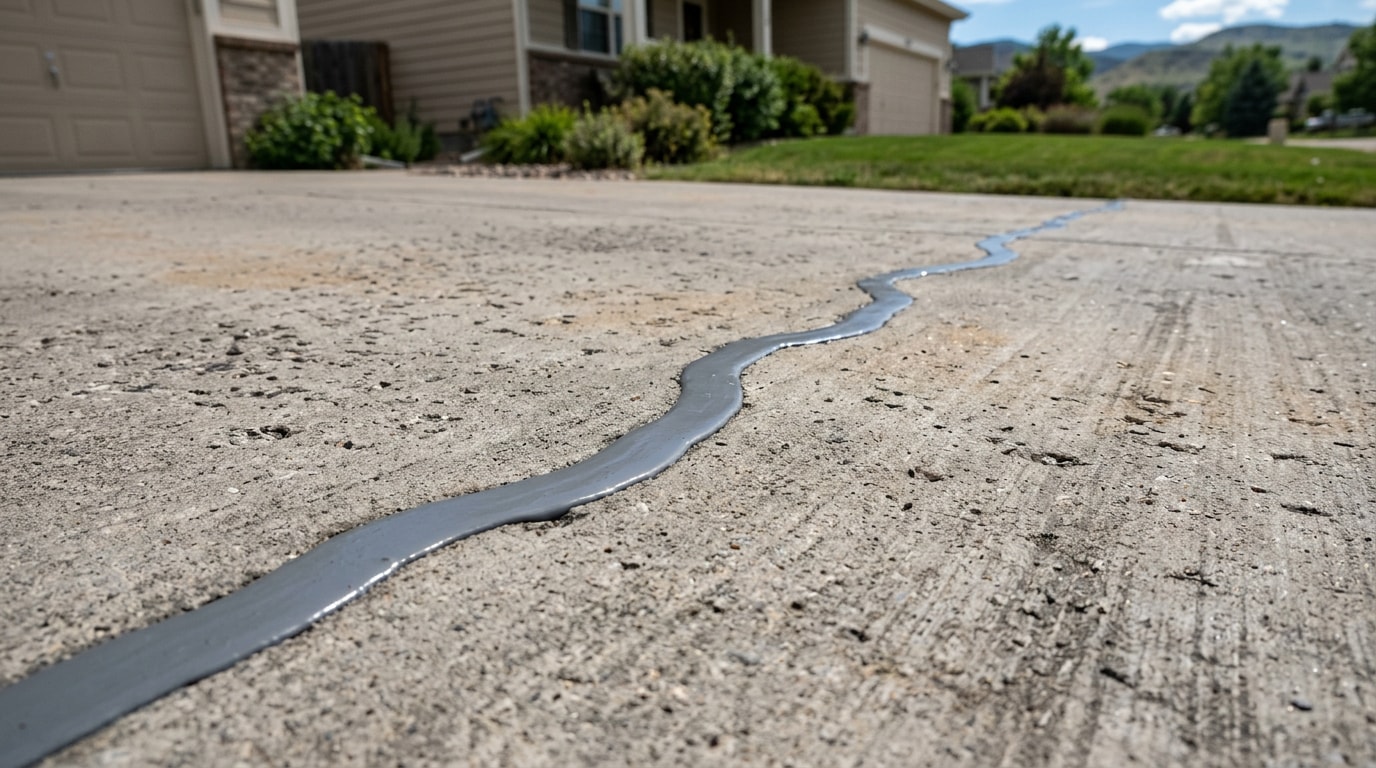
Self leveling concrete crack filler in South Denver Suburbs, CO fixes hairline and minor horizontal cracks in driveways, patios, and walkways before Colorado's freeze-thaw cycles turn them into bigger repairs. It will not fix a settling slab or a structural crack tied to a shifting foundation. Here's how to tell the difference, apply the product correctly, and know when a crack is telling you to call a contractor instead of grabbing another tube.
What Self-Leveling Crack Filler Can (and Can't) Fix
Self-leveling crack filler is a pourable sealant that flows into a horizontal crack or joint and settles flat on its own, without a putty knife or trowel. It's a maintenance product, not a structural repair. It blocks water intrusion and keeps hairline cracks from spreading, but it has no ability to lift a sunken slab or hold two sides of a moving crack together.
Good fit:
- Hairline or minor horizontal cracks in driveways, patios, and sidewalks
- Cosmetic surface cracks with no vertical offset
- Expansion joints that have opened up over time
Bad fit:
- Widening or stair-step cracks tied to a settling foundation
- Cracks with one side visibly higher than the other
- Any crack that reopens within weeks of being sealed
Before any concrete repair is carried out, the cause of the damage must be assessed and corrected and the objective of the repair understood , which is exactly why a crack that keeps coming back usually means movement underneath, not a need for more filler. Crack repair by injection can restore structural integrity and reduce moisture penetration in cracks starting around 0.002 in. (0.05 mm) in width , but that's a structural engineering fix, not a DIY weekend project.
Self-Leveling vs. Non-Sag Caulk: Picking the Right Sealant
Not every crack calls for the same product. Here's how the three most common options compare for South Denver Suburbs driveways and patios:
| Sealant Type | Best Crack Width | Flexibility | Typical Use | Cure Time |
|---|---|---|---|---|
| Silicone caulk | Narrow, shallow (under 1/8 in.) | Moderate | Cosmetic hairline cracks, quick touch-ups | Hours to skin over |
| Self-leveling polyurethane | 1/4 in. to 1/2 in. deep | High, built for movement | Horizontal joints and driveway/patio cracks | Days to full cure |
| Non-sag (gun-grade) caulk | Vertical cracks, crack edges | High | Damming wide joints before pouring self-leveler | Hours to days |
Silicone doesn't bond well to concrete long-term, so it's best reserved for narrow, shallow gaps. For most driveway and patio cracks in the region, a self-leveling polyurethane is the safer pick once the gap exceeds what silicone can reasonably hold.
How to Apply Self-Leveling Crack Filler (Step-by-Step)
Whether you're doing it yourself or watching a crew work, the process looks the same:
- Clean and rout the crack. Remove dirt, loose debris, and old caulk residue, then cut a clean groove so the sealant can bond to sound concrete.
- Dam or backer-rod the gap. For wide or irregular cracks, a foam backer rod or a bead of non-sag caulk sets the right depth and keeps the self-leveler from running too deep or leaking through gaps underneath.
- Pour and let it level. Self-leveling sealant is poured, not tooled, it flows evenly across the surface and finds its own level without a trowel.
- Let it cure undisturbed. Most self-leveling sealants tack over within one to two hours but need several days to reach full cure strength.
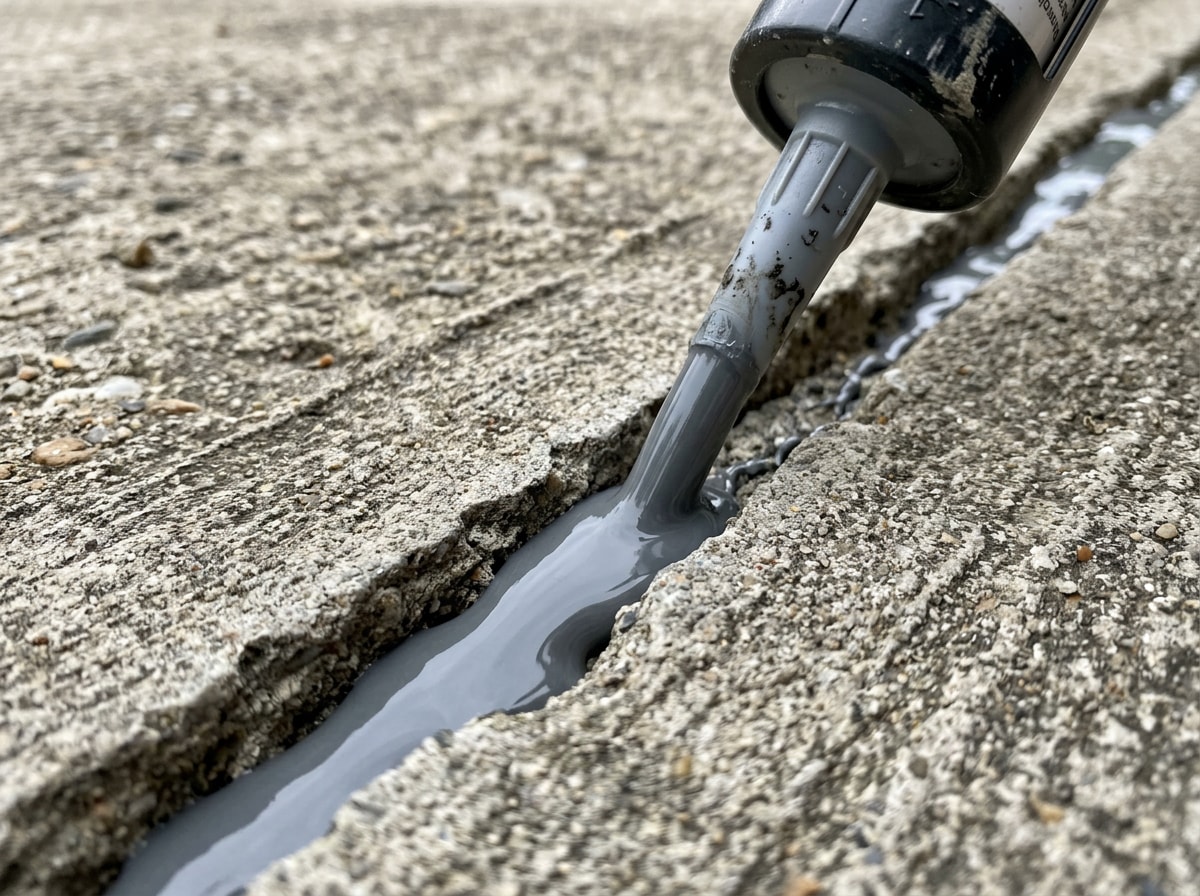
Sika's technical data sheet for its self-leveling polyurethane sealant lists a service temperature range of -40°F to 170°F and a final cure time of three to five days, with tack-free time in one to two hours . Recommended application temperatures run from 4°C to 38°C (40°F to 100°F) , which matters here: a cold snap during a fall pour can push a job outside the manufacturer's working window. Always check the product's technical data sheet before a late-season pour.
DIY vs. Calling a South Denver Suburbs Concrete Pro
A single narrow crack in a side patio is a reasonable DIY afternoon. Multiple wide cracks, a crack count that keeps growing, or a crack near a foundation wall is a different story.
On a recent Highlands Ranch driveway call, our crew found three layers of old caulk stacked on top of each other because nobody had cleaned out the original residue before resealing, the new filler never bonded and the crack reopened within a season. That's the most common mistake we see: trapped moisture or old sealant residue under a fresh pour.
Weigh these before deciding:
- Crack width: Under 1/4 in. and shallow is DIY territory; wider or deeper usually needs backer rod and more prep than a weekend allows.
- Accessibility: A crack in an open driveway is easy to route and clean; one under a deck or against a foundation wall is harder to prep correctly.
- Crack count: One or two cracks is manageable; a slab with a dozen cracks often points to a bigger drainage or soil issue worth a professional evaluation.
If you'd rather hand it off, get a free estimate before the next freeze cycle.
Concrete Repair vs. Full Slab Replacement
Most homeowners assume a cracked slab needs full replacement. Usually it just needs a repair, often a crack repair overlay or compatible bonding material, since cracking by itself doesn't mean the slab has failed structurally. A professional concrete installation is worth considering only when cracking is widespread, the slab has settled unevenly, or repeated repairs haven't held.
What Crack Filling Costs in the South Denver Suburbs
Pricing varies with crack width, length, and material, but here's a general range contractors in the area typically quote:
| Repair Scope | Typical Range | Notes |
|---|---|---|
| Basic crack filling, ~100 linear ft | $300 – $500 | Standard polyurethane or silicone sealant |
| Premium sealant upgrade | $600 – $1,000+ | Wider joints, backer rod, multiple applications |
| Crack repair + resurfacing | Varies by scope | Needed when cracking is widespread |
These are regional ballpark figures, not a quote. Request a free estimate before budgeting for your driveway or patio project.
Why South Denver Suburbs Driveways Crack: Clay Soil & Freeze-Thaw
Two local conditions drive crack repair demand across Highlands Ranch, Centennial, Littleton, Parker, Lone Tree, and Greenwood Village: expansive clay soil and a high number of annual freeze-thaw cycles.
A volume increase of 3% or more is generally considered by engineers to be potentially damaging and can require specially designed foundations , and Front Range clay soils routinely swell and shrink well past that threshold as moisture levels change. That movement under a slab is a major reason cracks reopen even after a fresh seal job.
Freeze-thaw cycling adds to the stress. NOAA's engineering climate data for the Denver/Stapleton station puts the average annual freeze-thaw cycle count at 105 , meaning water that gets into an unsealed crack has roughly that many chances each year to freeze, expand, and widen the gap further. That's exactly the cycle a well-timed self-leveling sealant is designed to interrupt.
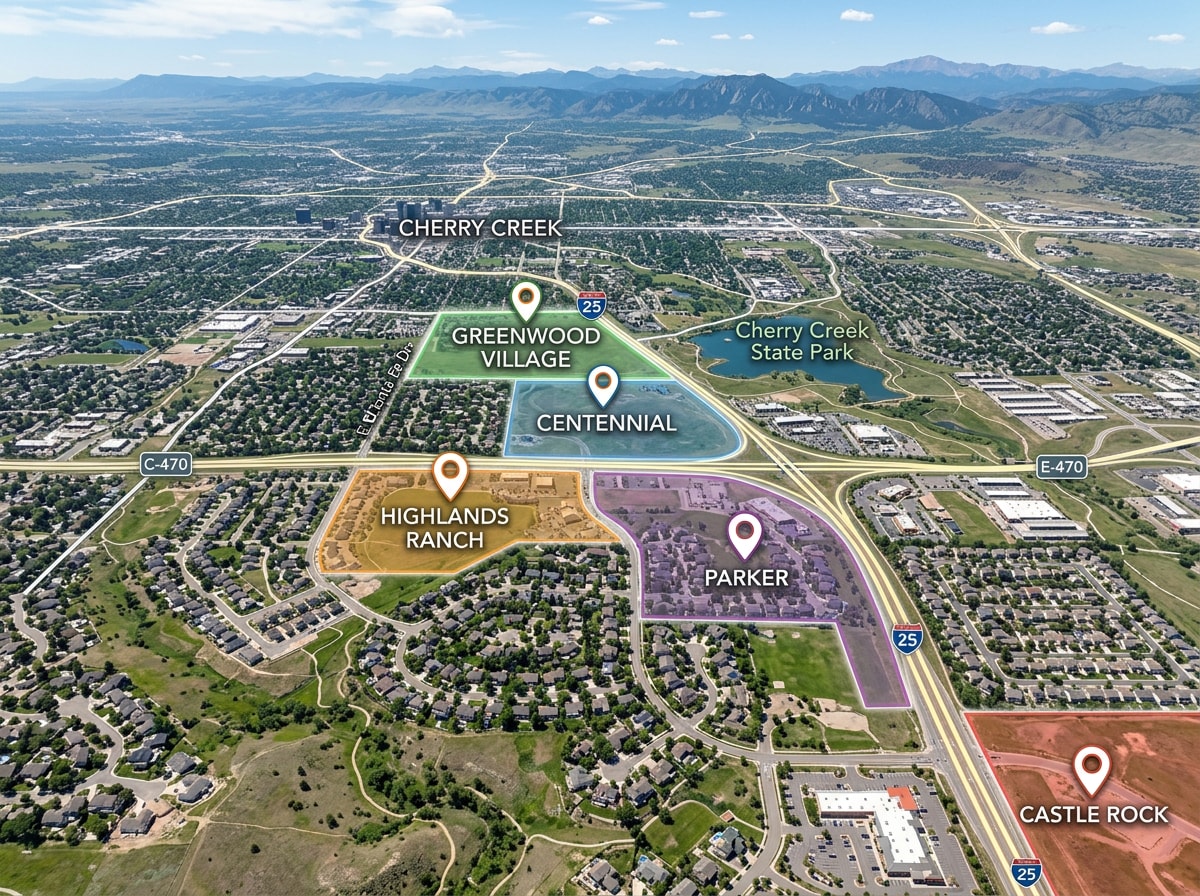
For slab condition before you commit to a repair plan, our concrete slump field guide for South Denver Suburbs covers how mix consistency affects long-term cracking risk. Homeowners in Highlands Ranch specifically can also check our Ken Caryl & Highlands Ranch area page, or browse South Denver Suburbs coverage for the rest of the region. The team at Peppers Land & Design handles both the sealant work and the bigger hardscape repairs when a crack turns out to be more than cosmetic.
FAQ
What is crack and joint repair?
Crack and joint repair is caulking and crack filling with a commercial-grade elastic material that stops water intrusion, sinking, and freeze-thaw heaving on driveways, patios, and flatwork.
What sealant do contractors use most often?
Most contractors use a polyurethane sealant rated for exterior, freeze-thaw conditions. Silicone is reserved for narrow, shallow cosmetic cracks since it bonds less reliably to concrete over time.
How wide of a crack can I caulk myself?
Up to about 1/4 in. wide and shallow is reasonable for a DIY repair. Wider or deeper cracks need backer rod and more prep, and cracks over roughly 1/2 in. with any vertical offset should get a contractor's eyes on them first.
Can self-leveling crack filler be used on vertical cracks?
No. Self-leveling sealants are formulated for horizontal surfaces like driveways and patios. On vertical cracks, the product runs before it can cure, so a non-sag caulk or epoxy is the better choice there.
How long does self-leveling crack filler take to cure?
Most self-leveling sealants tack over within one to two hours and reach final cure in three to five days, though exact times vary by product and temperature. Check the label before allowing heavy foot or vehicle traffic.
What is the best time of year to seal cracks in Colorado?
Late summer through fall, before the first hard freeze, gives sealant time to cure in mild weather. Waiting until winter makes proper cure and bonding much harder.
About the Author
This guide was written by the crew at Peppers Land & Design, a South Denver Suburbs hardscape and concrete contractor handling crack repair, concrete installation, and related flatwork across Highlands Ranch, Centennial, Littleton, and Parker. Questions about a specific crack or slab? Contact us for a free on-site estimate.