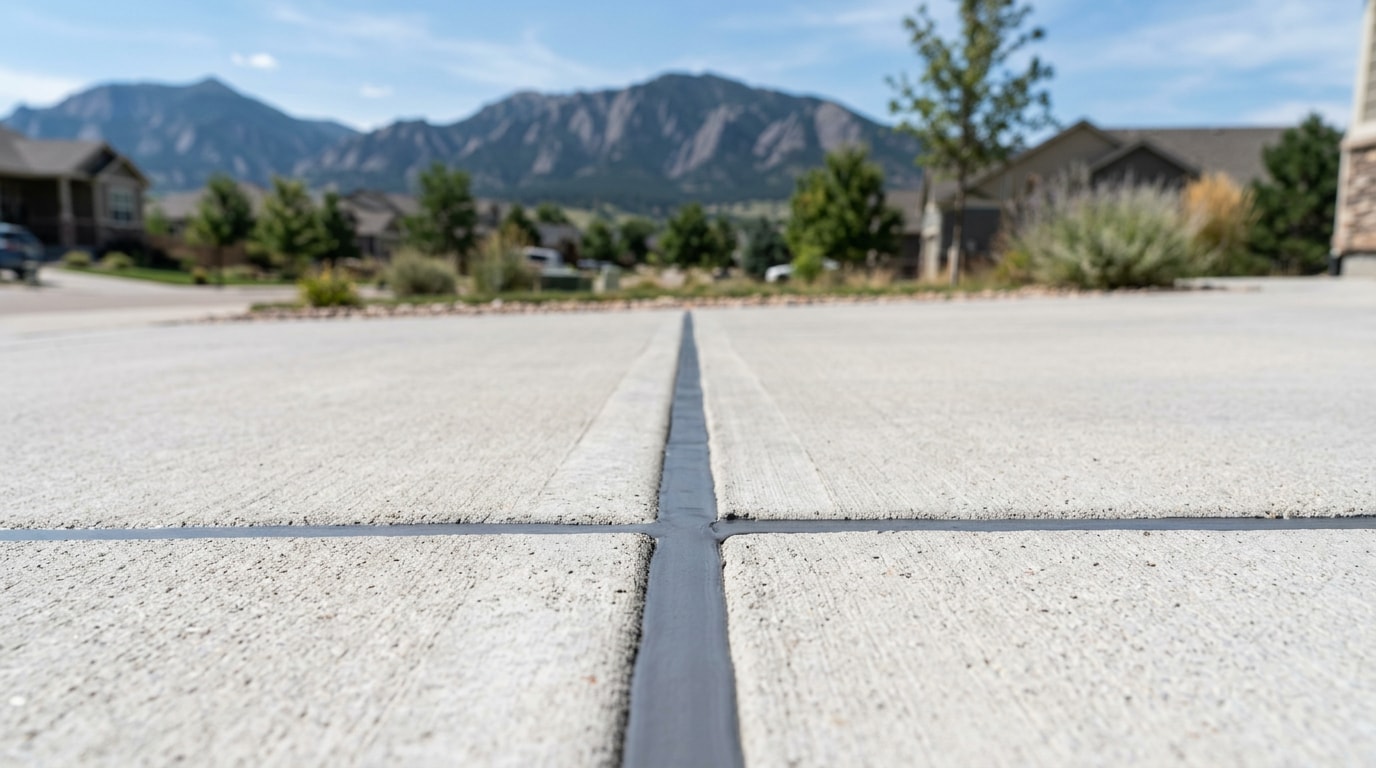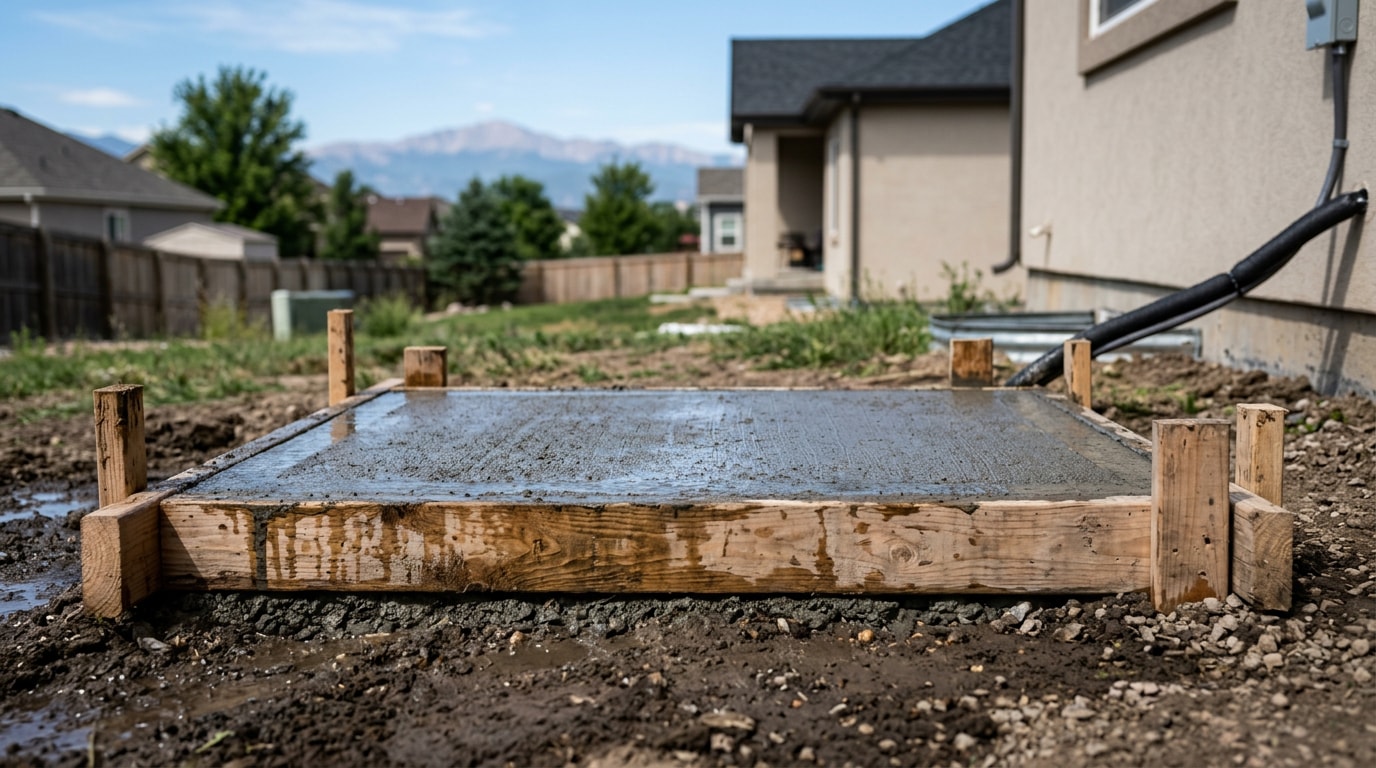
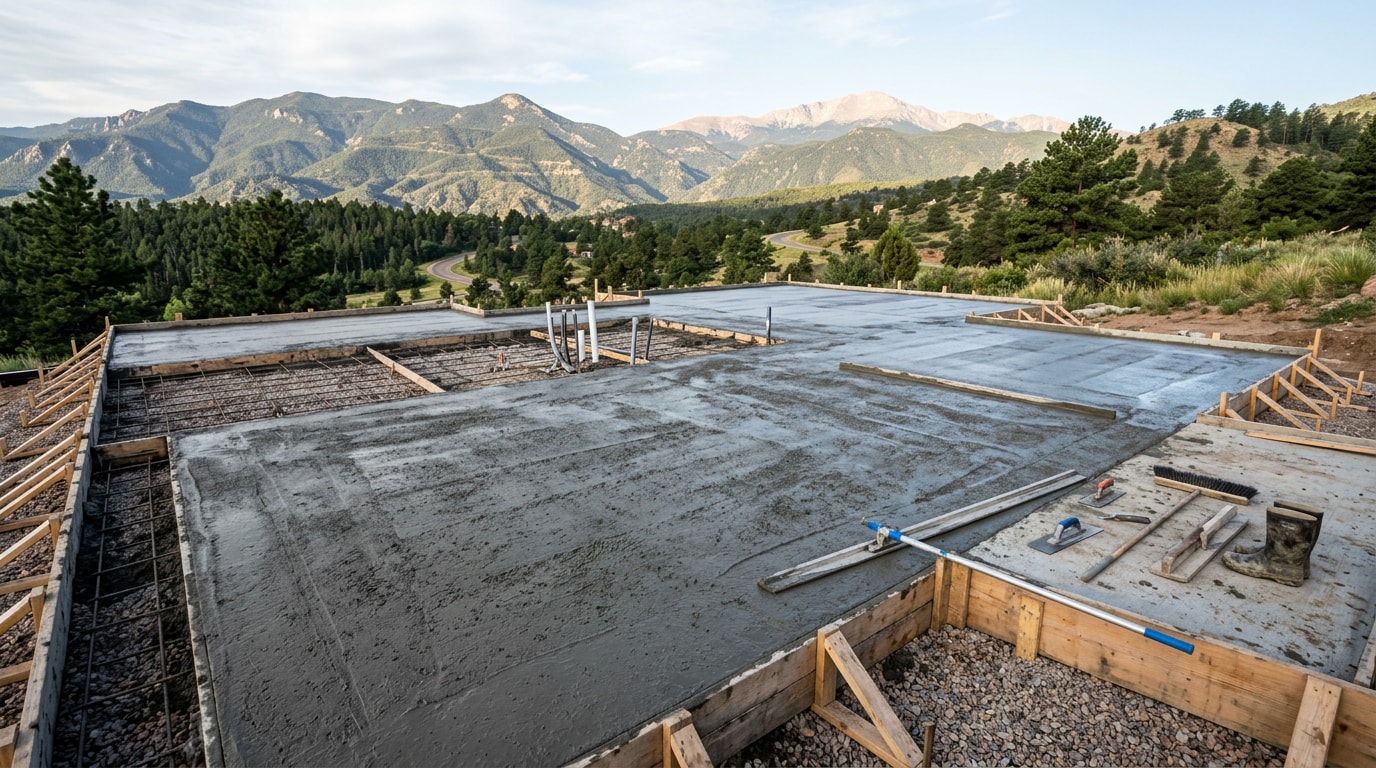
Concrete retarder buys a pour extra time before it stiffens, and in Golden & Mountain Communities, CO that extra time has to be managed against thin air, low humidity, and temperature swings that flatland Denver doesn't see. Dose it for the warm afternoon and you can leave a slab soft right as the sun drops. Our crews have mixed both set retarders and surface retarders into local pours from the valley floor up into the foothills, and the notes below come from that site experience, not just a product data sheet.
What Is Concrete Retarder?
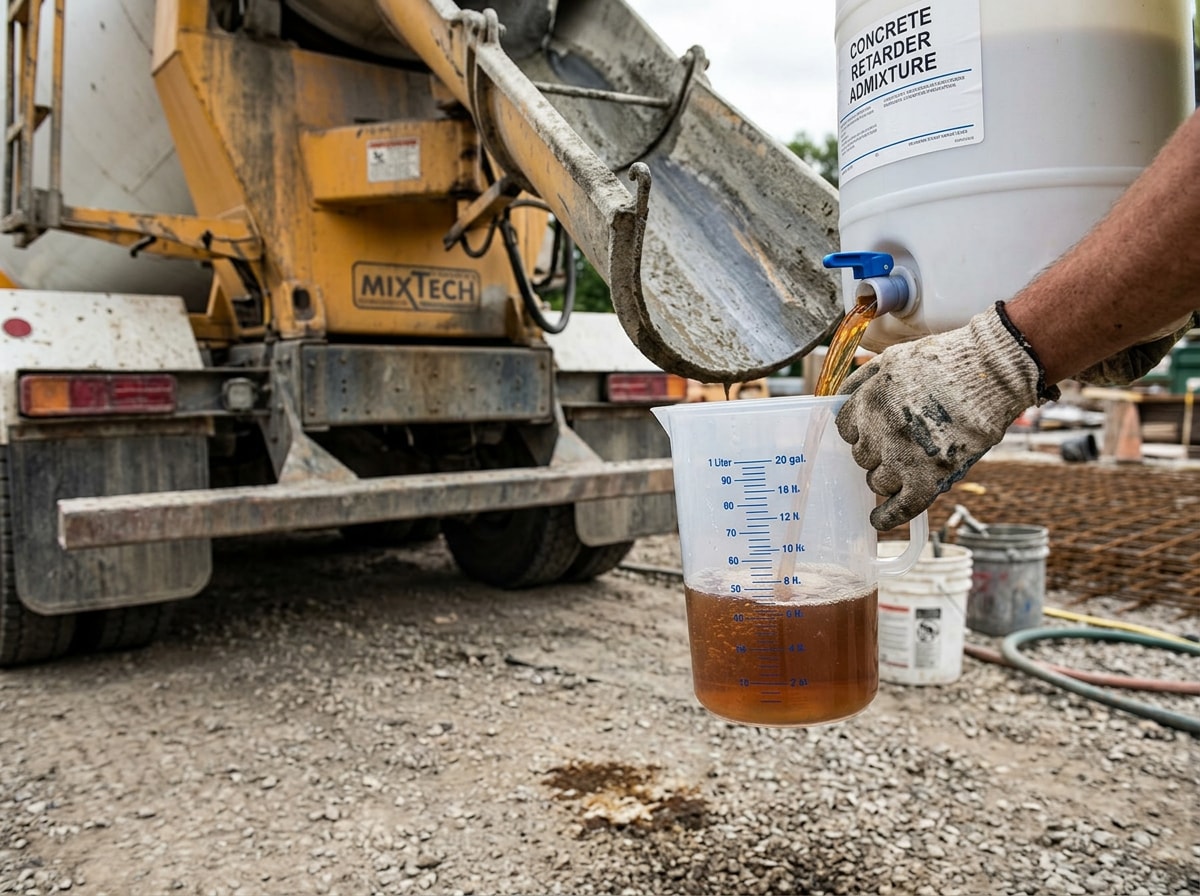
A concrete retarder is a chemical admixture that slows the chemical reaction between cement and water, giving crews extra time before the mix stiffens. It's dosed at a small fraction of the cement content and mixed directly into the batch before or during placement. Contractors reach for it whenever the natural set time of a mix would be too fast for the work involved.
Retarders fall into two broad camps:
- Mixed-in retarders — blended into the concrete during batching to extend overall working time.
- Surface retarders — applied topically after placement to delay set only at the surface, used for decorative finishing.
Both slow hydration, but they solve different problems. We'll cover the mixed-in types first, then the surface version later in this guide.
Why Elevation and Freeze-Thaw Change Retarder Timing Here
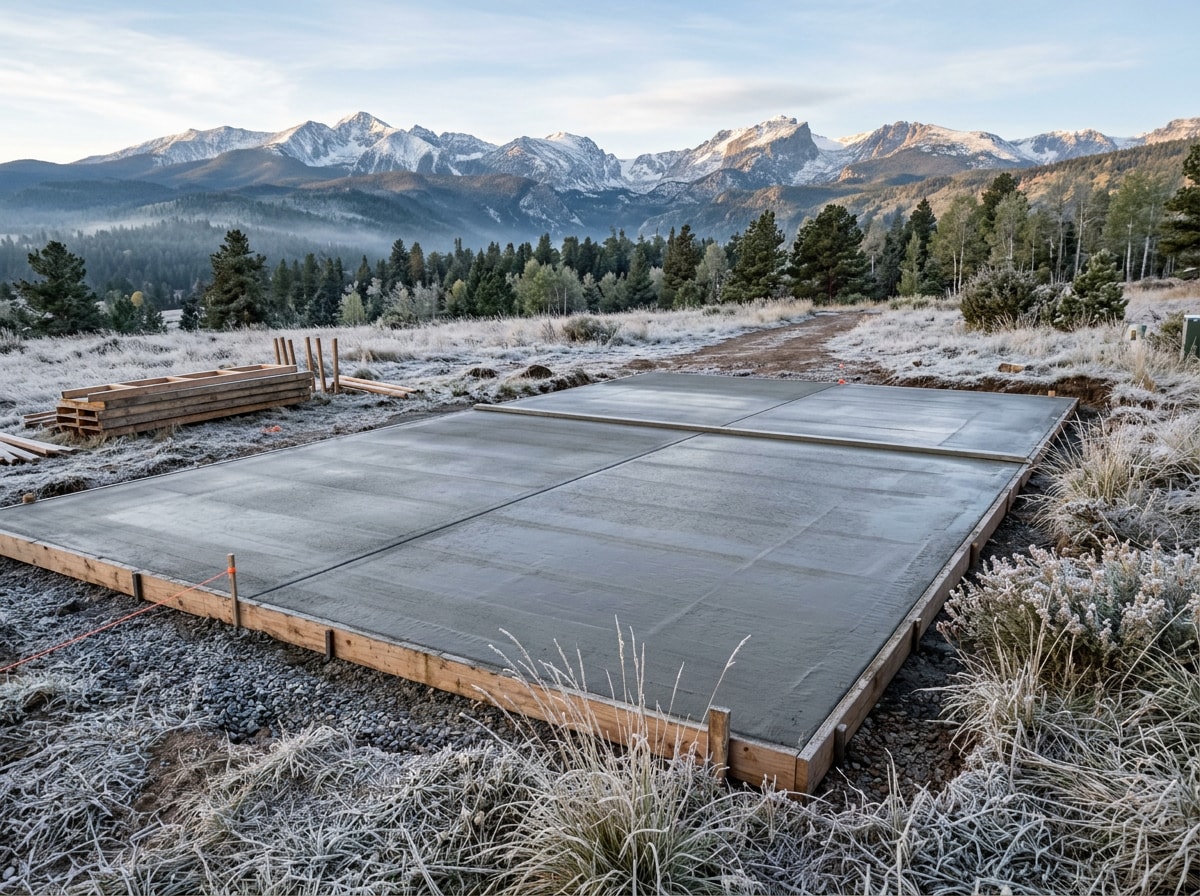
Golden sits at roughly 5,675 feet, and the foothills climb higher from there. Golden, Colorado is a city in the US state of Colorado with an elevation that changes how concrete cures compared to lower sites around Denver. Thinner air and lower humidity speed up moisture loss from fresh concrete, even on days that don't feel particularly hot. At the same time, daily temperature swings common in this climate mean a sunny afternoon pour can still face a hard freeze before midnight.
That combination makes retarder timing trickier than in flatland Denver. A retarder dosed for a warm afternoon can leave concrete still plastic, without real strength, right as temperatures drop after sunset. This is a bigger risk during a late-season foothills pour than during a summer pour with a long, stable warm window.
Cold-weather thresholds aren't a guess, either. ACI 306R-16 states that cold weather conditions exist when the air temperature has fallen to, or is expected to fall below, 40° F (4° C) during the protection period . Below that strength threshold, freeze damage becomes a real risk. The single most important number in cold-weather concreting is 500 psi, roughly the compressive strength at which enough mix water has been consumed by hydration that the remaining water will not do freeze damage; below it, a hard freeze can ruin the pour .
The practical takeaway: retarder dosage on shoulder-season or high-elevation pours should account for the evening temperature drop, not just the daytime high. For broader seasonal planning on pours in this area, see our concrete installation guide for Golden & Mountain Communities, CO.
Types of Concrete Retarders
Retarders aren't one product. Chemistry and application method both change how a product behaves on a given pour.
Organic Retarders
Organic retarders are built from natural compounds, sugars, lignosulfonates, and similar carbon-based molecules, that coat cement particles and slow their reaction with water. They're a common choice for precast work and decorative concrete, where a controlled, even set matters more than speed. Many ready-mix suppliers favor organic chemistries because dosing is predictable and the effect on final strength is minimal when used correctly.
These products show up often in architectural panels, countertops, and other precast elements where a consistent surface finish depends on uniform set timing across the whole pour. Our precast concrete guide for Evergreen, CO covers related foundation and retaining wall applications in similar mountain conditions.
Synthetic and Admixture-Grade Retarders
Synthetic retarders are formulated to fit a specific ASTM classification rather than relying on a single natural compound. They're more predictable in cold or variable conditions, which is one reason ready-mix plants serving the foothills often stock them alongside organic options.
How Concrete Retarders Work (Mechanism)
Concrete retarders slow hydration by interfering with how cement particles react with water, either by blocking crystal formation on the particle surface or by forming a thin, temporary barrier around each grain. The result is a delayed set without permanently stopping the reaction.
Two main mechanisms do the work:
- Nucleation inhibition slows the formation of the calcium silicate hydrate crystals that give concrete its early strength.
- Barrier formation — some retarders form a thin, insoluble layer around cement grains that briefly blocks water contact.
This isn't a loosely defined category. ASTM C494 classifies chemical admixtures into eight types based on their primary function, including Type B, retarding admixtures, and Type D, water-reducing and retarding admixtures . The National Precast Concrete Association breaks down each type in more detail.
| ASTM C494 Type | Function | Typical Use Case |
|---|---|---|
| Type B | Retarding only | Hot-weather pours, decorative work needing extra time |
| Type D | Water-reducing + retarding | Mixes needing both reduced water content and a delayed set |
| Type G | High-range water-reducing + retarding | High-strength or long-haul pumped mixes needing both strength and delay |
For a contractor, that classification translates into something practical: a Type B or D product on the batch ticket tells you the delay is engineered and tested, not a guess, which matters when timing a pour around weather, haul distance, or finishing crews.
Advantages and Disadvantages of Concrete Retarders
Retarders solve real scheduling and quality problems, but they come with trade-offs that matter more at altitude, where natural set times already run differently than at sea level.
Advantages
- Extended workability — more time to place, consolidate, and finish concrete before it stiffens. This helps prevent cold joints, the visible and structurally weak seams that form when one layer sets before the next is placed on top.
- Heat of hydration control — slowing the reaction spreads out heat generation on thick or large pours, lowering the risk of thermal cracking in mass concrete elements like footings and foundation walls.
Disadvantages
- Over-retardation — too much product, or the wrong product for conditions, can delay setting far longer than intended and leave a slab soft and vulnerable overnight.
- Admixture incompatibility — particularly when combined with air-entraining agents, which can affect the air void system that protects concrete from freeze-thaw damage.
This is where caution matters most locally: over-dosing a retarder on an already-cool shoulder-season day in the Golden foothills can stall setting almost entirely, leaving concrete exposed to an overnight freeze before it has any real strength.
Where Retarders Get Used
Retarders earn their keep in a handful of recurring situations:
- Hot-weather concreting. High temperatures accelerate hydration, and a retarder counteracts that so crews aren't racing the clock.
Proven local recommendations for adjusting concrete mixture composition and proportions, such as the use of water reducing and set retarding admixtures, are the standard response in hot-weather conditions, per NRMCA.
- Large pours. Mass foundations or big slabs benefit from the same heat-of-hydration control described above.
- Long-distance transport. Ready-mix trucks hauling concrete to remote mountain sites need extra set time just to stay workable by the time they arrive.
- Decorative work. Stamped patios, exposed aggregate, and architectural precast all lean on retarders, either mixed in or applied to the surface.
NRMCA's hot-weather concreting guidance covers the broader mix-adjustment strategies that pair with retarder use. Our team applies these same principles across concrete installation projects throughout the region.
Dosage Guidelines: How Much Retarder to Use
Dosage isn't one-size-fits-all. It shifts with temperature, cement type, and what the project actually needs from the mix.
Most dosage falls between 0.1% and 2% by weight of cement, with the exact number depending on ambient temperature, cement fineness, and desired delay.
- Hot-climate mixes often sit toward the higher end of that range to counteract fast natural hydration.
- Cooler conditions call for a lighter hand, since too much retarder compounds the overnight freeze risk covered earlier.
Getting this wrong in either direction either wastes working time or risks the over-retardation problems covered above, so dosage should always follow the admixture manufacturer's technical data sheet rather than a rule of thumb.
Concrete Surface Retarders for Exposing Aggregate
Surface retarders are a different animal from mixed-in set retarders. This is the product behind exposed-aggregate patios and decorative walkways, a popular finish on foothills properties where a natural stone look fits the surrounding landscape.
What Is a Concrete Surface Retarder?
A surface retarder is a liquid or film-forming deactivator applied to the top of freshly placed concrete that delays hydration only at that surface layer, while the concrete below sets normally. Washing or light brushing after the set delay removes the softened cement paste at the surface, exposing the aggregate underneath for a decorative, textured finish.
When Do You Apply Surface Retarder?
Surface retarder goes on immediately after placing and finishing, while the concrete is still plastic. Timing is tight:
- Too early, and the retarder sinks in unevenly.
- Too late, and it barely affects the surface at all.
Even coverage matters just as much as timing, since thin or missed spots create a blotchy exposed finish. Some products come pigmented so crews can see exactly where coverage has already been applied.
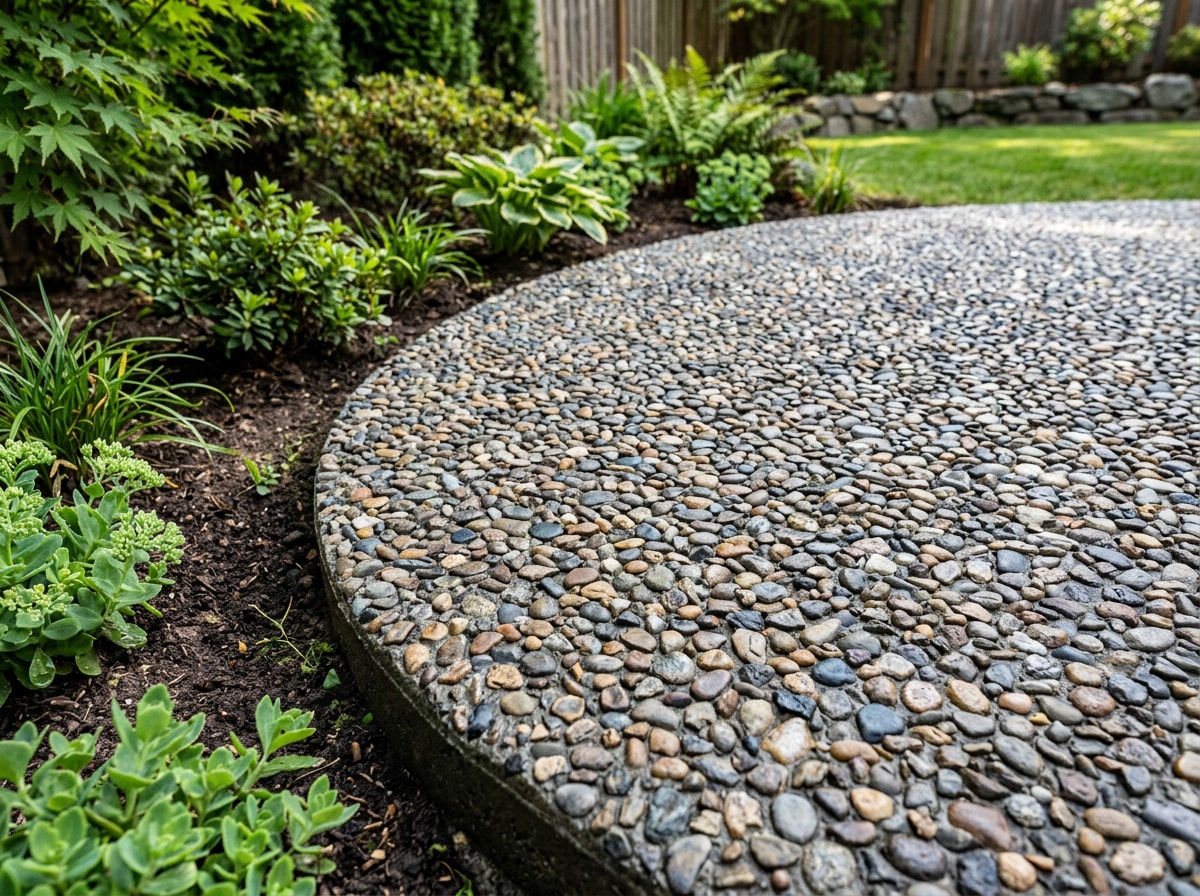
This technique pairs well with stone and hardscape features. See our retaining wall installation services and stamped concrete options for projects that often combine decorative finishes.
What Influences the Depth of Exposure?
Depth of exposure depends mainly on surface porosity of the concrete and how long the retarder sits before washing begins. A more porous mix or a longer dwell time exposes more aggregate; a denser mix or shorter dwell time leaves a shallower, more subtle texture. Crews typically test a small area first to confirm timing before committing to the full pour.
Not every pour needs a retarder at all, some jobs need the opposite problem solved. If you're also budgeting out quantities or finish timelines for a foothills project, our sand mix concrete guide for Downtown Denver & Cherry Creek, CO and concrete cure time guide cover the other end of the timeline.
Planning a pour in Golden or the surrounding mountain communities? Get a free estimate and we'll walk through dosage, mix design, and finish options before the truck shows up. You can see examples of our finished work on our projects page, and browse our full range of services on the homepage.
FAQ
Does a concrete retarder reduce concrete strength?
No. Properly dosed retarder does not reduce final compressive strength. Correct dosing only delays the timeline, it doesn't change how much strength the concrete ultimately gains.
How long can a concrete retarder delay setting time?
Typical retarders delay setting time anywhere from one hour to several hours, depending on dosage and site conditions like temperature and cement type.
What is the best concrete retarder for hot weather?
Common hot-weather retarder chemistries include sodium gluconate and lignosulfonate blends. In the Golden foothills, though, cold-climate timing is usually the bigger concern, since an afternoon pour can still face a hard freeze by nightfall.
Does concrete crack in Golden's freeze-thaw climate?
Any concrete can develop freeze-thaw cracking without proper curing, control joints, and drainage. Correct retarder timing helps concrete reach adequate strength before a freeze hits, reducing that risk.
How do I know if my pour needs a retarder at all?
If the mix will be placed, finished, and cured within a predictable window and temperatures are moderate, a retarder usually isn't necessary. Long hauls, hot afternoons, large pours, or decorative exposed-aggregate finishes are the situations where it earns its cost.
Can I add retarder on-site instead of at the plant?
Some products are designed for jobsite addition, but dosing accurately without plant equipment is harder and riskier. Most crews prefer batching retarder at the ready-mix plant, where dosage is measured and documented on the batch ticket.